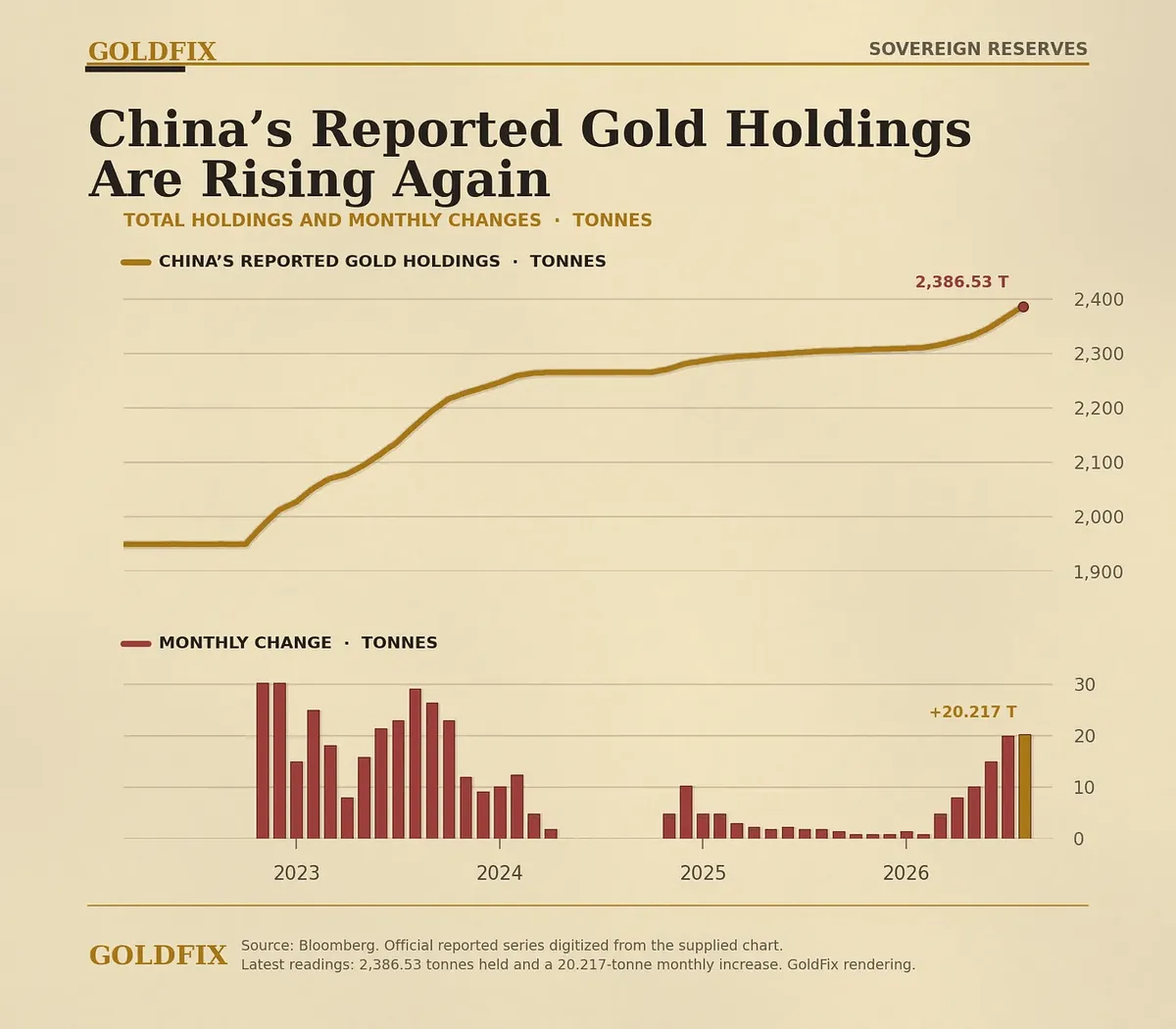
China’s real gold purchases appear to be roughly twice the amount disclosed through official channels, according to Goldman Sachs’ latest estimate. That gap (first noticed by ZeroHedge) matters because it suggests Beijing is building its gold reserves faster than the public numbers indicate.
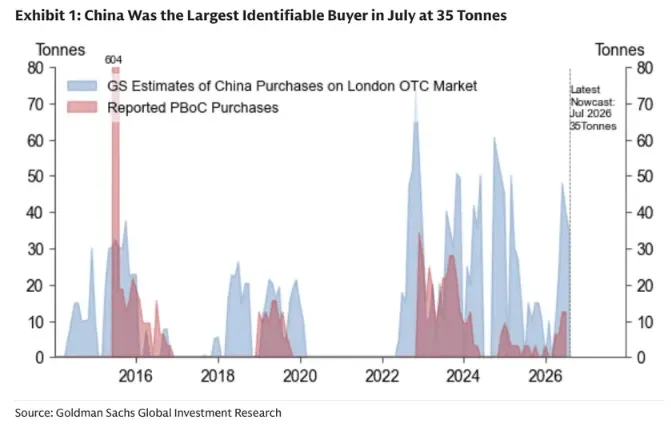
Goldman estimates that China purchased 35 tonnes of gold in July, making it the largest known buyer during the month. That estimate is roughly double the amount reflected in China’s publicly reported purchases pictured below:
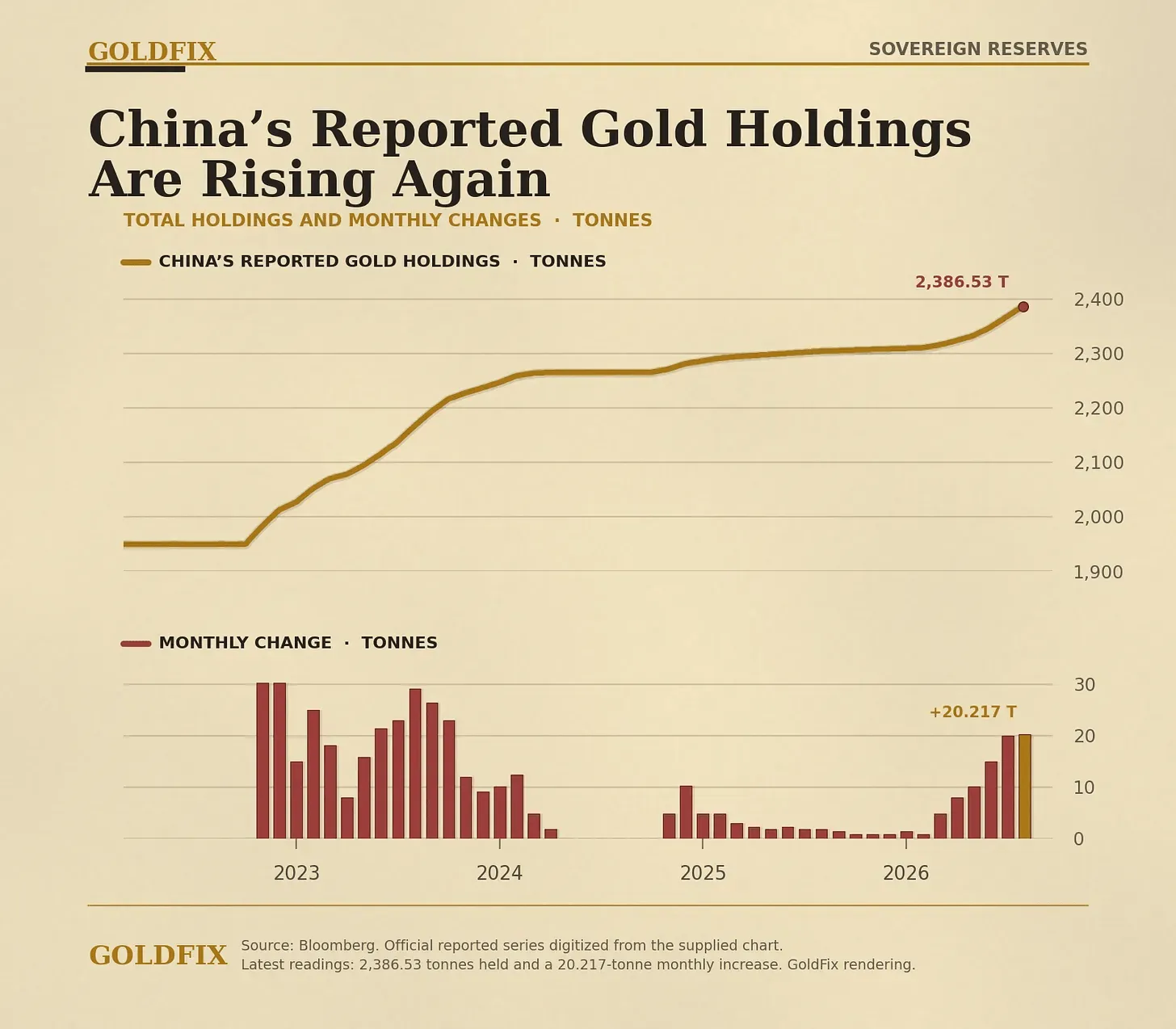
China had also accounted for most of the 44 tonnes of total central-bank buying estimated by Goldman during July as mentioned up top. To put that in perspective, central banks purchased an average of only 17 tonnes per month before 2022. On a three-month adjusted basis, buying has now accelerated to 91 tonnes per month, more than five times the earlier average.
The difference between official figures and Goldman’s estimate highlights a long-standing problem in the gold market: central banks do not always report purchases immediately or completely. Goldman tracks gold moving through the London over-the-counter market into domestic vaults or third-party custodians. This allows the bank to identify buying that may not yet appear in official reserve data.
There could be even more unreported buying. Gold held for foreign central banks at the Bank of England increased by 63 tonnes in July. Some of that metal may have been transferred from the New York Federal Reserve, but the increase was larger than the decline in New York. Goldman therefore concluded that “additional recent central bank purchases are not captured in our July nowcast estimate.”
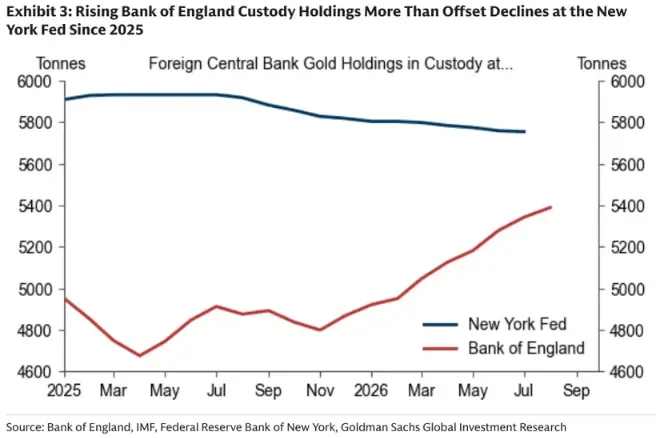
This shows that official reserve figures provide an incomplete picture of central-bank demand, with China’s actual purchases already estimated at about twice its publicly stated level.
Goldman continues to forecast gold at $4,900 an ounce by the end of 2026 and says the risks remain tilted higher. If China and other central banks are buying more gold than they admit, the physical demand supporting the market may be considerably stronger than it appears.