Where to Keep It
Central banks are buying gold at five times their pre-2022 pace, while concerns over reserve security are sharpening the debate over where to keep it.
Central Banks Keep Buying OTC Gold as Custody Debate Broadens
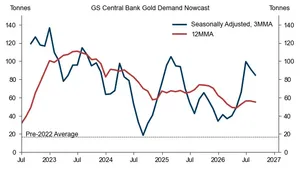
Central banks bought an estimated 79 tonnes of gold in August. Their three-month seasonally adjusted buying rate reached 85 tonnes a month, five times the average before 2022.
Goldman Sachs’ October 19 report, Precious Comment: Central Bank Gold Purchasing Trend Remains Strong Through August, puts China at the forefront of that demand. It also raises a question for countries that already own substantial reserves: how much do they trust the jurisdiction holding their gold?
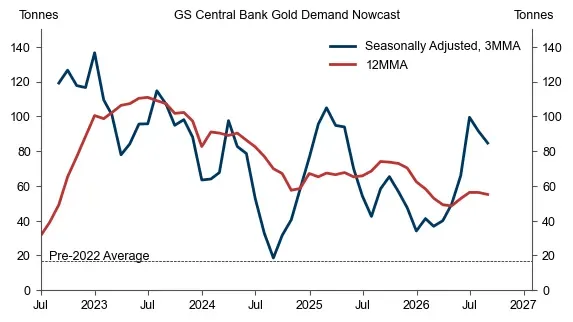
Goldman estimates Chinese purchases at 25 tonnes in August, making China the largest identifiable buyer. That figure is the bank’s estimate of purchases in London’s over-the-counter market; it should not be confused with the PBoC’s reported additions.
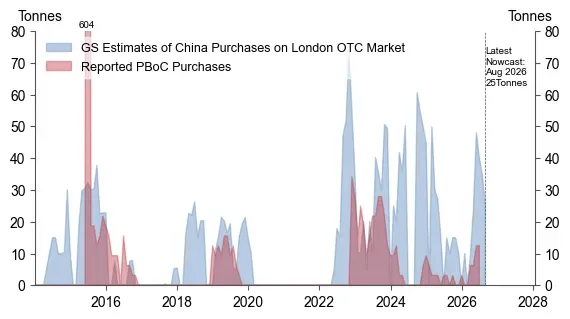
The bank sees scope for the buying to continue:
EM central banks, particularly China, remain underweight gold relative to plausible long-term allocations, while the motivations for diversifying away from G7 reserve currencies, including geopolitical and financial risk, likely remain in place.
Developed-market central banks have a different starting point. Goldman explains:
DM central banks have largely remained on the sidelines of the buying wave since 2022, partly because they already hold substantial gold reserves for historical reasons. But the debate is increasingly shifting from whether to own gold to where to store it, pointing to broader concerns around reserve security and cross-country trust. Consistent with this shift, foreign central bank gold holdings at the New York Fed declined by 40 tonnes in August, while custodial holdings at the Bank of England rose by 46 tonnes.
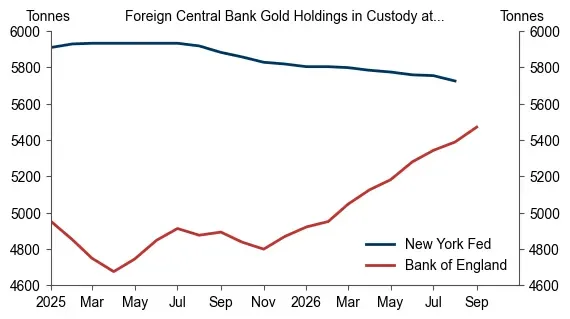
Those custody figures do not establish that the gold leaving New York arrived in London, or that either movement represented new buying. They show changes in where metal is held.
Buying gold reduces exposure to another government’s debt. For metal held abroad, access still depends on the custodian and the jurisdiction as the bank reminds us.
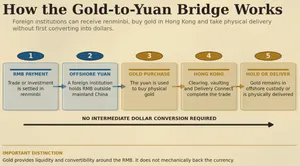
Finally: The metal leaving the US for London is not a comment on London being more trustworthy than the US. Much of that metal is using London as a connection to its final destination, eastward!