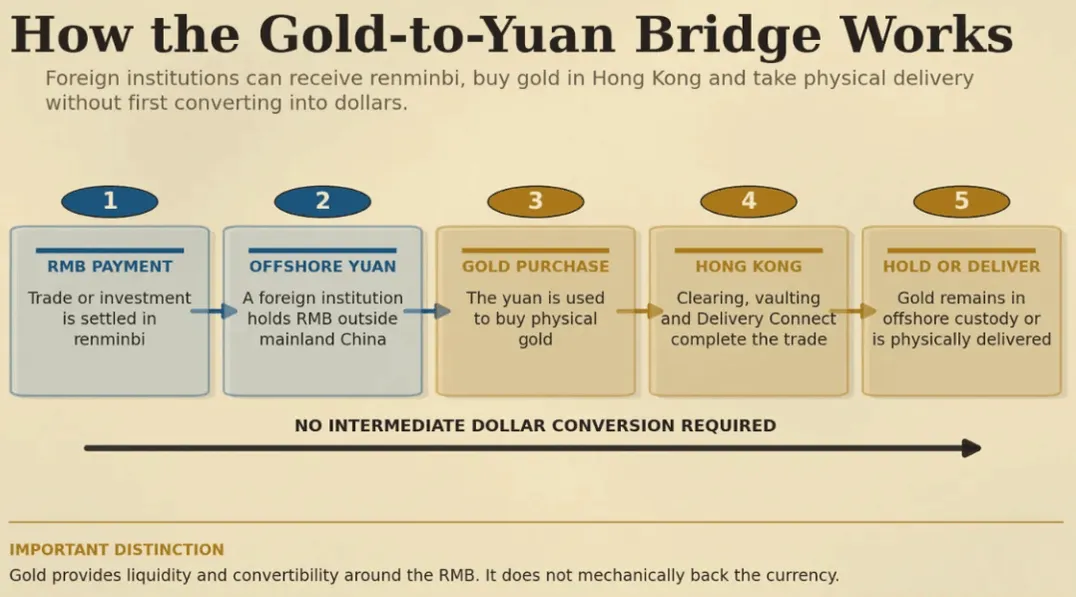
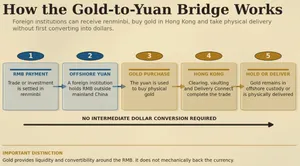
China’s gold strategy also supports its currency ambitions. Physical delivery, offshore vaults and yuan-denominated gold trading give foreign institutions more ways to use the renminbi they receive.
Analysts interviewed for Evelyn Cheng’s CNBC newsletter, How a gold-buying spree helps the yuan go global, connect Beijing’s reserve purchases with Hong Kong’s gold-market development. The practical question is what an overseas holder can do with yuan after accepting it in a transaction.
A Place to Use the Yuan
CNBC explains the connection:
China’s decades-long push for yuan internationalization is getting a lift from the buildout of Hong Kong as a gold trading center — denominated in the Chinese currency.
“As those trading volumes grow, there would be a growing volume of the physical gold trade that is denominated in RMB and not linked in USD,” said Charles Chang, managing director and Greater China country lead for corporate ratings at S&P Global Ratings.
The Chinese yuan, also known as the renminbi, accounts for a fraction of international transactions in a global financial system dominated by the U.S. dollar. Analysts I spoke with don’t expect major changes to that dynamic anytime soon, but Beijing’s gold purchases and Hong Kong trading platform are just the latest steps toward supporting greater use of the yuan globally.
“The challenge with internationalizing the RMB it’s somewhat more challenging to find places where you can use the RMB,” Chang said. “In terms of gold particularly, if the RMB that the buyer receives can be converted to gold, then it gives more channels for the spending to be done.”
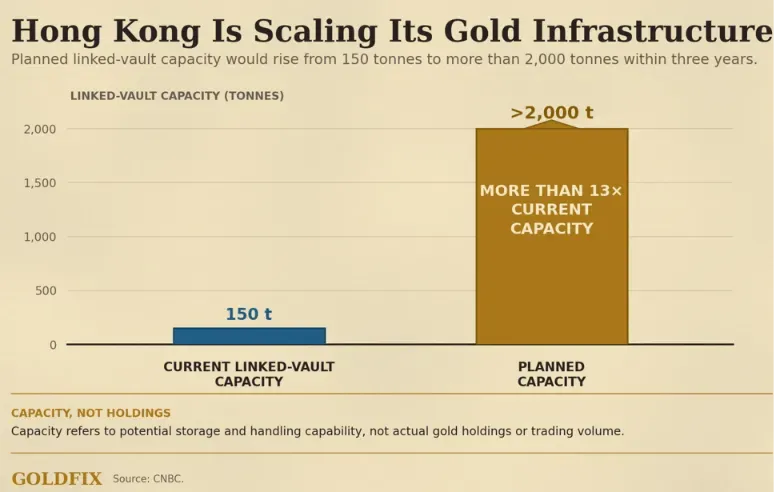
Hong Kong linked its gold vault with Shanghai last year, allowing yuan-denominated physical delivery to international institutions, CNBC reports. The planned expansion from 150 tonnes to more than 2,000 tonnes over three years would increase capacity to handle that business. Capacity is distinct from actual metal holdings or turnover.
From Settlement to Financing
An overseas company paid in yuan gains another use for those proceeds when it can purchase gold and take delivery through Hong Kong. The transaction connects the currency with an internationally recognized reserve asset. Vaulting, custody and settlement make that choice practical.
The channel operates through gold transactions at market prices. Broader use of the metal in financing would require lenders willing to accept it, clear ownership rights and arrangements for selling the collateral if necessary. The trading and delivery connection is developing; formal collateral treatment and wider gold-backed lending require evidence of the rules and transactions.
Gold Reserves Support Confidence
On reserve confidence, CNBC reports:
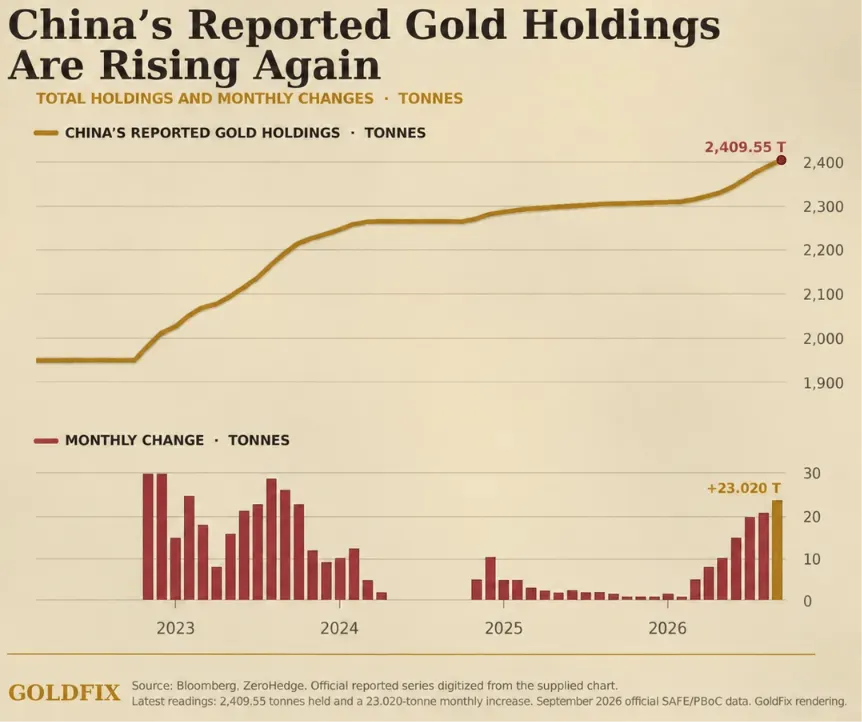
“China’s 23-month gold buying streak reinforces the credibility of the renminbi’s internationalization drive,” said Hao Zhou, head of research and chief economist at Guotai Junan International in Hong Kong.
“By steadily increasing gold reserves, Beijing is strengthening the long-term backing of its financial system and reducing reliance on dollar-denominated reserve assets,” he said. “While gold alone will not determine the RMB’s global role, it enhances confidence in the currency and supports broader efforts to expand its use in trade, investment and official reserves.”
Reserve purchases and the offshore market serve related purposes. Accumulation supports confidence in the financial system; trading and delivery give foreign holders a transaction they can complete with yuan.
Xia Yingying of Nanhua Futures expects central-bank gold accumulation to reduce reliance on Treasuries and dollar reserves over time. In CNBC’s translation, she forecasts a lower dollar reserve premium and greater attention to credit, fiscal and sanctions risks.
The Supply Chain Is Part of the Plan
CNBC closes with China’s access to the metal:
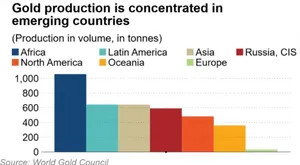
China has acquired major gold mines across Latin America, Africa and Asia, according to S&P Global Ratings.
“China’s plans for gold and its activities in gold are comprehensive and long lasting. These trends are going to be in place for a number of years,” Chang said.
“The comprehensive nature of this,” he said, “is something that markets often miss.”
Access to metal, offshore custody and settlement connect the physical supply chain with the yuan’s international use. Mining interests provide access to production; vaults and delivery channels make the metal available to institutions trading in the currency.
Yuan-denominated turnover, physical deliveries and bank lending against gold will show how much business develops around that infrastructure. The trading bridge is taking shape. Financing activity will determine how far the collateral role extends.
About the Author
Vincent Lanci is a commodity trader, Professor of MBA Finance (adj.) , and publisher of theGoldFixnewsletter.