Deutsche Bank’s report put out April 27th on their website argues that the global financial system is shifting in a way that favors gold over the U.S. dollar. The key idea is that the world is moving away from a stable, U.S.-led order and back toward a more divided, competitive environment. In that setting, countries tend to trust physical assets like gold more than financial assets tied to another country.
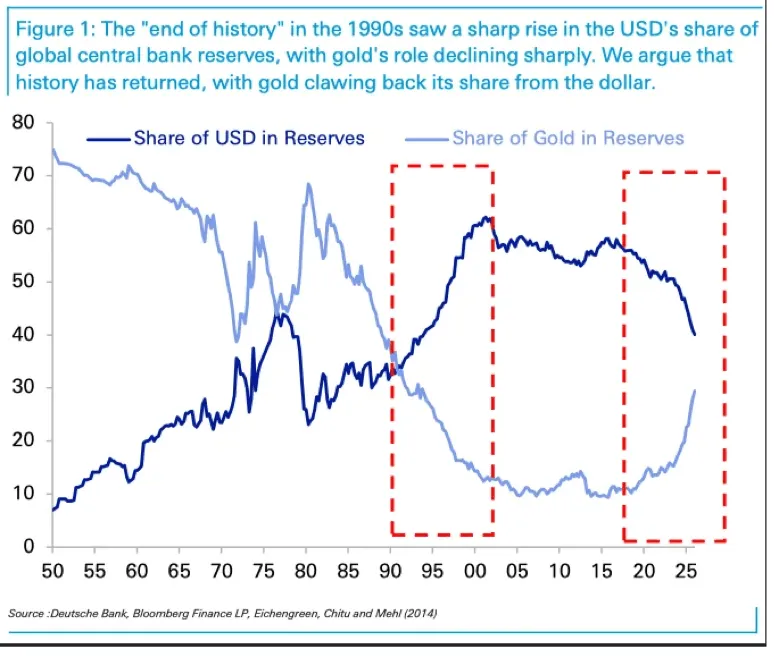
After the Cold War, the U.S. dominated global trade and finance. Central banks built large dollar reserves because the system was stable, inflation was low, and U.S. Treasuries were liquid and reliable. Gold became less important during this period. But Deutsche Bank believes that era, often called the “end of history,” is now reversing.
Geopolitical tensions are rising, and the U.S. is stepping back from parts of its global role. At the same time, events like the freezing of Russia’s reserves showed that dollar assets can be restricted. This has pushed many countries, especially in emerging markets, to rethink how they store their wealth.
Emerging market central banks are now the main buyers of gold. Since 2008, nearly all net central bank purchases have come from these countries. They are using gold to protect their savings and reduce reliance on the dollar. This shift is already showing up in reserve data. The dollar’s share of global reserves has fallen from over 60 percent to about 40 percent, while gold has risen to around 30 percent.
Deutsche Bank argues this trend still has room to continue. Before the 1990s, gold made up 40 to 70 percent of reserves. A return to even 40 percent would require significant additional buying, especially from emerging markets, which still hold relatively low gold allocations.
“Gold prices could still rise to $8000 over the next five years, if EM countries all target a 40% gold share.”
The report models different outcomes and finds that gold prices could rise sharply under these conditions. Even if overall reserves decline, continued buying could support a move toward that level.
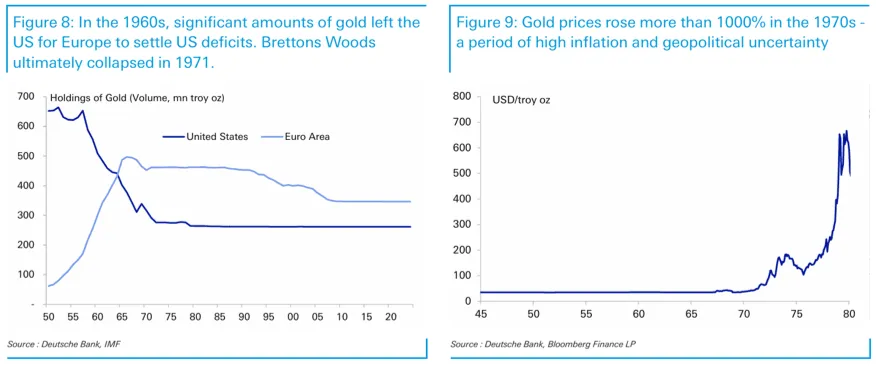
In the longer term, gold could take on a larger role in the global system. It may act as a neutral asset that helps countries build financial independence in a more fragmented world.