GFN – NEW YORK:
Gold’s resilience near record highs despite elevated real yields, Treasury market volatility, and foreign reserve diversification reflects a broader shift in sovereign reserve management as central banks increasingly treat bullion as strategic geopolitical insurance.
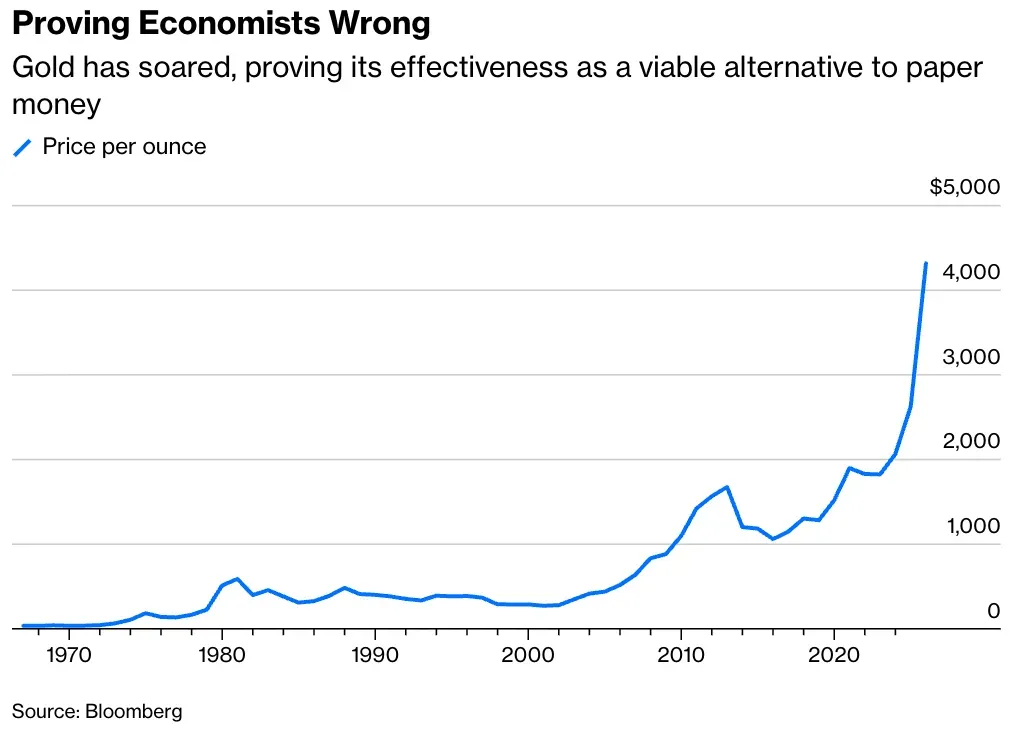
Gold has remained near $5,000 an ounce even as US Treasury yields have risen and foreign central banks have sold portions of their US government bond holdings to defend domestic currencies, a pattern that contrasts with prior crisis periods when safe-haven flows typically favored dollar-denominated debt (via BBG).
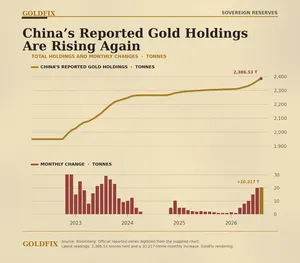
The divergence has reinforced market attention on structural demand from official-sector buyers, which have accumulated bullion at the fastest pace in decades as reserve managers reassess the role of sovereign assets in an increasingly fragmented geopolitical environment.
“Gold continues to benefit from sustained central bank demand and reserve diversification trends,” the World Gold Council said in recent commentary on official-sector purchases.
The shift follows record net central bank buying in 2022 and continued elevated purchases thereafter, led by institutions in emerging and non-aligned economies including the People’s Bank of China, the Reserve Bank of India, and the National Bank of Poland. Analysts have linked the change in reserve strategy in part to the 2022 freezing of Russian central bank assets by Western governments, an event widely viewed by reserve managers as increasing the political risk attached to dollar- and euro-denominated holdings.

Gold’s current strength also differs from earlier rallies that were primarily associated with retail investment flows or inflation hedging, with strategists noting that sovereign accumulation has become the dominant marginal driver of demand.
The metal’s performance during recent geopolitical disruptions, including the Iran conflict and associated Treasury market volatility, has further supported the view that bullion is increasingly being treated by central banks as a neutral reserve asset insulated from sanctions, counterparty exposure, and foreign monetary policy decisions. The trend points to an evolving reserve-management framework in which gold occupies a larger strategic role alongside traditional sovereign debt holdings within global monetary portfolios.