GFN – MUMBAI: India’s Securities and Exchange Board of India has introduced regulatory changes that expand mutual fund access to precious metals while shifting exchange-traded fund valuation away from London benchmarks, a move that may re-anchor pricing to domestic supply-demand conditions.
“ETFs must use domestic exchange-published spot prices rather than international benchmarks.”
“Mutual funds will be permitted broader allocations into non-core assets, including gold and silver ETFs.”
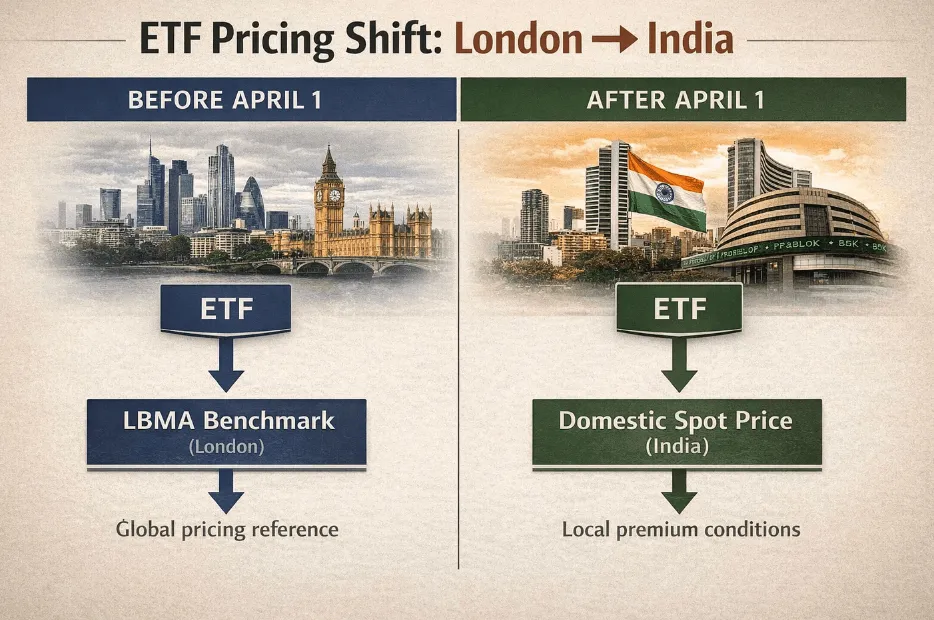
SEBI confirmed that mutual funds will gain expanded flexibility to allocate into gold and silver exchange-traded funds, while a separate circular effective April 1 mandates that ETF valuations reference domestic spot pricing rather than benchmarks linked to the London Bullion Market Association. The combined change introduces an institutional allocation channel that operates independently of London price discovery.
“Indian ETF net asset values will reflect domestic market conditions rather than LBMA-linked pricing.”
Under the revised framework, Indian mutual funds, which collectively oversee roughly ₹81 trillion in assets, can deploy capital into gold and silver ETFs as part of expanded portfolio flexibility rules. Market participants indicate that even modest allocation levels from this capital base could translate into material demand for both metals, particularly silver, where India already represents a dominant share of global physical imports.
“The valuation shift disconnects ETF pricing from London and anchors it to local supply-demand dynamics.”
Beginning April 1, funds will be required to calculate net asset values using domestic spot prices published by Indian exchanges. This change removes reliance on London benchmarks and ties ETF pricing to local conditions, where premiums to international prices frequently emerge during periods of tight supply.
“India imported approximately 180–190 million ounces of silver in 2025, reinforcing its role as a key physical demand center.”
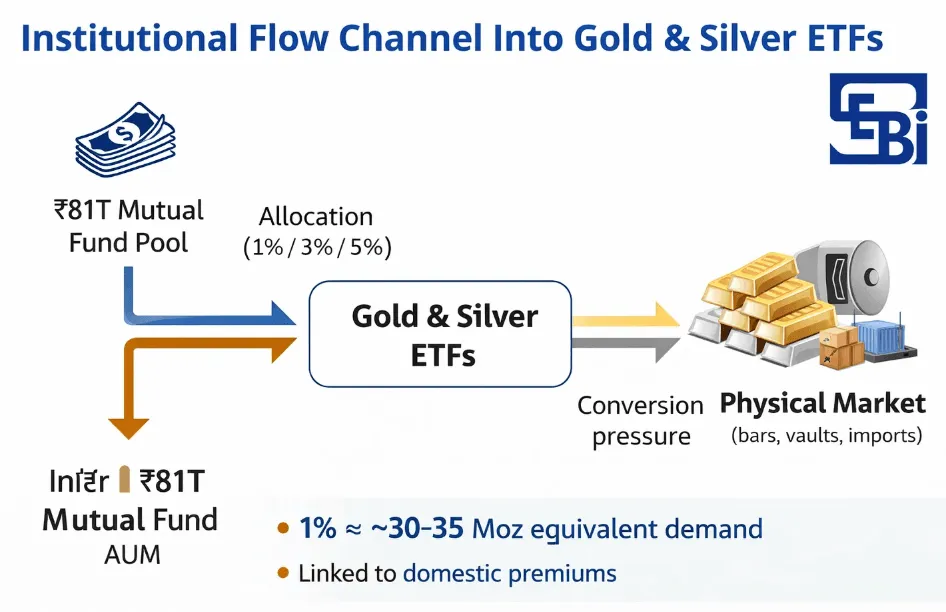
Analysts note that the transition may allow domestic demand dynamics to feed directly into financial product pricing, reinforcing India’s role in physical markets while reducing dependence on offshore benchmarks. The introduction of a regulated institutional allocation channel alongside localized pricing creates a framework in which gold and silver ETFs become a primary conduit for capital deployment, with valuations increasingly reflecting domestic rather than global benchmark conditions.