Central Banks Sell (More) US Treasuries
Foreign Official Selling Accelerates Post-Iran Shock
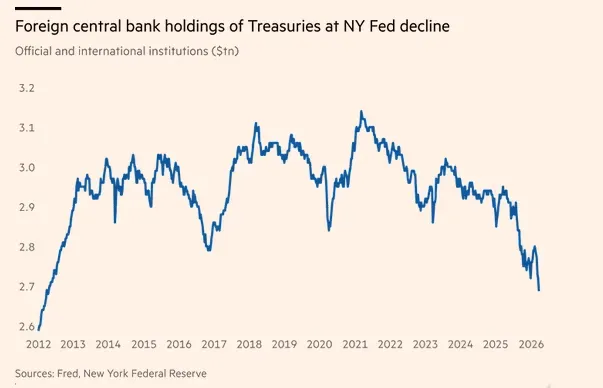
The Financial Times reports that foreign official institutions have sharply reduced their holdings of US Treasuries held in custody at the New York Federal Reserve, with balances falling to their lowest level since 2012. The decline totals $82 billion since late February, bringing holdings to approximately $2.7 trillion.
This movement coincides directly with the onset of the Iran conflict and the associated closure of the Strait of Hormuz, which triggered a surge in global energy prices and a broad strengthening of the US dollar.
“The foreign official sector is selling Treasuries.”
The reduction in holdings reflects a coordinated response among central banks and sovereign institutions facing rising dollar funding needs and currency pressures.
Energy Shock Transmits Through Reserve Behavior
The report identifies oil-importing economies as the primary drivers of the selling activity. Countries such as Turkey, India, and Thailand are highlighted as likely participants, as higher oil prices increase demand for US dollars, which are required for energy imports.
Central banks in these economies are simultaneously managing two pressures: rising import costs and weakening domestic currencies.
“A number of countries . . . don’t want their currencies to weaken further because it pushes up the local currency price of oil.”
The mechanism is straightforward. To stabilize their currencies and finance higher energy imports, central banks liquidate reserve assets. Treasuries, as the most liquid reserve instrument, become the primary source of funds.
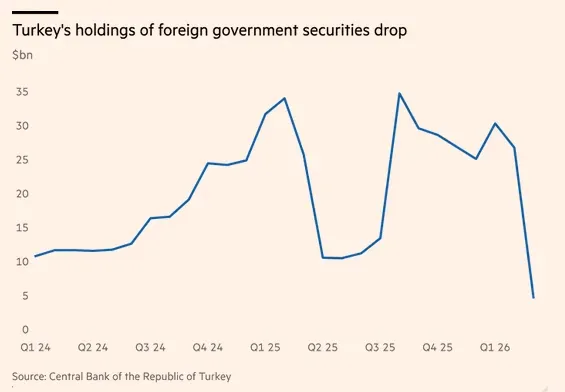
Turkey provides a concrete example, having sold $22 billion in foreign government securities since late February, with a significant portion likely consisting of US Treasuries.
FX Intervention and Dollar Dynamics
The selling also reflects active foreign exchange intervention. Central banks defending their currencies must sell dollar-denominated assets to acquire local currency liquidity or directly intervene in FX markets.
This dynamic reinforces a feedback loop: stronger dollar leads to higher local currency oil prices, which in turn forces further reserve liquidation.
The report notes that even where direct Treasury sales are not confirmed, declines in FX reserves across multiple countries indicate similar pressure dynamics.
Treasury Market Absorbs Official Outflows Amid Rising Yields
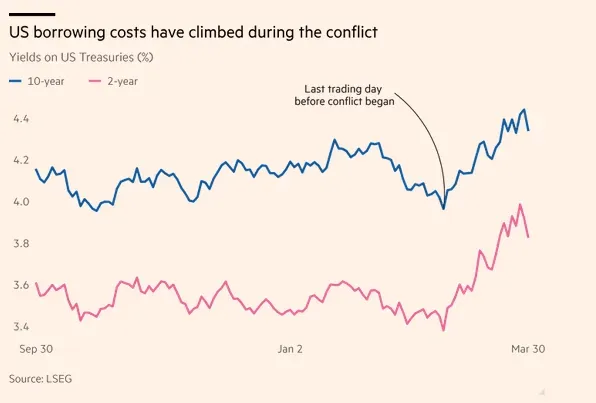
The timing of these sales is notable given concurrent stress within the Treasury market. Yields on both short- and long-term US government bonds have risen sharply, reflecting investor concern over inflationary pressures tied to the Middle East conflict.
Foreign official selling adds an additional layer of supply into a market already adjusting to higher inflation expectations and elevated borrowing needs.
“They are pulling in rainy-day money.”
This characterization suggests that central banks are not repositioning portfolios tactically, but rather drawing down reserves to manage immediate macroeconomic stress.
Oil Exporters and Secondary Effects
While the report focuses primarily on oil-importing nations, it also notes that some oil-exporting countries in the Middle East may be selling Treasuries to offset revenue disruptions or fiscal needs. However, their role is described as secondary given their smaller share of total Treasury holdings.
Structural Context: Reserve Diversification Continues
The observed selling occurs within a longer-term trend of declining foreign official participation in the Treasury market. Reserve managers have increasingly diversified away from dollar assets in recent years.
“Foreign reserve managers and official accounts are diversifying away from Treasuries.”
This structural shift has gradually increased the importance of private sector demand in absorbing US government debt issuance.
Interpretation of Custody Data
The report cautions that not all declines in Fed custody holdings necessarily reflect outright sales. Some assets may have been transferred to alternative custodians.
However, analysts emphasize that the magnitude and timing of the decline remain significant, particularly given the expansion of the Treasury market since 2012.
Synthesis: Liquidity Stress, Not Strategic Rotation
The data points to a coordinated, liquidity-driven response among foreign official institutions. The combination of higher energy costs, currency pressure, and dollar strength has forced central banks to mobilize reserves.
Treasuries, as the most liquid and scalable reserve asset, have become the primary adjustment mechanism.
The result is a short-term increase in Treasury supply entering the market at a time when yields are already rising, alongside a continuation of the longer-term trend toward reserve diversification.