Venezuela is sending gold back into the Western supply chain. A new deal between state miner Minerven and commodity trader Trafigura will ship up to 1,000 kilograms of gold dore to U.S. refineries, reopening a trade route dormant for years and hinting at a broader hemispheric realignment in resource flows and settlement infrastructure.
TL;DR
- U.S.–Venezuela gold deal: Minerven will sell 650–1,000 kg of gold dore to Trafigura for shipment to U.S. refineries.
- Supply chain reopening: Venezuelan gold returns to a formal Western refining route after years of opaque export channels.
- Trader as system node: Trafigura links mining output, logistics, and financial markets, turning dore into tradable bullion.
- Strategic signal: Flow suggests a Western Hemisphere resource bloc, with Latin America supplying resources and North America anchoring refining and finance.
The Reopening of Venezuelan Gold Flows
A new commercial agreement involving Venezuelan gold exports signals the reopening of a trade channel that had largely disappeared during years of sanctions and political instability. According to reporting from Axios and Reuters, Venezuela’s state mining company has agreed to supply a shipment of gold dore bars destined for refining in the United States.
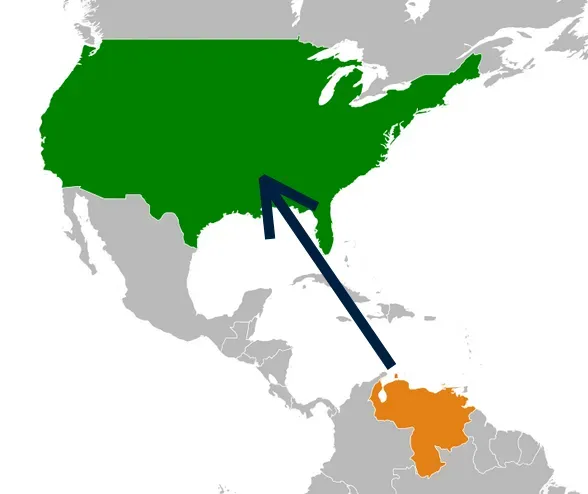
The arrangement involves Venezuela’s state-owned mining firm Minerven, which has signed a deal to sell between 650 and 1,000 kilograms of gold dore to global commodities trader Trafigura. The shipment will ultimately be processed at U.S. refineries.
The transaction was reportedly facilitated through discussions involving officials from the United States Department of the Interior, including Interior Secretary Doug Burgum, who visited Venezuela as part of a broader effort to explore investment opportunities in the country’s natural resource sectors.
“Venezuela’s state-owned mining company has signed a deal to sell as much as 1,000 kg of gold dore bars to commodities trader Trafigura for the U.S. market.”
The quantity involved equates to roughly 32,150 troy ounces of gold. At current market prices above $5,000 per ounce, the shipment represents a transaction valued in excess of $160 million.
Dore and the Refining Chain
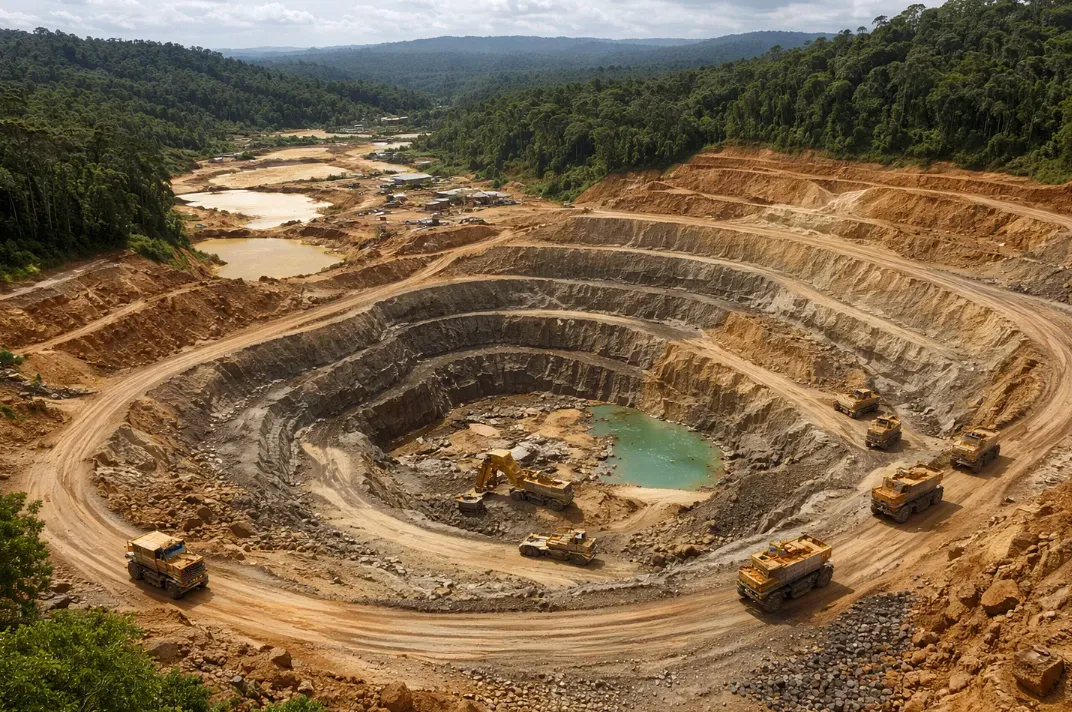
The material involved in the transaction is gold dore, a semi-refined form of gold produced at mining operations. Dore bars typically contain significant proportions of gold and silver along with other trace metals and must undergo further refining before they can be converted into standard bullion bars used in global financial markets.
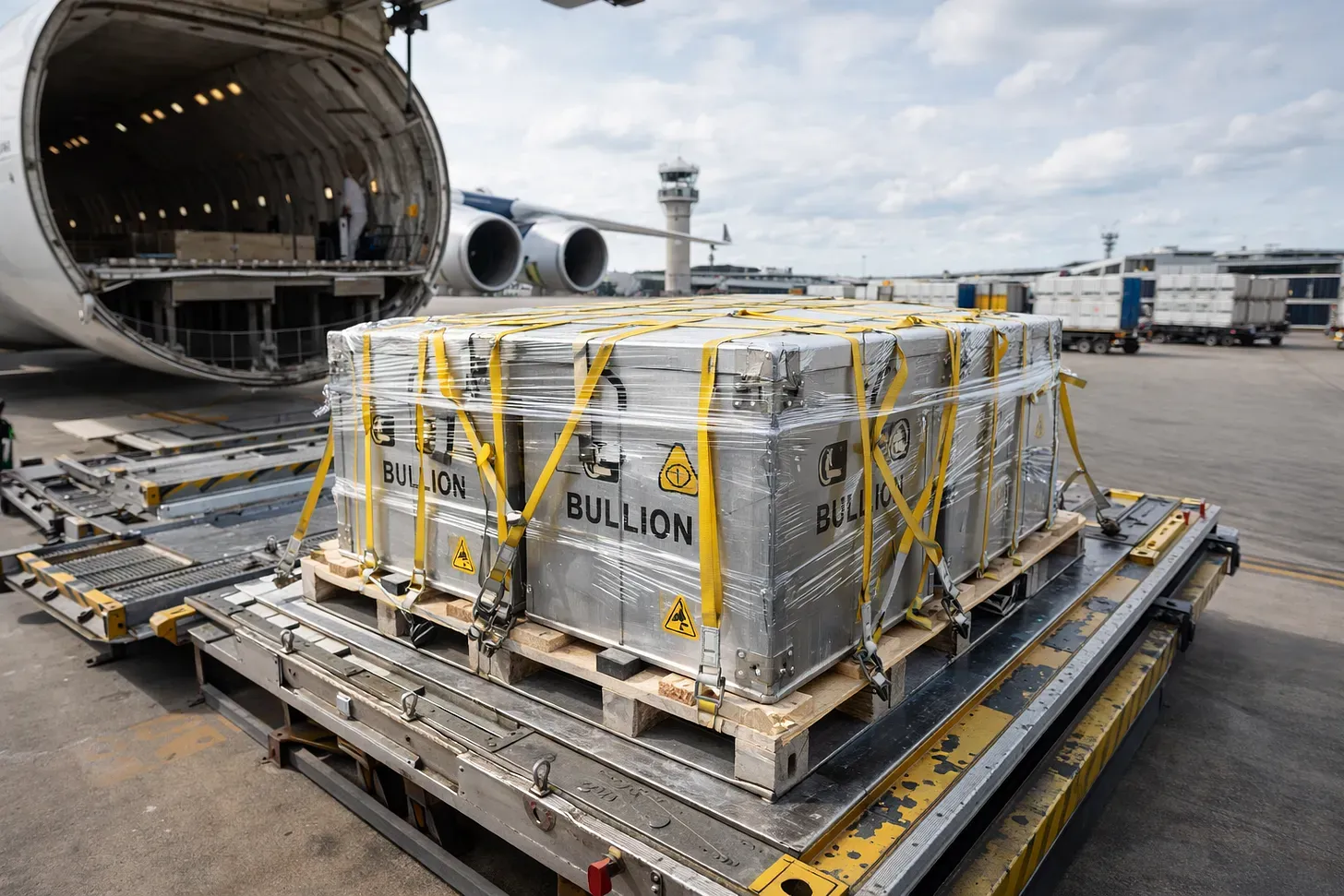
Under the agreement, Trafigura will take delivery of the dore bars and arrange their shipment to refineries located in the United States, where the material will be processed into high-purity gold suitable for investment or industrial use.
“Trafigura will ship the gold to U.S. refineries under a separate arrangement with the U.S. government.”
In the global bullion ecosystem, dore flows represent the earliest stage of the supply chain connecting mining production to the refined bars traded across major financial centers.

The Return of Western Commercial Access
The shipment also reflects a broader shift in Venezuela’s resource sector following the political transition that removed former president Nicolás Maduro earlier in 2026.
For years, sanctions and financial restrictions limited Venezuela’s ability to sell gold through Western financial channels. Instead, Venezuelan gold production often moved through informal or opaque trading routes, including sales to intermediaries operating outside the traditional bullion market.
The new agreement signals the reopening of a formal commercial pathway connecting Venezuelan mining output with Western refining infrastructure.
The agreement represents one of several resource-sector arrangements linked to efforts to rebuild Venezuela’s oil and mining industries following the country’s political transition.
Although the initial shipment volume is relatively modest by global mining standards, the development is notable because it establishes a precedent for future bullion exports from Venezuela into Western markets.
Commodities Traders as Intermediaries
The role of Trafigura in the transaction illustrates the continued importance of large commodity trading houses in the global metals trade.
These firms often function as intermediaries between mining operations and the downstream refining or financial sectors. Their logistical capabilities allow them to arrange transportation, financing, and hedging for shipments that move across international borders.
In the context of Venezuela’s reopening resource economy, commodity traders are likely to play a central role in reconnecting domestic production with global supply chains.
Early Signal of Sector Reengagement
The agreement involving Minerven and Trafigura represents an early example of renewed Western engagement with Venezuela’s mining industry.
Gold production has long been one of the country’s secondary resource sectors alongside oil. However, the industry suffered from underinvestment, sanctions, and political instability during the past decade.
The new export arrangement suggests that international trading firms and Western refiners are beginning to re-establish commercial relationships with Venezuelan producers as the country’s resource economy is reorganized.
Structural Significance
At a surface level, the transaction represents a single gold shipment.
At a structural level, it reflects the re-opening of a supply chain linking Venezuelan mining output with the Western bullion refining system. Should the arrangement expand into larger volumes, it could mark the beginning of a broader normalization of Venezuelan gold flows within global metals markets.
For now, the agreement stands as an early indicator that Venezuela’s mining sector may once again begin integrating with international commodity trade networks.

Analysis: Strategic Context
The Venezuelan gold shipment is modest in size, but its significance lies in the direction of the flow and the structure surrounding it. The transaction suggests the re-emergence of a hemispheric resource architecture anchored in U.S. financial and industrial infrastructure.
For much of the past decade, Venezuelan gold moved through opaque routes tied to buyers in Turkey, the Middle East, and parts of Asia. The new arrangement redirects those flows toward U.S. refining capacity through the intermediary role of Trafigura, with gold dore produced by Minerven ultimately entering the Western bullion supply chain.

This shift aligns with a broader geopolitical pattern. Washington appears increasingly focused on consolidating commodity access within the Western Hemisphere. Energy, minerals, and industrial metals across Latin America are gradually being integrated into supply networks tied to North American capital markets and industrial capacity. In strategic terms, this resembles a modern expression of the Monroe Doctrine, implemented through economic integration rather than military enforcement.
Gold occupies a unique role within this framework. Unlike most mined commodities, it functions both as a physical resource and as a financial asset. Once dore is refined into standard bullion bars, it becomes eligible for vaulting, collateralization, and settlement within global financial markets.
Historically, gold has often acted as a bridge between commodity production and monetary settlement, particularly during periods of geopolitical fragmentation or sanctions. When traditional financial channels become constrained, gold frequently reappears as a neutral asset capable of settling cross-border trade.
The Venezuelan shipment therefore illustrates more than a reopening of mining exports. It highlights the potential re-integration of gold into commodity payment chains. Refined bullion can circulate through financial markets, serve as collateral, or facilitate settlement between counterparties operating across different financial systems.
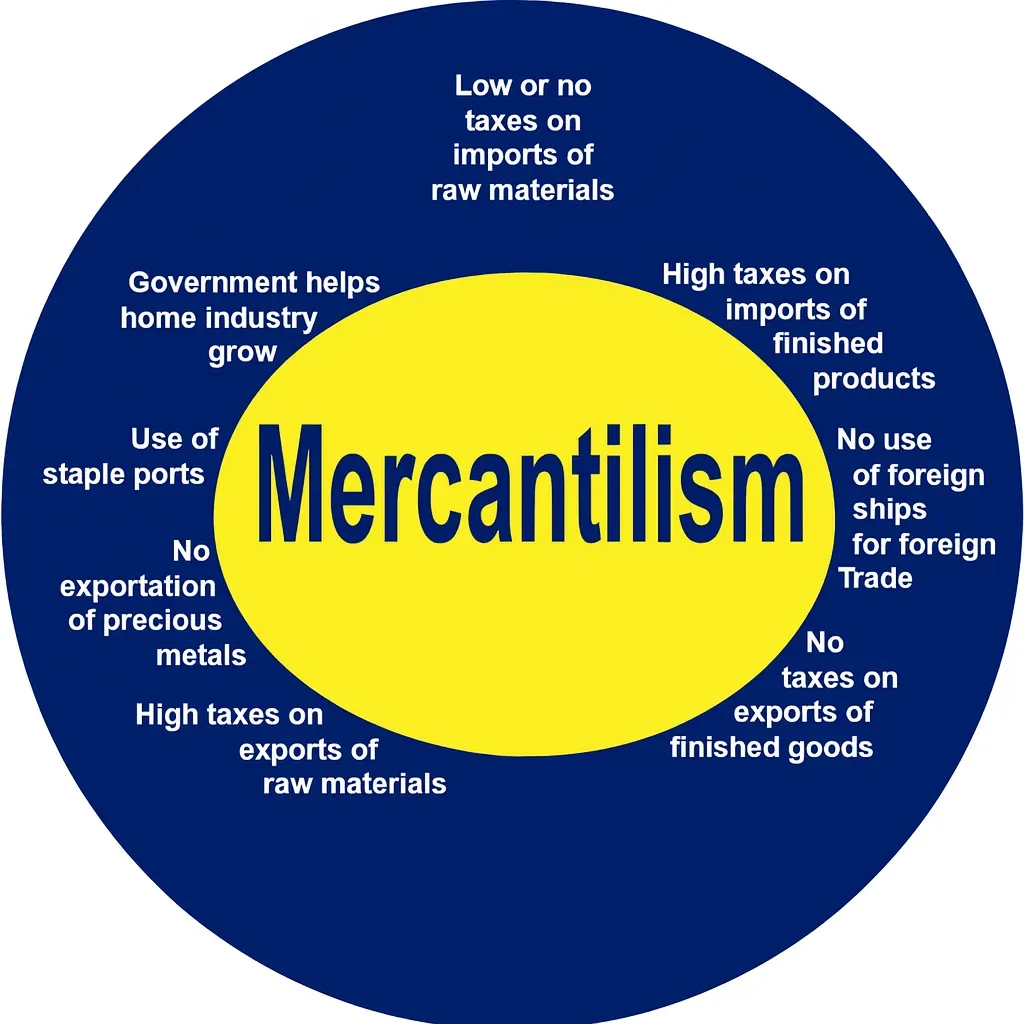
The involvement of large commodity traders further reinforces this structure. Firms such as Trafigura operate as system nodes connecting upstream extraction, midstream logistics, and downstream financial markets. In doing so, they transform raw commodities into globally tradable financial assets.
Viewed through that lens, the Venezuelan deal becomes an early signal of a broader structural shift. The United States may be gradually consolidating access to natural resources across the Americas while simultaneously anchoring the financial processing of those resources within its own markets.
Latin America provides upstream production. North America provides refining capacity, capital, and financial infrastructure. Commodity traders bridge the two as is the way in a mercantile coproratist world
The shipment itself is small. The architecture it hints at is considerably larger.