Gold sits inside the commodity complex, but the World Gold Council argues that investors should not treat it like a conventional commodity allocation. Its latest report Gold: the most effective commodity investment (see attached at bottom), finds that gold differs from energy, industrial metals, and agriculturals in its supply structure, sources of demand, liquidity, and behavior across economic cycles. Those differences have historically translated into stronger long-term returns, lower vol, better diversification, and more consistent protection during periods of market stress.
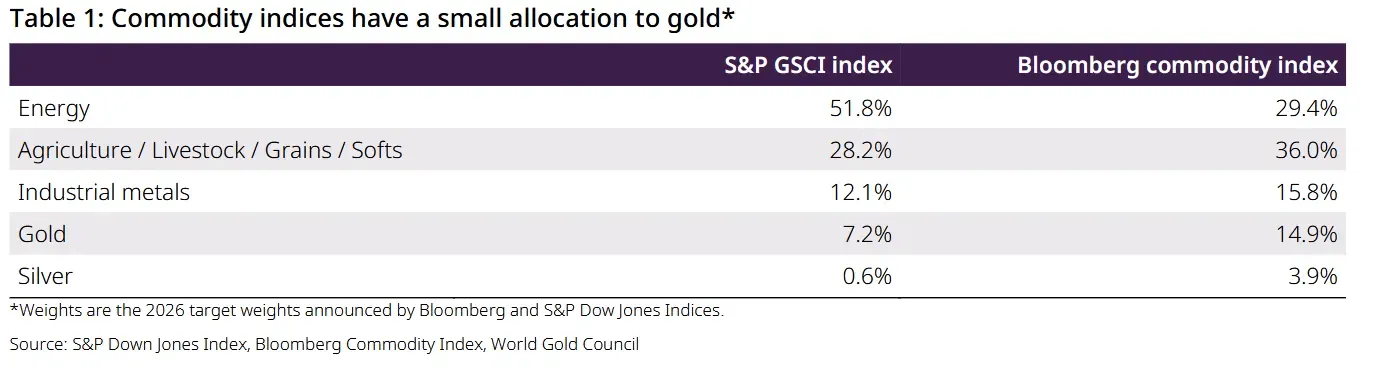
The report argues (and we agree) gold is underrepresented because conventional commodity indices don’t fully capture the depth or structure of its market. The S&P GSCI gives gold a 7.2% weighting and the Bloomberg Commodity Index 14.9%, but those methodologies rely heavily on futures and/or production. Gold also trades through large OTC and ETF markets and has an enormous above-ground stock that can continuously be recycled, sold and reallocated. Index weights can thus understate gold’s strategic portfolio role.
Gold is Different Than The Others
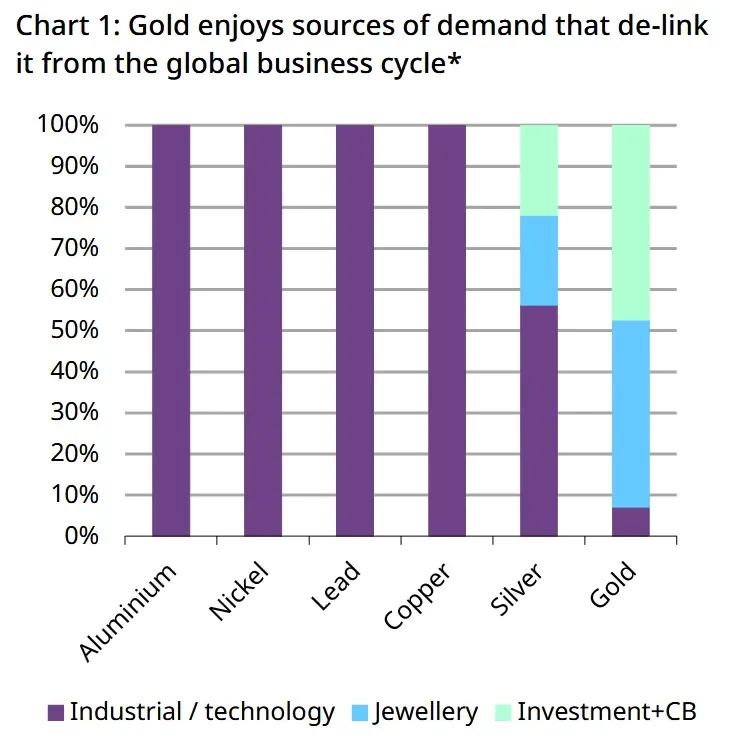
Most commodities are closely tied to the business cycle because industrial consumption dominates demand. Gold is different. It functions simultaneously as a consumer good, investment asset, and central-bank reserve. Jewelry and technology demand tend to strengthen during economic expansion, while investment and official-sector demand can rise during uncertainty. The combination gives gold both pro and counter-cyclical sources of demand and makes it less dependent on any single phase of the business cycle.
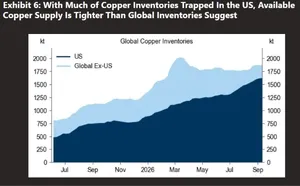
Supply behaves differently as well. Energy, copper, adn agriculturals depend heavily on inventories to bridge production and consumption. When inventories become scarce, prices can rise sharply. Gold is not consumed in the same way. Its above-ground stock is enormous relative to annual mine production, so its price is less dependent on short-term scarcity. More than any other commodity Gold’s price is demand-driven. Its supply is known. As one Bullion Bank said: ‘You can’t pump more gold out of the ground, but you can bid it out of unsuspecting hands’
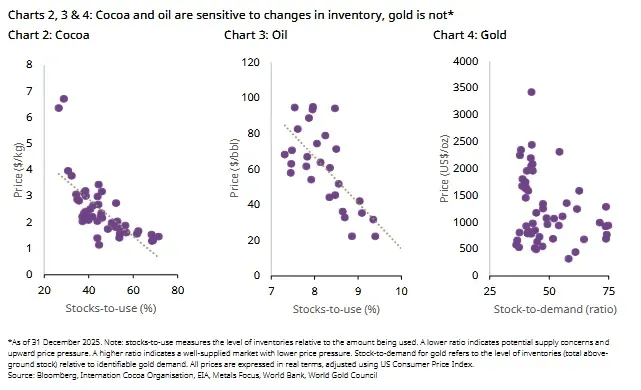
The report outlines the three major advantages Gold has over other commodities.
- Stronger Returns
- Better Diversification in Crisis
- Liquidity when it is needed
1- Stronger Returns and Less Contango
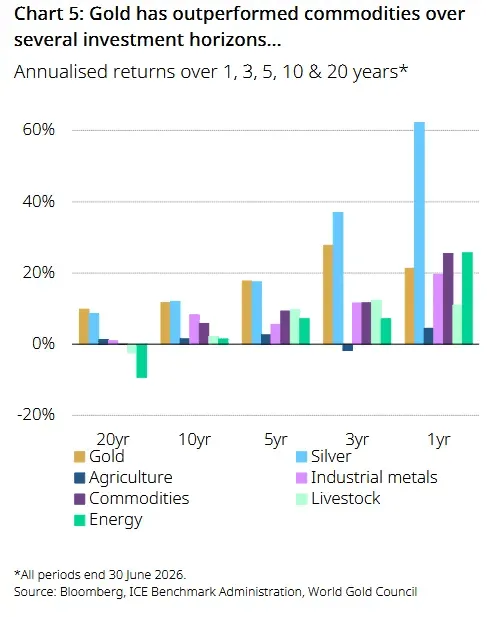
The first major investment advantage is performance. Gold has outperformed broad commodity indices and most commodity subsectors over the past three, five, ten, and twenty years (see chart below) through June 2026. Over the longest horizon, several commodity sectors generated negative returns, while gold remained positive. The report acknowledges that gold can underperform over shorter periods, but its longer-term record has been considerably stronger.
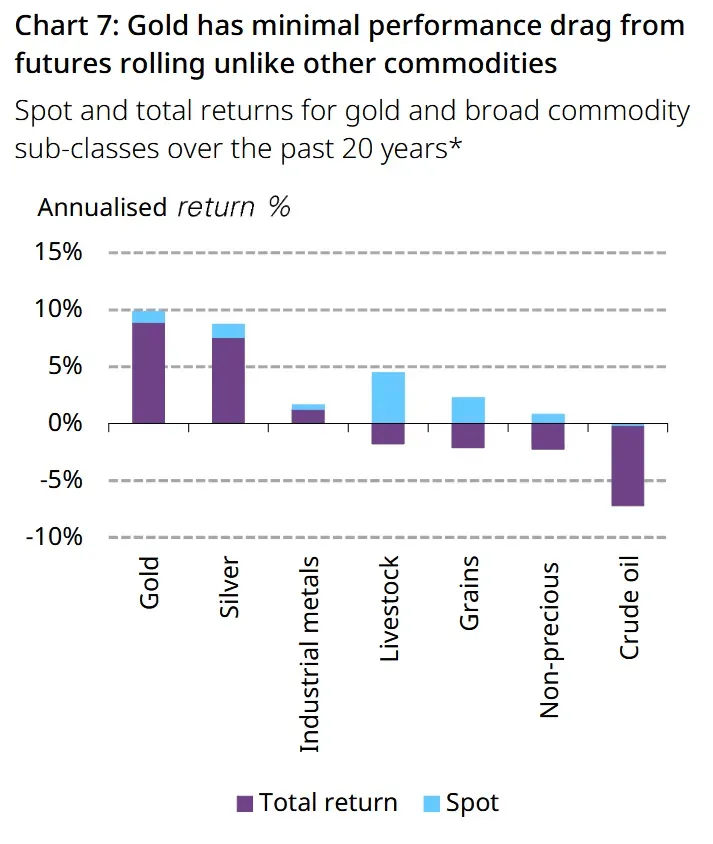
Part of that difference comes from futures-market structure. Commodity investors can face substantial roll costs when futures curves trade in contango. Gold’s large above-ground inventory, low storage costs and limited convenience yield have historically produced a much flatter futures curve. Between June 2006 and June 2026, gold returned 9.9% annually in spot terms and 8.9% through futures. Oil generated a negative 0.2% spot return and negative 7.2% futures return over the same period after rolling and collateral effects.
2- Diversification in Crisis
Gold’s second major advantage is diversification. Its correlation with other commodities and financial assets has historically been low, but the report emphasizes that the relationship changes with market conditions. During stronger economic periods, gold can rise alongside equities as consumer demand improves. During risk-off periods, investment demand can take over and gold’s correlation with equities tends to fall.
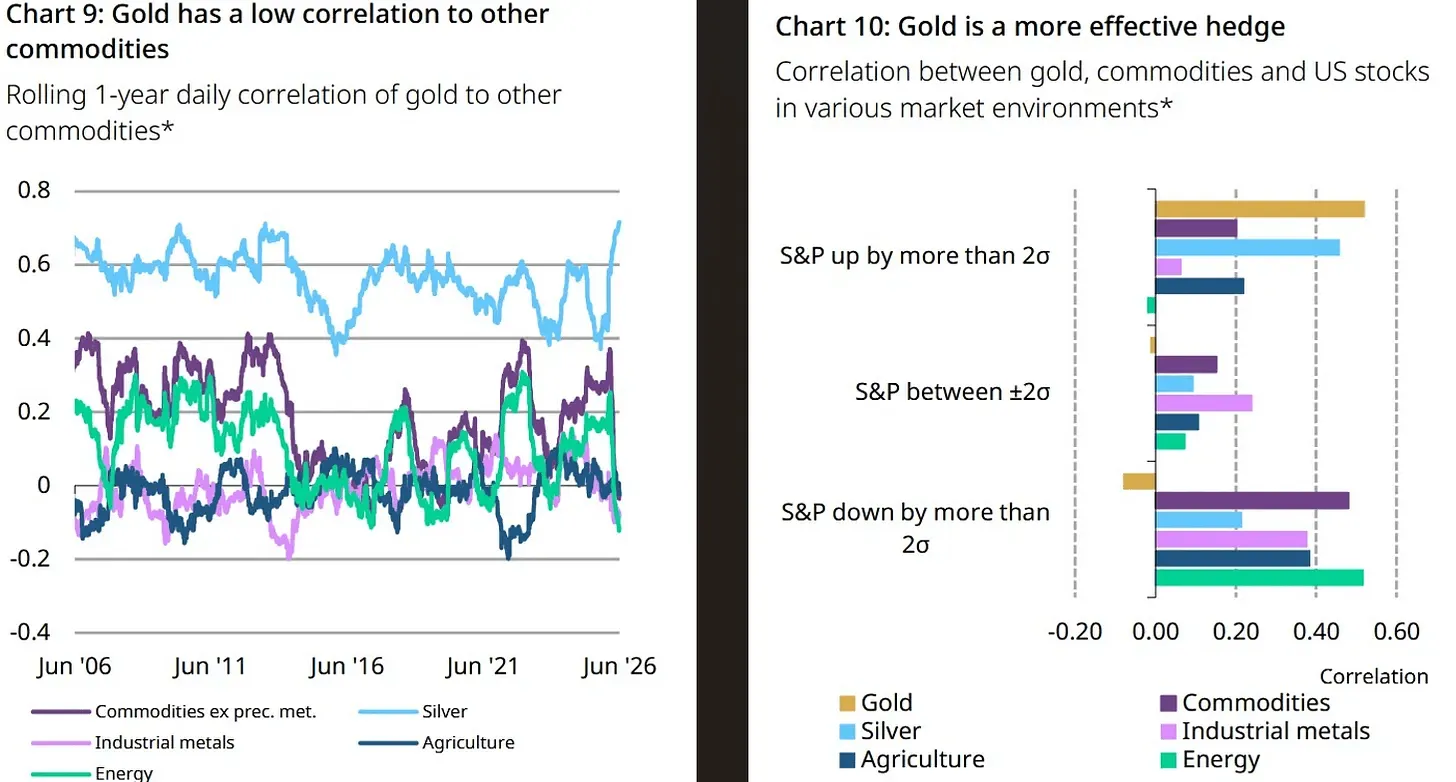
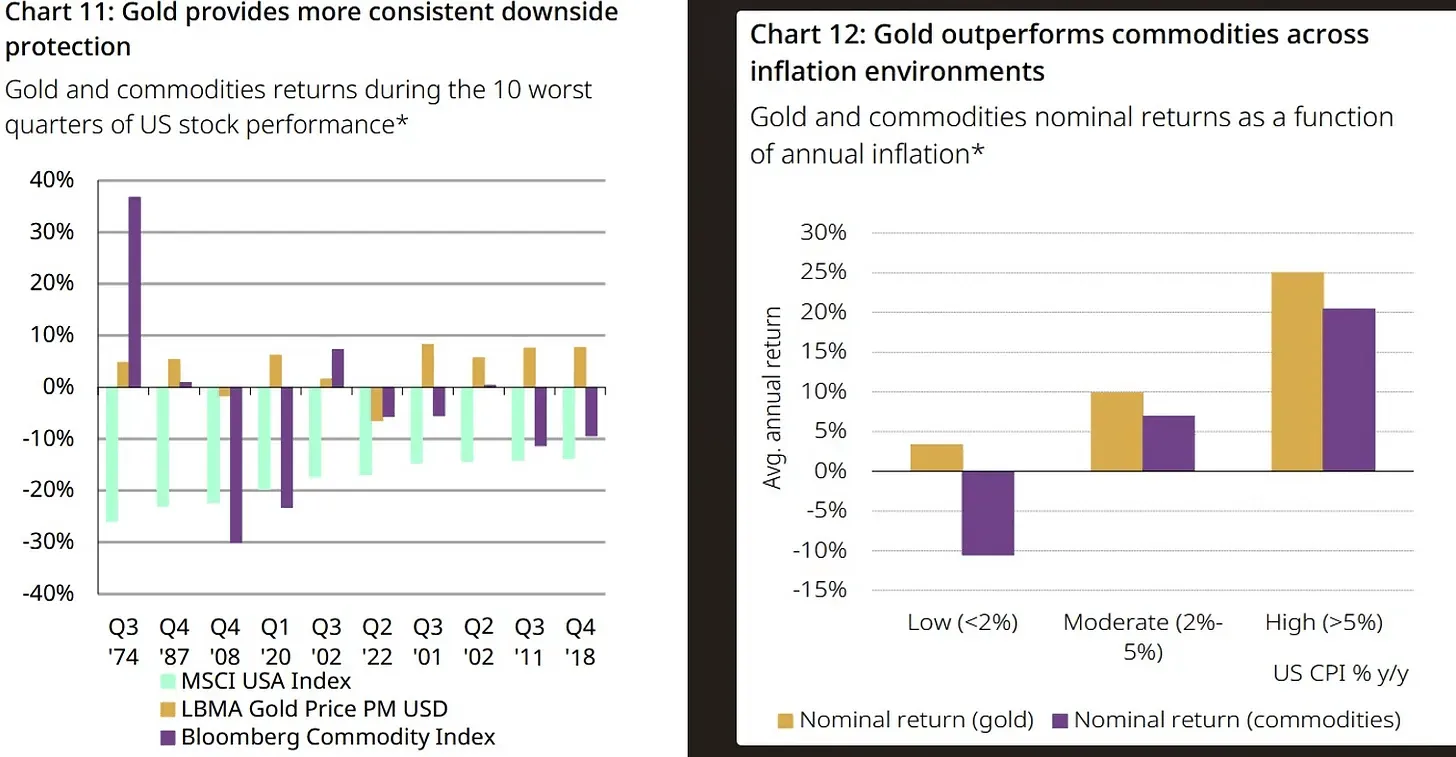
That behavior has been visible during major market selloffs. In the fourth quarter of 2018, the MSCI USA Index fell 14% and commodities declined 9%, while gold gained 8%. During the first-quarter 2020 COVID selloff, US equities fell 20% and commodities dropped 23%, while gold returned 6%. The Council uses these episodes to illustrate how broad commodities can behave like risk assets during stress while gold has historically provided more consistent downside protection.
“Gold, however, can do much more.”
The inflation record shows a similar distinction. Commodities have traditionally performed well when inflation is high, but the Council finds that gold has performed better during high-inflation periods while also remaining positive when inflation is low. Broad commodities, by contrast, historically produced negative nominal returns in low-inflation environments.
3- Institutional Liquidity
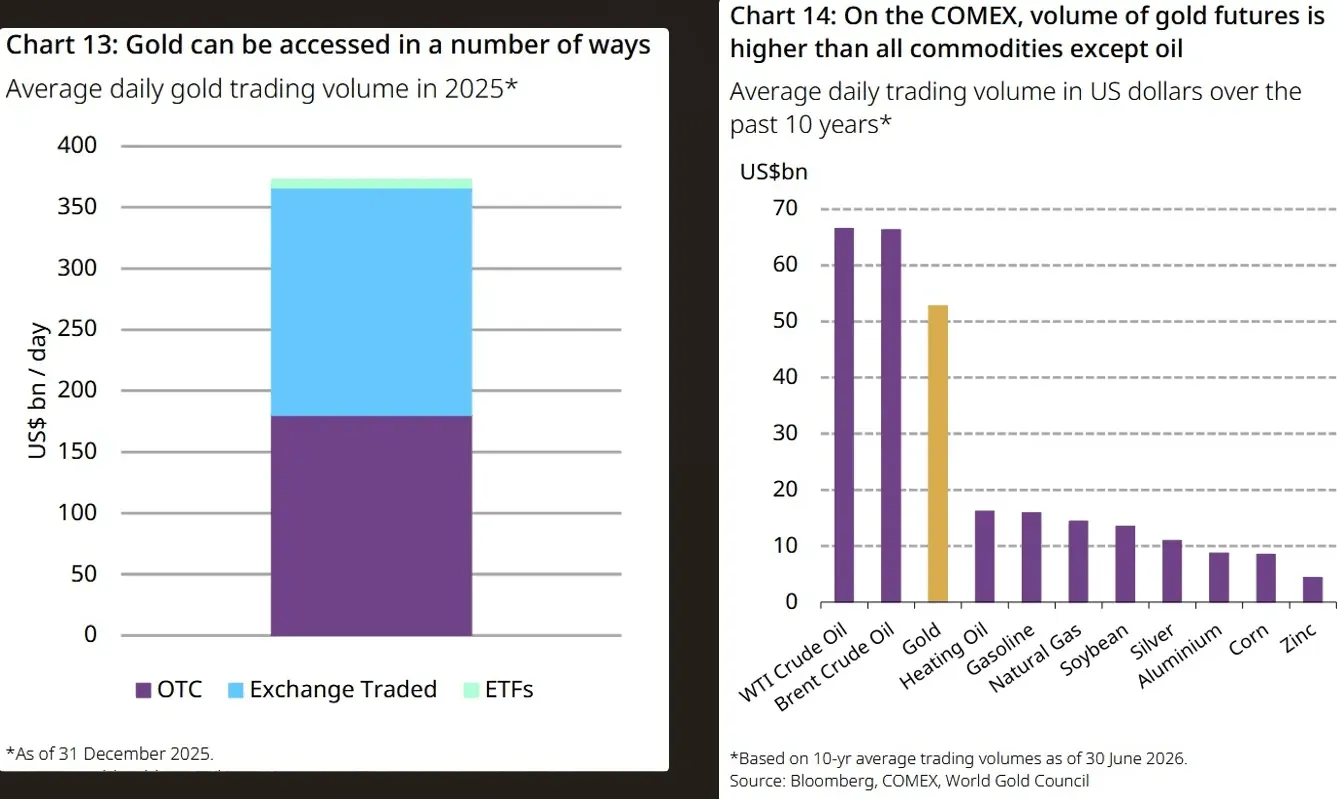
Liquidity provides another important distinction. Global gold trading averaged approximately $373 billion per day in 2025, including about $186 billion in futures, $180 billion in OTC activity and $7.2 billion in physically backed ETFs. On COMEX alone, gold futures averaged roughly $53 billion of daily turnover over the past decade, second only to oil among major commodities.
“Gold is liquid.”
Gold Does More
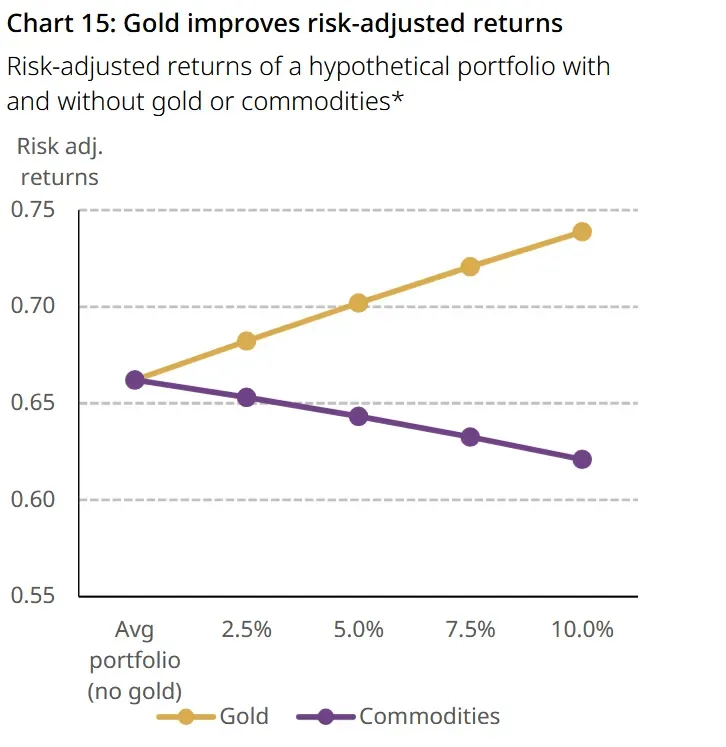
The portfolio analysis provides the clearest distinction. Commodity exposure is generally less than 10% of portfolios, and gold frequently represents only a small portion of that allocation. The Council estimates that many portfolios therefore have less than 1% direct exposure to gold. Its historical modeling finds that simply increasing broad commodity exposure would not have improved risk-adjusted returns over the past twenty years. Adding gold did.
In the hypothetical portfolio, a 5% gold allocation improved returns and reduced volatility and maximum drawdowns across three-, five-, ten- and twenty-year periods. Over twenty years, the portfolio with gold generated a 7.9% annualized return versus 7.8% without gold, while volatility declined from 11.8% to 11.3% and the maximum drawdown improved from negative 41% to negative 38.6%.
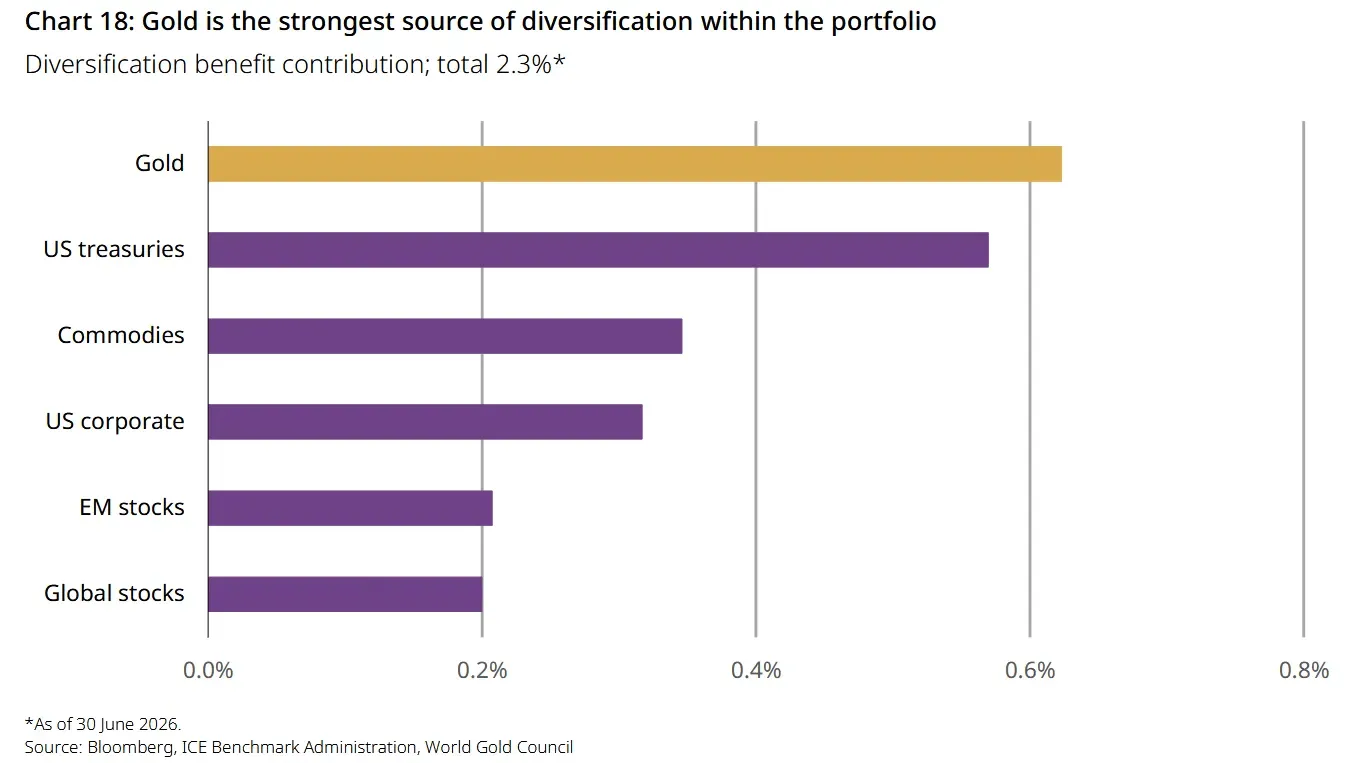
More significantly, the Council calculates that a 5% gold allocation supplied 28% of the portfolio’s total diversification benefit, the largest contribution of any asset. A comparable 5% commodity allocation contributed 15%.
Gold Should Stand Separate From Other Commodities
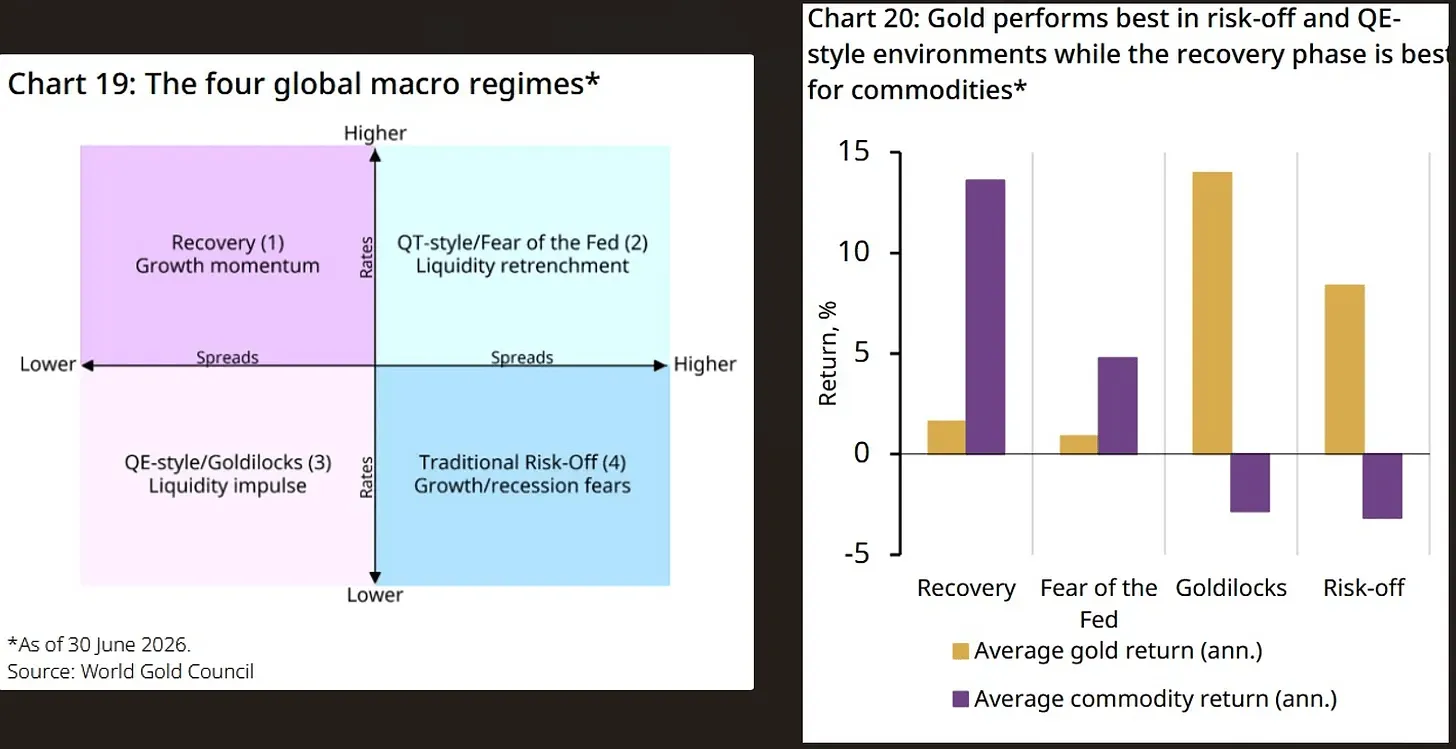
The Council concludes by dividing markets into four environments based on movements in yields and corporate spreads:
- QE-style
- Goldilocks,
- Fear of the Fed,
- Recovery and Risk-off.
Gold historically performs best during Risk-off and Goldilocks periods, while broad commodities perform best during economic recovery characterized by stronger growth, rising inflation and higher interest rates.
The important distinction is consistency. Gold generated positive historical returns across all four regimes, while commodities performed strongly during recovery but poorly during recessionary environments.
“Gold may be a commodity, but it is not a typical one.”
The report conclusion is that gold and commodities should not be viewed as interchangeable exposures. Gold’s large above-ground stock, diverse demand structure, limited roll costs, deep liquidity, and changing correlation with financial assets give it characteristics that broad commodity indices do not reproduce. For strategic investors, the WGC argues that gold is better treated as a distinct portfolio allocation that complements commodity exposure rather than simply another component within it.