Repositioning Silver in a Fragmenting System
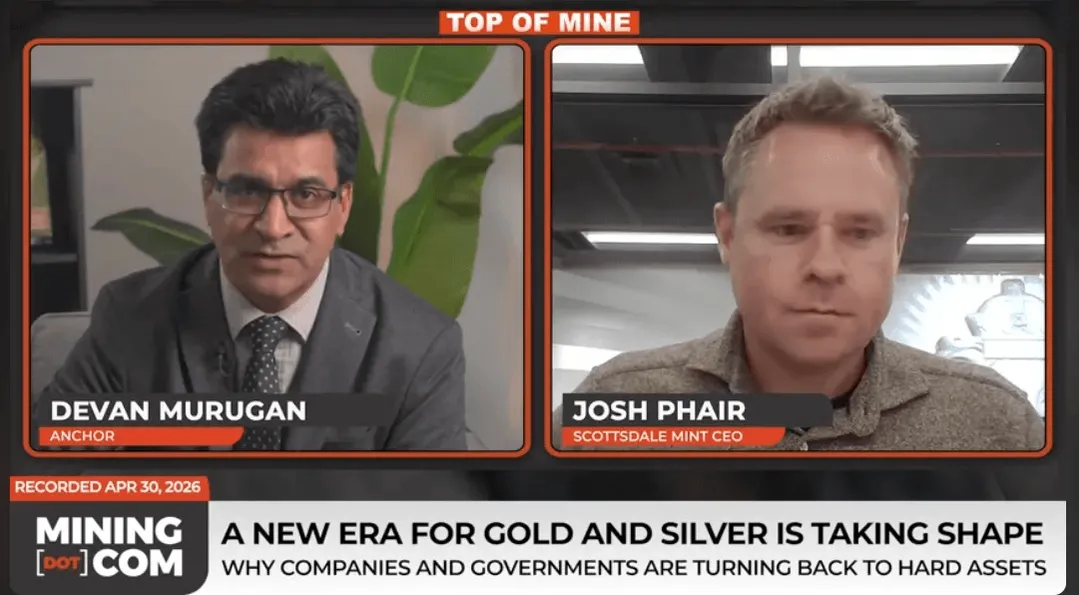
Recently Josh Phair, CEO at Scottsdale metals sat down with Devan Murugan at Mining.com for an interview covering breaking events in precious metals.
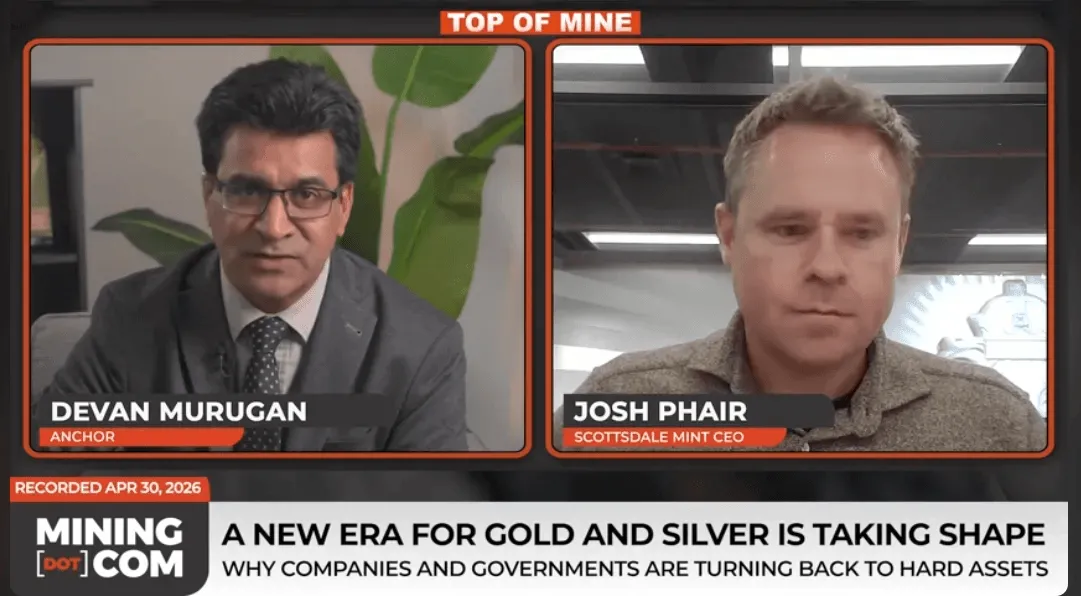
In the interview with Josh discussion centers on the reclassification of precious metals, particularly silver, within a global system undergoing structural change. The discussion opens with a direct framing: ownership of hard assets is becoming strategically relevant as governments compete for resources while expanding fiat supply . Within this context, metals are positioned as instruments of stability rather than passive stores of value.
Silver: From Byproduct to Strategic Asset
Josh states that silver is no longer functioning as a secondary monetary metal. It now operates across three domains simultaneously: industrial input, investment vehicle, and strategic reserve. The designation of silver as a critical mineral by the United States reinforces this shift, aligning it with national security and supply chain policy. He further notes that global feedstock flows are changing, with refining and processing increasingly concentrated in specific jurisdictions, creating localized shortages and logistical friction.
Corporate Balance Sheets and the Return of Physical
The partnership between Hyperscale Data and Scottsdale Mint is presented as a case study in evolving treasury strategy. Josh describes this as a transition toward “war chest” accumulation, where companies hold physical metals alongside digital assets such as Bitcoin. The rationale is twofold: metals serve as both operational inputs for emerging industries like AI and robotics, and as balance sheet assets that retain value under uncertain monetary conditions. This marks a departure from purely financialized exposure toward direct ownership.
Market Structure and Price Formation
Josh attributes the disconnect between physical tightness and price behavior to the structure of the market itself. Banks finance production, prepay for output, and intermediate distribution, embedding themselves across the supply chain. As a result, pricing remains influenced by paper markets, where positions often reflect hedging and inventory management rather than immediate physical scarcity. Over time, he suggests, this structure does not eliminate price discovery but delays its expression.
Toward a Monetary Reset Framework
The interview concludes with a forward-looking assessment. Josh frames current conditions as indicative of a broader monetary transition, where confidence in fiat systems is eroding and asset ownership is being reconsidered. Within this framework, gold and silver are positioned as foundational components of a restructured system. Silver, in particular, is identified as structurally supported by persistent supply deficits and expanding industrial demand, with price volatility viewed as a function of transition rather than instability.

Chapters:
- 00:00 — Why hard assets matter now
- 00:15 — Silver’s new role in global markets
- 02:39 — The Hyperscale partnership explained
- 06:13 — Companies rethink treasury strategy
- 08:24 — Silver deficit and supply pressure
- 10:41 — Who really sets the silver price?
- 19:34 — Monetary reset and silver outlook