How many paper ounces back each real ounce, what registered vs eligible means, and the settlement stress that gaps the price.
Contents
- TL;DR: paper vs physical silver
- What “paper silver” actually is
- The ratio that matters
- Registered vs eligible: reading COMEX inventory
- Where the real metal sits: COMEX vs LBMA
- Why the market can break
- The early-warning signals
TL;DR: paper vs physical silver
“Paper silver” is a claim on metal: a futures contract, an option, an unallocated account, an ETF share. “Physical silver” is the bar itself. Most of the time the two trade interchangeably, which is why the paper market can be many times larger than the metal behind it. The system breaks when a meaningful slice of paper holders demand delivery and there isn’t enough deliverable metal to serve them, a settlement stress that shows up as a violent price move long before any vault literally empties.
This note is the paper-vs-physical layer specifically: what the ratio is, how COMEX inventory buckets actually work, and why a stressed market gaps. For the full picture (the deficit math, COMEX vs LBMA inventories, and the gold/silver ratio), start with our pillar on the silver squeeze, explained.
What “paper silver” actually is
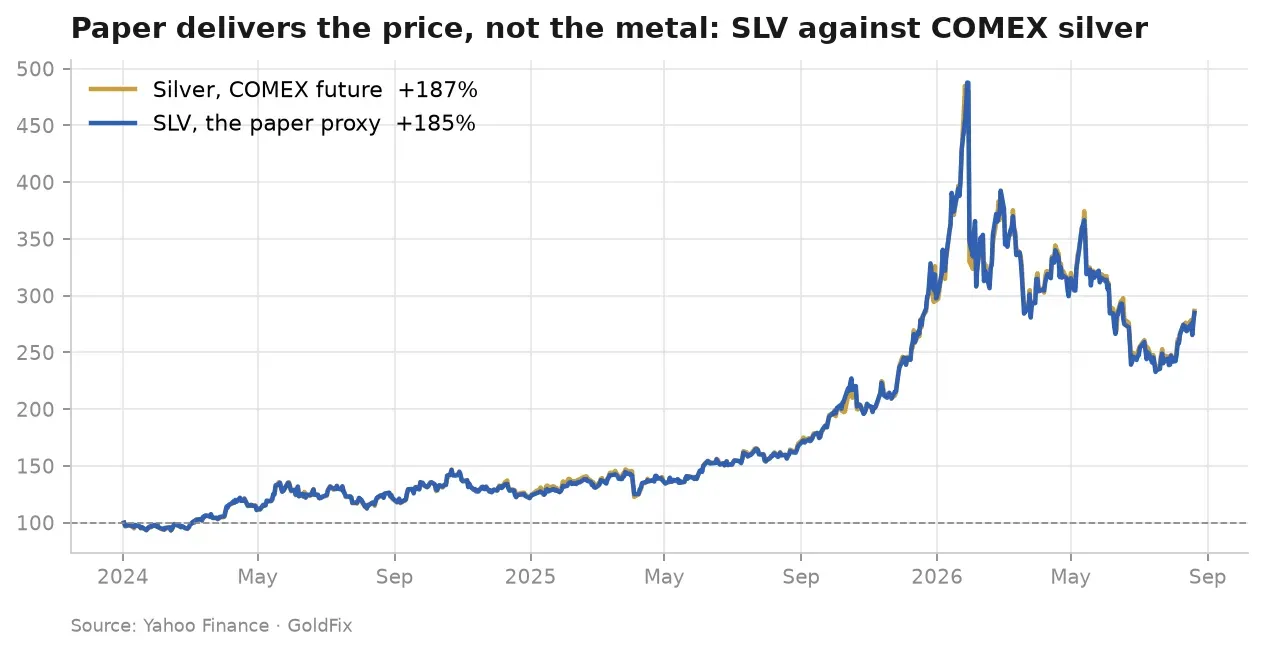
Paper silver is any instrument that gives you price exposure without putting a bar in your hand: COMEX futures and options, OTC unallocated accounts at bullion banks, pooled accounts, and most ETF structures. It exists for good reasons: it’s liquid, cheap to trade, and lets industrial users and miners hedge without shipping metal. The catch is that the total of these claims can far exceed the physical silver that would have to settle them if everyone asked at once. Almost nobody asks at once, until they do.
The ratio that matters
The single best mental model for fragility is the ratio of paper claims to deliverable metal. By some widely-cited estimates, there can be dozens of paper ounces outstanding for every ounce of registered, deliverable COMEX silver. The higher that ratio runs, the harder price has to move to clear even a modest wave of delivery demand, because the metal to honor the claims simply isn’t there at the current price. A high paper-to-physical ratio doesn’t cause a squeeze, but it’s the dry tinder that makes one explosive when a spark lands.

Registered vs eligible: reading COMEX inventory
COMEX silver in the warehouses splits into two buckets, and conflating them is how people misread every inventory headline. Registered silver is pledged and immediately eligible to settle futures contracts; this is the metal that actually backs delivery. Eligible silver is in the vault but not pledged; it can be converted to registered, but it isn’t committed today. When the internet screams “COMEX is draining,” it usually means registered stock is falling. That’s a real stress gauge, but metal moves between the buckets, so a falling registered number is a warning light, not a doomsday clock.

Where the real metal sits: COMEX vs LBMA
COMEX (New York) is the futures venue and the headline inventory number everyone quotes. But the bigger physical hub is the LBMA (London), the over-the-counter market where most real bullion is stored and traded, much of it already spoken-for: allocated to ETFs, central banks, and clients. The number that matters for a real squeeze isn’t the total London vault figure; it’s the float (the unencumbered metal actually free to move), which is a fraction of the headline. Squeeze risk lives in the gap between total reported metal and truly free, deliverable float across both venues.

Why the market can break
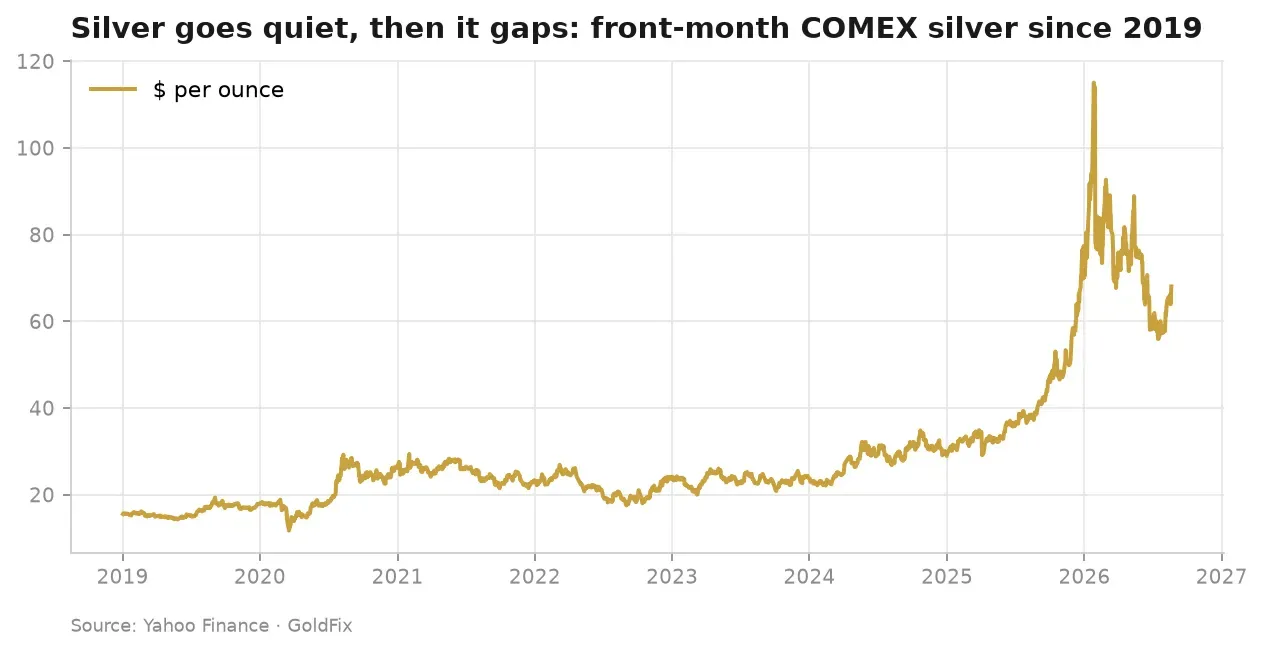
Put it together. A paper market many multiples the size of deliverable metal, a registered COMEX bucket that can be drawn down, an LBMA float thinner than the headline suggests, and a structural deficit eroding the cushion every year. None of that matters while paper holders are happy holding paper. It matters enormously the moment a meaningful slice of them want bars instead of claims. That’s a settlement stress, not “the world ran out of silver.” It resolves through price, fast, because the plumbing can’t deliver metal fast enough. That’s why silver sits dead for months and then gaps violently.
The early-warning signals
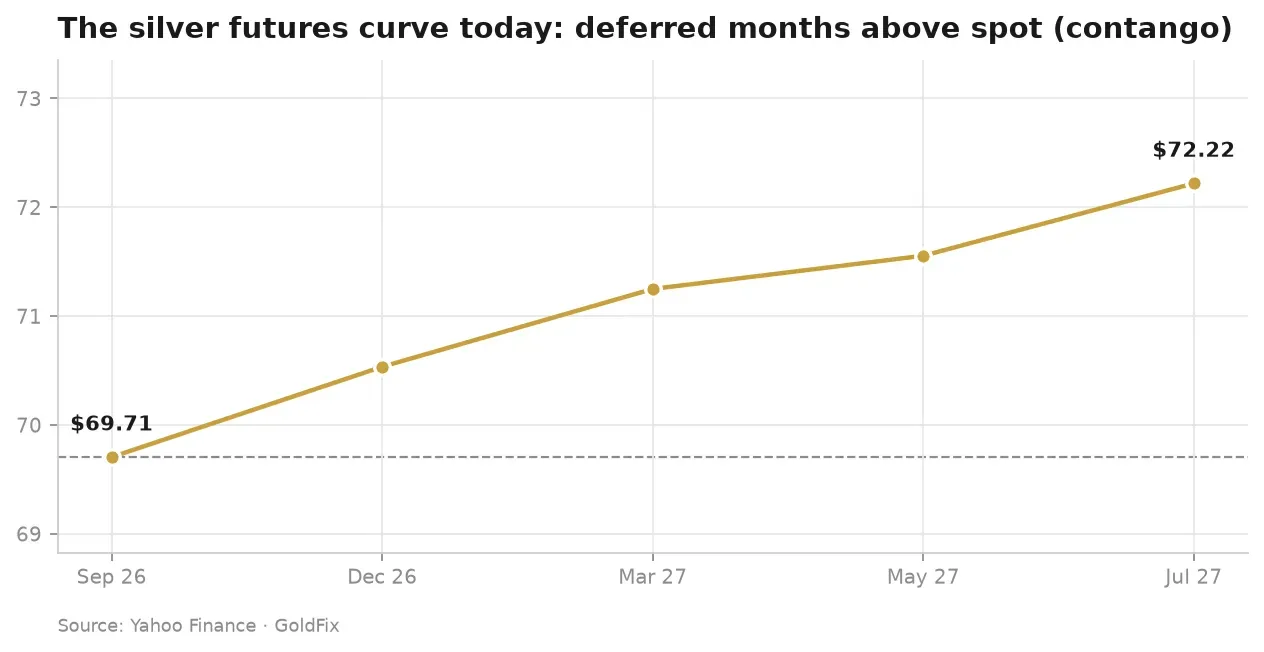
Settlement stress is observable before it’s a price headline. Surging lease rates mean physical metal is hard to borrow. Backwardation (spot above the futures curve) means people will pay a premium to have silver now. Rising delivery notices and falling registered stock mean longs are standing for metal. When those line up, the paper-physical gap is being tested in real time, and that’s when the ratio stops being trivia and starts being price.