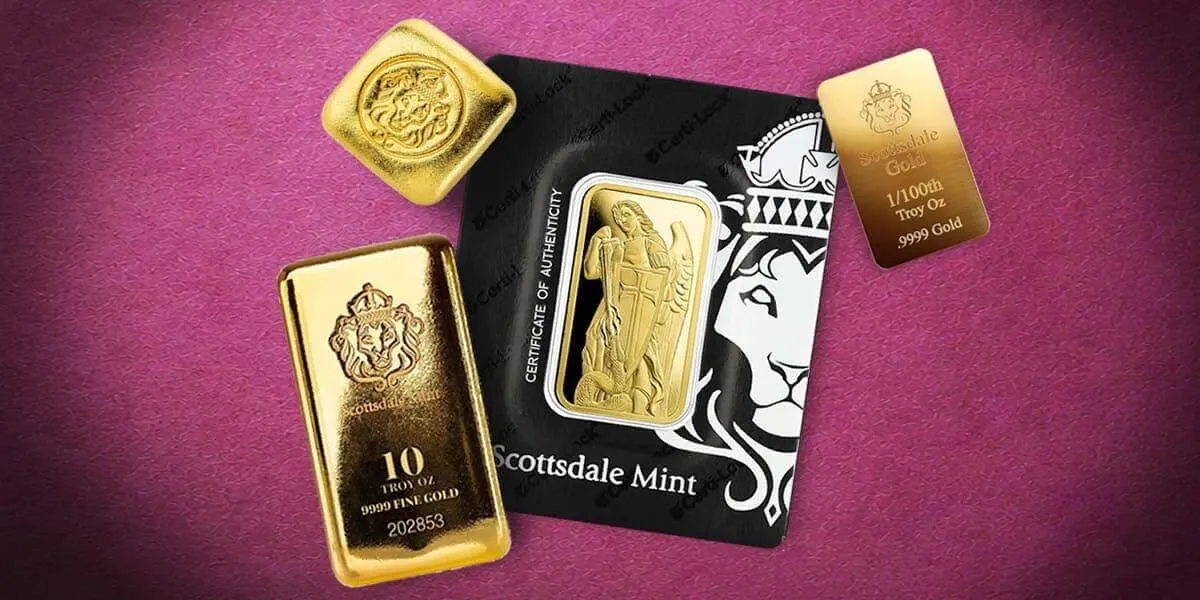
Quick Answer: Several reputable private mints and bullion dealers offer gold bullion at competitive premiums over spot price with fully insured shipping, typically via USPS Registered Mail covering up to $50,000 per package. The real discount lies in comparing total cost, not just the sticker price.
You can find competitively priced gold bullion from established private mints and major online dealers that include fully insured shipping as part of the purchase. The trick is understanding that a real discount isn’t just about the lowest advertised price. You need to compare the total cost, which includes the premium over spot, any shipping fees, and the dealer’s buy-sell spread. Gold bars generally carry lower premiums than coins, so if your goal is accumulating metal at the lowest cost per ounce, bars are usually your best bet.
Authoritative Frameworks Referenced: The London Bullion Market Association’s Good Delivery Standard establishes international benchmarks for gold purity and authenticity, making it the reference point for legitimate bullion transactions worldwide. The IRS Collectibles Classification under Section 1231 governs how physical gold is taxed at a maximum 28% capital gains rate, which is higher than the 20% rate applied to traditional securities. Professional authentication services like PCGS, NGC, and ANACS provide third-party verification through advanced metallurgical analysis and tamper-evident encapsulation, serving as the industry standard for confirming bullion authenticity.
What does gold bullion actually cost beyond spot price?
Here’s the thing most first-time buyers don’t realize: the spot price you see on financial news tickers is not what you’ll pay. Every physical gold product carries a premium on top of spot, and that premium covers real costs. According to dealer pricing breakdowns, minting and fabrication alone run approximately $30 to $50 per ounce, and when you add logistics, insurance, and handling, the total cost over spot typically lands between $50 and $150 per ounce.¹
The premium also varies dramatically by product type. Gold bars, especially larger ones, tend to carry the slimmest markups because they’re simpler to produce. Coins, on the other hand, can carry premiums exceeding 30% over spot because of their collectible appeal, sovereign mint branding, and legal tender status.² Think of it like buying coffee beans versus a fancy latte. The raw material is the same, but the packaging and experience change the price.
Then there’s the dealer spread, which is the difference between what a dealer charges you to buy and what they’ll pay you to sell back. A tight spread means better liquidity for you down the road. So when you’re comparing dealers, don’t just look at the buy price. Check the sell-back price too, because that gap is a hidden cost that directly affects your real return.
How does insured shipping work for gold bullion?
Most reputable dealers ship gold bullion via USPS Registered Mail, which is widely considered the safest method for precious metals. This service provides full chain-of-custody tracking where every person who handles the package signs for it, and it can insure items up to $50,000 per package with full value disclosure at the time of mailing.³ That level of accountability is why it’s been the go-to method for shipping valuables for over a century.
Many established dealers include this insured shipping at no additional cost, absorbing it into their pricing. Others may charge a flat fee or offer free shipping above a certain order threshold. If you’re comparing two dealers and one advertises a slightly lower price per ounce but charges $25 for shipping while the other includes it free, the math might actually favor the higher-priced dealer.
What’s the catch? If your purchase exceeds $50,000, standard USPS Registered Mail insurance won’t cover the full value. You’d need supplemental third-party insurance for larger orders. For most individual buyers picking up a few ounces at a time, the standard coverage is more than sufficient, but high-volume purchasers should ask specifically about coverage limits before placing an order.
Are gold bars cheaper than gold coins?
Almost always, yes. Gold bars carry lower premiums than coins because they’re less expensive to produce and don’t carry the added costs of intricate designs, legal tender status, or sovereign mint branding. Premiums on bars can be minimal compared to spot price, while coin premiums can climb above 30% depending on the product.² If you’re purely focused on accumulating as much gold as possible for your dollar, bars are the more cost-effective choice.
That said, coins have advantages that bars don’t. Sovereign-minted coins like American Eagles or Canadian Maple Leafs are instantly recognizable worldwide, which can make them easier to sell in certain situations. They also tend to hold their premiums better over time, meaning you might recoup more of that markup when you sell. If you’re a cost-sensitive buyer, sometimes called a stacker in the precious metals community, bars are your friend. If you value recognition and resale flexibility, coins might justify the higher premium.
Think of it this way. Bars are like buying generic medication. Same active ingredient, lower price. Coins are the brand-name version. Same gold content, but you’re paying extra for the packaging and reputation.
How do I verify gold bullion is authentic?
Counterfeiting is a real concern in the bullion market. Common fraud schemes include gold-plated tungsten bars, fake coins with incorrect weights, and misleading online marketplace listings.⁴ The good news is that reputable dealers have robust verification processes in place, and you can take steps to protect yourself too.
The gold standard for authentication, no pun intended, involves XRF testing, which stands for X-ray fluorescence. This non-destructive method analyzes the metal’s composition to confirm purity without damaging the product. Professional grading services like PCGS, NGC, and ANACS also provide third-party authentication using advanced imaging and metallurgical analysis, sealing verified products in tamper-evident encapsulation.⁴ If you’re buying a high-value piece, look for products that come in assay packaging, which is a sealed card containing the manufacturer’s certification of weight and purity.
Your best defense, though, is buying from established dealers who stake their reputation on authenticity. Look for mints that verify guaranteed purity, weight, and metal content on every product. If a deal looks too good to be true, especially from an unfamiliar seller on a marketplace or auction site, it probably is.
What taxes apply when I sell gold bullion?
This is where a lot of new investors get surprised. The IRS classifies physical gold as a collectible, not a standard investment security. That means when you sell gold bullion at a profit, you face a maximum capital gains tax rate of 28%, compared to the 20% maximum rate on traditional stocks and securities.⁵ That’s a meaningful difference that directly eats into your returns.
To put real numbers on it, say you bought 5 ounces of gold at $2,000 per ounce and sold them later at $2,500 per ounce. Your $2,500 profit would be taxed at up to 28%, leaving you with a tax bill of up to $700. If that same $2,500 gain came from selling stocks, you’d owe a maximum of $500. That $200 difference matters, especially as your holdings grow.
If you’re considering gold as a long-term investment, it’s worth exploring tax-advantaged structures like precious metals IRAs, which can defer or eliminate capital gains taxes depending on the account type. Just be aware that IRA-eligible bullion must meet specific purity standards, and not every product qualifies. This isn’t financial advice, of course, but it’s a factor that should absolutely be part of your decision-making process.
How should I insure gold bullion stored at home?
Here’s something that catches a lot of people off guard. Your standard homeowner’s insurance policy typically limits coverage for precious metals to around $2,500. If you’ve got $10,000 or $50,000 worth of gold sitting in a safe at home, most of it is completely unprotected under your basic policy. That’s a significant gap between what you own and what’s actually covered.
You have a couple of options. First, you can add a scheduled personal property rider to your homeowner’s policy, which specifically lists and covers your bullion at its appraised value. This usually requires a recent appraisal and increases your premium, but it’s straightforward. Second, you can use specialized private vault storage, which typically includes full insurance coverage as part of the service. Vault storage also tends to preserve resale value better because the metal’s chain of custody is documented.
If you’re storing at home, invest in a quality safe that’s both fire-rated and bolted down. Keep detailed records including purchase receipts, serial numbers if your products have them, and photographs. And whatever you do, don’t broadcast what you’ve got. Discretion is its own form of insurance.
Is the gold market liquid enough to sell quickly?
The gold market is one of the most liquid asset markets on the planet. According to the World Gold Council, total global gold demand exceeded 5,000 tonnes for the first time in 2025, with total demand value reaching $555 billion, a 45% increase year-over-year.⁶ Daily trading volumes averaged roughly $361 billion, which means there’s no shortage of buyers when you’re ready to sell.
That said, liquidity for physical bullion isn’t the same as liquidity for gold ETFs or futures contracts. When you sell physical gold, you need a buyer willing to pay a fair price, and that usually means selling back to a dealer. The dealer’s buy-back price will be below spot, which is how they make their margin. The spread between what you paid and what you’ll get back is essentially the cost of owning physical metal.
If you’re someone who might need to convert gold to cash quickly, consider sticking with widely recognized products. One-ounce bars and well-known sovereign coins tend to sell fastest because dealers don’t need to spend extra time or money verifying them. Unusual sizes or lesser-known products might take longer to move. According to J.P. Morgan research, physical gold held by investors reached approximately 2.8% of total assets under management as of September 2025, with potential to rise toward 4 to 5%, suggesting the buyer pool is growing.⁷
When might buying discounted gold bullion not be worth it?
Not every advertised discount is actually a good deal, and there are several scenarios where chasing the lowest price can backfire. First, a dealer advertising low spot prices may offset that with inflated premiums, higher shipping fees, or wider buy-sell spreads. You need to evaluate all three pricing components together, because the lowest headline price does not necessarily represent the best total value.²
Second, if you’re buying in large quantities that exceed $50,000 per shipment, standard insured delivery won’t fully cover your purchase.³ You’d need to arrange supplemental insurance, which adds cost and complexity. For high-net-worth investors building substantial positions, the logistics of insured delivery can become a meaningful expense that erodes whatever discount you thought you were getting.
Finally, market conditions matter. Premiums fluctuate in real-time based on supply and demand. During periods of market stress or surging demand, the premiums that dealers charge can spike significantly, sometimes doubling or tripling from normal levels. A product that’s a good deal today might carry a much higher markup next week. And remember, the 28% capital gains tax on physical gold means your net return is lower than comparable gains in traditional securities.⁵ If you’re investing purely for financial return rather than portfolio diversification, the tax drag is a real consideration.
Key Takeaways
- Gold bars carry lower premiums than coins, saving you up to 30% on markup costs.
- USPS Registered Mail insures bullion shipments up to $50,000 per package.
- Total cost includes spot price, premium, and dealer spread, not just the advertised price.
- Physical gold is taxed at 28% capital gains, higher than the 20% rate on stocks.
- Home insurance typically covers only $2,500 in precious metals without a rider.
About This Topic
Gold bullion is physical gold in the form of bars, rounds, or coins, typically purchased as an investment or store of value. Buying gold bullion involves understanding pricing components beyond the raw metal value, including premiums over spot price, dealer spreads, shipping and insurance costs, and tax implications. Reputable dealers and private mints offer products ranging from one gram to one kilogram with guaranteed purity, assay certification, and fully insured delivery. The gold market is highly liquid, with global demand exceeding $555 billion in 2025, but physical gold carries unique considerations including a 28% capital gains tax rate, storage and insurance responsibilities, and the need for authenticity verification to avoid counterfeit products.
Comparative Analysis Table
| Factor | Option A | Option B | Notes |
| Premium over spot price | Gold Bars: Typically $50-$100 over spot per ounce with minimal fabrication costs | Gold Coins: Can exceed 30% over spot due to design, legal tender status, and sovereign branding | Bars are preferable for cost-conscious buyers focused on accumulating maximum metal weight |
| Resale recognition | Gold Bars: May require additional verification from buyers, especially for lesser-known mints | Gold Coins: Sovereign coins are instantly recognizable worldwide and tend to hold premiums better | Coins are preferable if you anticipate selling in informal or international markets |
| Storage and insurance | Home Storage: Full control and immediate access, but homeowner’s insurance limits coverage to roughly $2,500 | Private Vault Storage: Full insurance coverage included, documented chain of custody, but monthly fees and limited access | Vault storage is preferable for holdings exceeding $10,000 or for investors prioritizing resale value |
| Liquidity speed | Physical Bullion: Requires finding a dealer or buyer, sell-back at below spot, may take days | Gold ETFs or Futures: Sell instantly on exchanges at market price during trading hours | ETFs are preferable for investors who may need to liquidate quickly; physical is better for long-term holding |
| Tax treatment | Physical Gold: Taxed as collectible at up to 28% capital gains rate | Gold ETFs or Futures: May qualify for 20% maximum capital gains rate depending on structure | Tax-advantaged accounts like precious metals IRAs can mitigate the higher physical gold tax rate |
How to Implement
- Check the live spot price first. Start by looking up the current gold spot price on an independent financial site before visiting any dealer. This gives you a baseline so you can immediately calculate the premium any dealer is charging over the raw metal value.
- Compare total landed cost across at least three dealers. Add up the product price, any shipping fees, and payment method surcharges for each dealer. Don’t just compare the per-ounce price. A dealer offering free insured shipping might actually beat a competitor with a lower sticker price but a $25 shipping charge.
- Choose bars over coins if cost per ounce is your priority. Select gold bars for the lowest premiums, or choose well-known sovereign coins if resale flexibility matters more to you. Larger bars like 10-ounce or kilo sizes typically carry the slimmest percentage premiums.
- Confirm the dealer’s shipping insurance and method. Verify that the dealer ships via USPS Registered Mail or an equivalent insured method, and confirm the coverage amount matches your order value. For orders exceeding $50,000, ask about supplemental insurance options before purchasing.
- Verify authenticity upon delivery. Inspect your bullion immediately upon receipt. Confirm the weight matches specifications, check for assay packaging or certification seals, and compare the product against the dealer’s listed dimensions. If anything seems off, contact the dealer before removing the product from its original packaging.
- Arrange proper insurance for your holdings. Contact your homeowner’s insurance provider to add a scheduled personal property rider for your bullion, or arrange vault storage that includes full insurance coverage. Keep purchase receipts, serial numbers, and photographs as documentation.
Troubleshooting FAQs
What should I do if my gold bullion shipment arrives damaged or appears tampered with?
Do not open the package further. Photograph the exterior packaging and any visible damage from multiple angles. Contact the dealer immediately and file a claim with the shipping carrier. Reputable dealers that ship via USPS Registered Mail have full chain-of-custody documentation, which makes resolving claims significantly easier. Most established dealers will replace the shipment or issue a refund once the claim is verified.
Why is the price I’m quoted higher than the spot price I see online?
The spot price reflects the wholesale price of gold traded in large institutional quantities on commodities exchanges. It does not include the costs of turning that raw gold into a finished product and getting it to your door. Minting, fabrication, logistics, insurance, dealer margin, and handling all add to the final price. This premium over spot typically ranges from $50 to $150 per ounce for bars, and can be considerably higher for coins or collectible products. Comparing the total premium across dealers is the right way to evaluate whether you’re getting a fair price.
Implementation Stories
- A first-time buyer in her 30s wanted to start building a gold position but felt overwhelmed by the number of dealers and products available. She focused on comparing the total cost per ounce, including shipping, across three well-known dealers and chose one-ounce gold bars in assay packaging. By selecting bars instead of coins, she saved roughly $90 per ounce in premiums on her initial five-ounce purchase.
- A retired couple had been buying gold coins for years from a local shop without ever comparing prices online. When they finally checked dealer websites, they discovered they’d been paying premiums nearly double what online dealers charged for the same products. They switched to ordering online with insured delivery and redirected the savings into buying additional metal.
- An experienced collector learned the hard way about home insurance limitations when a pipe burst damaged the room where he stored his bullion. His homeowner’s policy covered only $2,500 of his $40,000 collection. After the claim, he moved the majority of his holdings into a private vault with full insurance coverage and kept only a small portion at home in a fire-rated safe.
Best Practices Checklist
- Always calculate the total premium over spot price, including shipping and payment fees, before comparing dealers.
- Confirm that your dealer ships via USPS Registered Mail or an equivalent fully insured method with chain-of-custody tracking.
- Choose products in assay packaging or with third-party certification from services like PCGS, NGC, or ANACS for built-in authenticity verification.
- Review your homeowner’s insurance precious metals coverage limit and add a scheduled rider or use vault storage for holdings above $2,500.
- Keep detailed records of every purchase including receipts, serial numbers, product photos, and assay certificates for tax reporting and insurance purposes.
- Factor in the 28% collectibles capital gains tax rate when calculating your expected net return on physical gold investments.
Glossary
| Term | Definition |
| Spot Price | The current market price for one ounce of gold as traded on commodities exchanges. This is the wholesale baseline price before any premiums, shipping, or dealer margins are added. |
| Premium | The amount charged above the spot price to cover minting, fabrication, logistics, insurance, and dealer profit. Premiums vary by product type, with bars typically carrying lower premiums than coins. |
| Assay Packaging | A sealed card or holder containing a gold bar or round along with a certificate from the manufacturer verifying the product’s weight, purity, and authenticity. The tamper-evident seal confirms the product hasn’t been altered since leaving the mint. |
| Dealer Spread | The difference between the price a dealer charges you to buy gold and the price they’ll pay you to sell it back. A tighter spread means lower transaction costs and better liquidity for the investor. |
| XRF Testing | X-ray fluorescence testing, a non-destructive method that analyzes the elemental composition of a metal to confirm its purity. Reputable dealers use XRF to verify bullion authenticity without damaging the product. |
References
- Pacific Precious Metals. “Gold Premiums Explained: Why Physical Bullion Costs More Than Spot”. Pacific Precious Metals. January 1, 2026. https://www.pacificpreciousmetals.com/blog/gold-premiums.
- JM Bullion. “Bullion Price vs. Spot Price”. JM Bullion. January 1, 2026. https://www.jmbullion.com/investing-guide/pricing-payments/bullion-price-spot-price/.
- Scottsdale Mint. “How to Ship Precious Metals Safely”. Scottsdale Mint. January 1, 2022. https://www.scottsdalemint.com/articles/2022/how-to-ship-precious-metals-safely/.
- Veldt Gold. “Common Bullion Scams”. Veldt Gold. January 1, 2026. https://veldtgold.com/common-bullion-scams/.
- SmartAsset. “How Do I Avoid Capital Gains Tax on Gold?”. SmartAsset. January 1, 2026. https://smartasset.com/taxes/avoid-capital-gains-tax-on-gold.
- World Gold Council. “Gold Demand Trends: Q4 and Full Year 2025”. World Gold Council. December 31, 2025. https://www.gold.org/goldhub/research/gold-demand-trends/gold-demand-trends-full-year-2025.
- J.P. Morgan. “Gold price predictions from J.P. Morgan Global Research”. J.P. Morgan. January 1, 2026. https://www.jpmorgan.com/insights/global-research/commodities/gold-prices.