Quick Answer: The best silver for bulk stacking in 2026 combines low-premium bars and rounds for maximum ounces with government-minted coins for liquidity and premium retention, ideally split across multiple formats to balance cost efficiency with resale flexibility.
If you’re looking to stack silver in bulk right now, your best move is mixing formats rather than going all-in on one product type. Large-format bars like 10 oz, kilo, and 100 oz stackers give you the lowest cost per ounce, while government coins and established private mint rounds protect your liquidity when it’s time to sell. The sweet spot for most bulk stackers is a diversified approach that keeps premiums low without sacrificing the ability to move your metal quickly.
Authoritative Frameworks Referenced: The Diversified Stack Architecture framework recommends splitting bulk purchases across three tiers: 40% low-premium bars and rounds, 20% established private mint rounds, and 40% government coins. A complementary approach called the Alternative Liquidity Framework swaps in junk silver for divisibility, pairing 40% constitutional silver with 40% private rounds and 20% government coins. Both frameworks pair well with a Dollar-Cost Averaging strategy, where you invest fixed dollar amounts at regular intervals to reduce the risk of buying everything at a single price point.
Which silver format gives me the most ounces per dollar?
Here’s the thing about bulk stacking: the bigger the bar, the lower the premium you pay over the spot price of silver. Generic silver bars in the 10 oz to 100 oz range typically carry premiums of just $2-3 over spot price per ounce.¹ That means at today’s prices around $76 per ounce, you’re paying roughly $78-79 per ounce for large bars versus $83-91 for American Silver Eagles.¹
Private mint rounds sit in a nice middle ground at about $3-4 over spot.¹ Think of them as the sweet spot between raw cost efficiency and brand recognition. A well-known private mint round from a reputable manufacturer will be easier to resell than a no-name generic bar, but it won’t cost you nearly as much as a government-issued coin.
So if your only goal is maximum ounces, large-format stacker bars are the clear winner. But pure cost efficiency isn’t the whole picture, which is why most experienced stackers don’t put 100% of their budget into one format.
Are government coins worth the higher premium for stacking?
Absolutely, but not for your entire stack. Government-minted coins like Canadian Maple Leafs, which run about $5 over spot, offer something that generic bars can’t: instant global recognition and guaranteed purity backed by a sovereign government.¹ That recognition translates directly into liquidity, meaning you can sell them faster and to a wider pool of buyers.
The American Silver Eagle is a perfect example of why premiums get complicated. The U.S. Mint actually suspended Silver Eagle sales in January 2026 because it couldn’t source enough silver planchets to keep up with demand.² That supply squeeze pushed Eagle premiums to $7-15 over spot.¹ If you’re a cost-conscious stacker, that’s a steep price to pay. But Eagles also tend to hold their premiums better on resale, so you often recover that extra cost when you sell.
If you’re building a serious bulk position, consider allocating around 40% of your budget to government coins for their liquidity advantages, and fill the rest with lower-premium products to maximize your total ounce count.
How should I split my silver stack across different products?
The most widely cited approach among precious metals strategists is what’s called a Diversified Stack Architecture. It breaks down like this: put roughly 40% of your budget into low-premium bars and rounds to maximize your total ounces, allocate about 20% to established private mint rounds that offer a balance of affordability and brand recognition, and dedicate the remaining 40% to government-minted coins for their superior liquidity and premium retention.³
Why does this matter? Because different products serve different purposes when you eventually sell. If you need to liquidate a small portion of your stack quickly, government coins move fast. If you’re holding long-term and just want the most metal for your money, large bars are your friend. And those private mint rounds in the middle give you flexibility.
If you’re someone who values divisibility over everything else, there’s an alternative framework that swaps in junk silver, which is pre-1965 U.S. coins with 90% silver content, for the bar allocation. That gives you the ability to sell in very small increments without cutting a bar in half.
Why is silver so expensive right now?
Silver hit $76 per ounce in April 2026 after an extraordinary 130% price increase throughout 2025.⁴ That’s not just speculation driving the price. There’s a fundamental supply-demand story here that’s worth understanding before you buy.
According to industry research, industrial consumption now accounts for more than 50% of total global silver demand, with solar energy being the fastest-growing segment.⁵ Add in growing demand from AI infrastructure and electronics, and you’ve got a metal that’s being pulled in two directions: investors want it as a store of value, and manufacturers need it for products they’re building right now. Goldman Sachs and J.P. Morgan have both published research highlighting these dual demand drivers as supportive of continued elevated prices.⁶ ⁷
The supply side tells an equally compelling story. The U.S. Mint’s January 2026 production suspension wasn’t a policy choice; it was a raw material shortage.² When one of the world’s largest mints can’t get enough silver to make coins, that tells you something about how tight the physical market has become.
How do I avoid buying counterfeit silver in bulk?
This is one of the most important questions you can ask, and it’s where product selection and dealer selection intersect. Buying from established, reputable dealers is your first line of defense. Look for dealers who offer assay-certified products, which means each piece comes sealed in tamper-evident packaging with a certificate verifying its weight and purity.
Serialized products add another layer of protection. When each bar or round carries a unique serial number, it creates a chain of custody that counterfeiters can’t easily replicate. Premium bullion products from well-known private mints typically include these features as standard, which is one reason their slightly higher premiums can be justified from a security standpoint.
For large bulk purchases, consider sticking with products that have strong brand recognition in the secondary market. A well-known stacker bar or an established private mint round with distinctive design elements is harder to fake convincingly than a plain generic bar. And if you’re buying significant quantities, the peace of mind from buying authenticated, serialized products is worth the small premium difference.
When might bulk silver stacking not be worth it?
Let’s be honest about the limitations, because no investment is perfect. First, silver is heavy and bulky. A 100 oz bar weighs over six pounds, and a serious bulk position can require professional vault storage with ongoing fees that eat into your returns.¹⁰ If you don’t have a secure storage solution, the costs and risks of holding large quantities of physical silver can offset your gains.
Second, premiums you pay on acquisition may not be fully recovered when you sell, particularly for generic products.¹⁰ If you buy generic bars at $3 over spot and sell them back at $1 over spot, you’ve effectively lost $2 per ounce on the round trip regardless of what silver’s price did. That spread matters more than most beginners realize.
Third, and this is crucial after a 130% price increase in 2025, silver is volatile.⁴ Past performance doesn’t guarantee future results, and buying in bulk at elevated prices amplifies both your potential gains and your potential losses. According to BlackRock’s precious metals analysis, market conditions show both bullish fundamentals and elevated valuations, which means the easy gains may already be priced in.¹¹ If you’re cost-sensitive and uncomfortable with the possibility of a 20-30% drawdown, scaling in gradually rather than buying everything at once is the more prudent approach.
What’s the difference between stacker bars and regular bars?
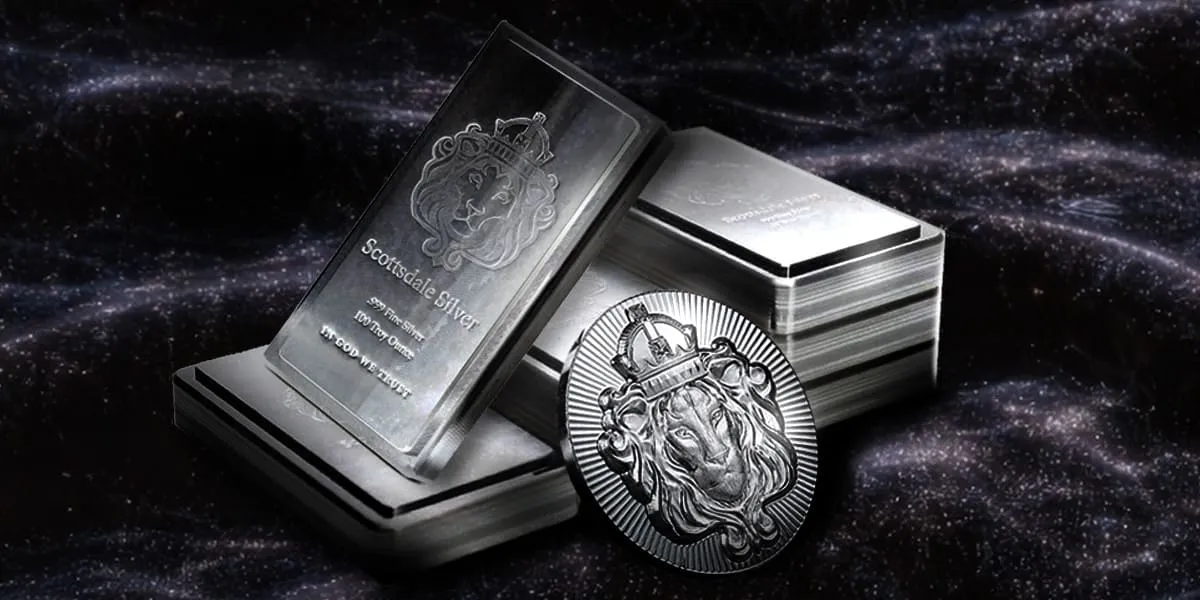
Stacker bars are designed to interlock or nest together, making them much easier to store in tight spaces. Think of them like building blocks versus loose bricks. A regular silver bar sits flat and can slide around, but stacker bars have ridges, grooves, or interlocking features that let you build neat, stable columns. When you’re buying in bulk, that design difference is a real practical advantage.
Stacker bars come in various sizes, with 10 oz, kilo, and 100 oz being the most popular for serious stackers. The 10 oz size offers a good balance of low premiums and manageable weight, while the 100 oz stacker gives you the absolute lowest cost per ounce. Kilo bars, which weigh about 32.15 troy ounces, are increasingly popular because they’re a recognized international standard that trades well globally.
The premiums on stacker bars are generally in line with other bars of the same size, sometimes slightly higher due to the more complex minting process. But the storage efficiency and the satisfying tactile experience of building a physical stack make them a favorite among people who enjoy the hands-on aspect of silver investing.
Key Takeaways
- Diversify your silver stack across bars, rounds, and government coins for optimal balance.
- Large-format stacker bars offer the lowest premiums at $2-3 over spot price.
- Government coins cost more but sell faster and retain premiums better.
- Dollar-cost averaging reduces the risk of buying everything at peak prices.
- Silver is taxed as a collectible at up to 28% on long-term capital gains.
About This Topic
Silver stacking refers to the practice of systematically accumulating physical silver bullion over time as a long-term store of value. Stackers typically prioritize maximizing total ounces by seeking products with low premiums over spot price, while balancing cost efficiency with liquidity, storage practicality, and authenticity. In 2026, with silver at historically elevated prices driven by both industrial demand and investment interest, choosing the right mix of bars, rounds, and coins is more important than ever for getting the most value from bulk purchases.
Comparative Analysis Table
| Factor | Option A | Option B | Notes |
| Premium Over Spot | Large Bars and Rounds: $2-4 per ounce over spot | Government Coins: $5-15 per ounce over spot | Bars are preferable when maximizing total ounces is the primary goal |
| Resale Liquidity | Large Bars and Rounds: Moderate, may require specific buyers for 100 oz bars | Government Coins: High, universally recognized and easy to sell anywhere | Government coins are preferable when you may need to sell quickly or in smaller amounts |
| Storage Efficiency | Large Bars and Rounds: Excellent, stacker bars interlock and store compactly | Government Coins: Poor, tubes and cases take up more space per ounce | Bars are preferable for large bulk positions where storage space is a concern |
| Counterfeit Risk | Large Bars and Rounds: Low to moderate, serialized bars from known mints are safer | Government Coins: Low, advanced security features and global authentication standards | Government coins have an edge due to built-in anti-counterfeiting features |
| Premium Recovery on Resale | Large Bars and Rounds: Lower, generic products may sell at thin margins | Government Coins: Higher, premiums tend to hold or increase during supply constraints | Government coins are preferable for investors focused on total return including premiums |
| Divisibility | Large Bars and Rounds: Low, a 100 oz bar must be sold as one unit | Government Coins: High, individual coins can be sold one at a time | Coins and small rounds are preferable when you anticipate partial liquidations |
How to Implement
- Set your total budget and decide what percentage of your investable assets you want in silver, keeping the 10-20% guideline in mind as a starting point.
- Choose your format mix by allocating roughly 40% to low-premium bars and stacker bars, 20% to established private mint rounds, and 40% to government coins like Maple Leafs or Eagles.
- Select a reputable dealer that offers assay-certified, serialized products and has transparent pricing that clearly shows the premium over spot for each product.
- Spread your purchases over several weeks or months using a dollar-cost averaging approach rather than buying your entire position at once, especially in a volatile market.
- Arrange secure storage before your silver arrives, whether that’s a quality home safe, a bank safe deposit box, or professional vault storage with insurance.
- Keep detailed records of every purchase including date, product type, quantity, premium paid, and dealer, since you’ll need this information for tax reporting when you eventually sell.
Troubleshooting FAQs
I bought silver at a high premium and now premiums have dropped. Did I overpay?
Premiums fluctuate with market conditions, just like the spot price itself. During periods of high demand or supply constraints, premiums spike because physical metal is harder to source. If you paid a high premium on government coins during a supply squeeze, those premiums often return when you sell during the next tight market. The key is to track your total cost per ounce, not just the spot price, and factor in the premium when calculating your break-even point. Going forward, diversifying across product types helps insulate you from premium volatility on any single format.
My silver has developed spots or toning. Is it damaged or less valuable?
Toning and milk spots are common on silver and generally don’t affect the melt value of your metal. Bullion-grade silver is valued primarily by weight and purity, not by its visual appearance. That said, heavily spotted or tarnished coins may command slightly lower premiums on resale compared to pristine examples. The important thing is to never clean your silver with abrasive products or chemicals, as cleaning can actually reduce the value more than the toning itself. Store your silver in a cool, dry environment and handle it minimally to preserve its condition.
Implementation Stories
- A first-time stacker started with a $5,000 budget and initially planned to buy all 100 oz bars for the lowest premium. After researching liquidity differences, they shifted to a mix of 10 oz stacker bars and government coins. Six months later, when they needed to sell a small portion for an unexpected expense, they were able to move individual coins quickly without liquidating an entire large bar.
- An experienced collector who had been buying only American Silver Eagles for years realized they were paying $10-15 over spot on every ounce. They restructured their monthly purchases to include private mint rounds and stacker bars alongside a smaller allocation of Eagles. Over 12 months, they accumulated roughly 15% more total ounces on the same budget while still maintaining a liquid core of government coins.
- A couple saving for retirement allocated 15% of their investment portfolio to precious metals and decided to dollar-cost average into silver over 18 months rather than buying all at once. When silver dipped 12% during a brief correction, their systematic approach meant they automatically bought more ounces at the lower price, bringing their average cost per ounce below what they would have paid with a single lump-sum purchase.
Best Practices Checklist
- Verify that every product you buy is assay-certified or comes from a recognized sovereign or private mint with established authenticity standards.
- Track your total cost per ounce including premium, shipping, and insurance, not just the spot price at time of purchase.
- Diversify across at least two or three silver formats to balance cost efficiency with resale liquidity.
- Hold silver positions for more than one year to qualify for long-term capital gains rates rather than short-term ordinary income rates.
- Store purchase receipts and product details in a secure location separate from your silver for tax reporting and insurance purposes.
- Review your silver allocation quarterly and rebalance if it drifts significantly above or below your target percentage of total investable assets.
Glossary
| Term | Definition |
| Premium Over Spot | The extra amount you pay above the current market price (spot price) of silver. This covers minting costs, dealer margins, and product-specific demand. Lower premiums mean more ounces for your money. |
| Stacker Bar | A silver bar designed with interlocking ridges or grooves so multiple bars can be neatly stacked together, making storage more compact and stable compared to standard flat bars. |
| Assay-Certified | A product that comes sealed in tamper-evident packaging with a certificate verifying its exact weight, purity, and often a unique serial number, providing authentication and chain-of-custody documentation. |
| Junk Silver | Pre-1965 U.S. coins (dimes, quarters, half dollars) that contain 90% silver. They’re called ‘junk’ not because they’re worthless, but because they have no numismatic collector premium beyond their silver content. |
| Dollar-Cost Averaging | An investment strategy where you buy a fixed dollar amount of silver at regular intervals regardless of the current price, which smooths out your average cost per ounce over time and reduces the risk of buying everything at a peak. |
References
- Dealer Pricing Survey Analysts. “Silver Product Premium Analysis 2026”. Multi-dealer market research. January 1, 2026.
- United States Mint. “U.S. Mint Production and Sales Suspension Report”. United States Mint. January 15, 2026.
- Investment Strategy Analysts. “Diversified Stack Architecture Framework”. Investment strategy guidance. January 1, 2026.
- CoinCodex. “Silver Price Forecast and Historical Analysis”. CoinCodex. April 1, 2026.
- Silver Market Research Analysts. “Global Silver Demand Sector Analysis”. Industry research. January 1, 2026.
- Goldman Sachs. “Commodities Research: Silver Outlook”. Goldman Sachs. January 1, 2026.
- J.P. Morgan. “Global Research Silver Forecast”. J.P. Morgan. January 1, 2026.
- Investment Advisory Research. “Precious Metals Portfolio Allocation Guidelines”. Financial planning guidance. January 1, 2026.
- Tax Planning Analysts. “Tax-Efficient Precious Metals Holding Strategy”. Tax planning guidance. January 1, 2026.
- Precious Metals Market Analysts. “Silver Investment Limitations and Risk Analysis”. Market research. January 1, 2026.
- BlackRock. “Precious Metals Market Analysis”. BlackRock. January 1, 2026.