Goldman Sachs: The Correction Has Changed the Mood, Not the Structural Gold Story
Goldman Sachs says gold’s recent correction reflects cyclical market pressures rather than a change in the metal’s long-term outlook. The bank continues to forecast gold reaching $4,900 per ounce by the end of 2026, arguing that sovereign reserve diversification and central bank demand remain the dominant structural drivers.
Gold’s recent correction has cooled one of the strongest momentum trades of the past several years, yet Goldman Sachs believes the underlying investment case remains largely unchanged. While higher interest-rate expectations, a firmer U.S. dollar and softer ETF demand have weighed on prices in recent months, the bank argues that the market continues to be supported by a much deeper source of demand.
Samantha Dart, Co-Head of Global Commodities Research at Goldman Sachs, said the four-month decline does not alter the bank’s long-term outlook for the precious metal. Goldman continues to forecast gold reaching $4,900 per ounce by the end of 2026, citing sovereign reserve diversification and continued central bank purchases as the principal structural drivers.
Recent trading has reflected a changing macro environment. Gold fell as markets reduced expectations for near-term Federal Reserve rate cuts, the U.S. dollar strengthened, and ETF demand softened following an extended rally. The metal later recovered modestly after weaker U.S. labor data and comments from Federal Reserve Chairman Kevin Warsh suggesting inflation risks may be easing.
Goldman believes these developments represent cyclical influences on price rather than a deterioration in the longer-term demand profile. The bank continues to distinguish between investment flows that respond to changing macro conditions and sovereign purchases that are driven by reserve management and diversification objectives.
“The recent correction has affected investor positioning, while the structural demand story continues to be supported by official-sector buying.”
Wall Street Remains Constructive on Gold
Goldman’s outlook remains broadly consistent with forecasts from several major investment banks, although expectations vary regarding the pace of future gains and the drivers required to reach those targets.
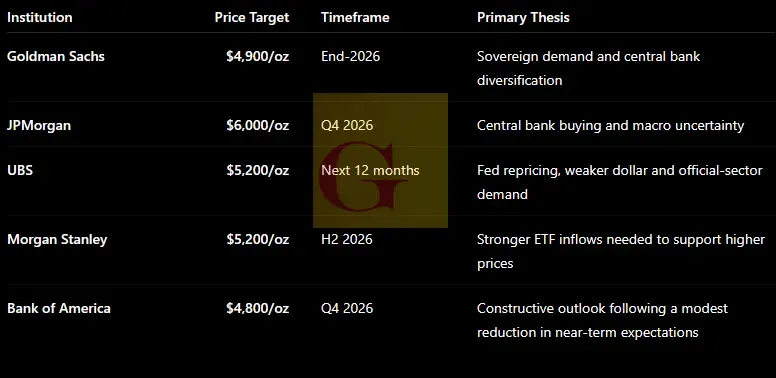
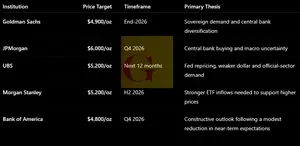
Although the forecasts differ in magnitude, most continue to identify central bank accumulation, reserve diversification, monetary policy expectations and investor flows as the primary variables shaping the next phase of the gold market.
Looking Beyond the Correction
Gold’s recent pullback has prompted investors to reassess whether the rally has exhausted itself or merely entered a period of consolidation. Goldman argues the latter remains the more likely interpretation, emphasizing that the structural sources of demand have not materially changed.
The bank views sovereign buying as fundamentally different from ETF flows or speculative positioning. While investment demand can fluctuate rapidly in response to interest rates and currency movements, official-sector purchases typically reflect multi-year reserve allocation decisions that evolve much more gradually.
GoldFix Comment
Goldman’s report reinforces a theme that has become increasingly important throughout this bull market: the distinction between cyclical price drivers and structural demand. Financial investors continue to respond to changes in interest-rate expectations, the U.S. dollar and ETF flows, but official-sector buyers operate under a different set of incentives.
Since 2022, central bank purchases have become one of the defining features of the global gold market. Reserve managers are increasingly evaluating gold through the lens of diversification, liquidity, geopolitical resilience and balance-sheet management. Those decisions are measured over years rather than quarters, making them considerably less sensitive to short-term market volatility.