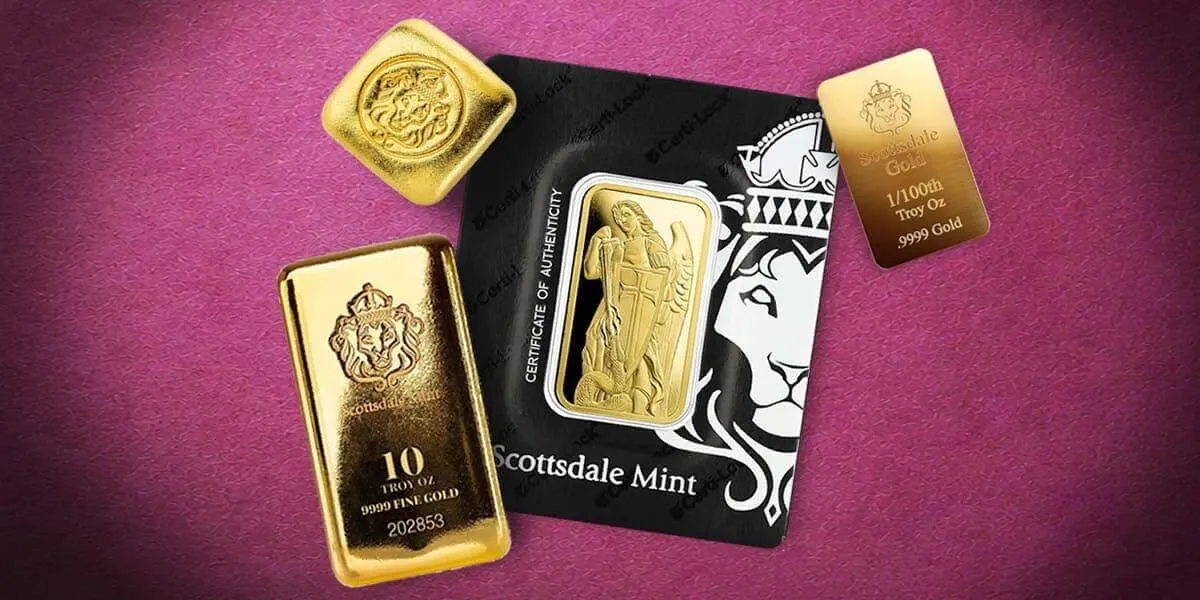
Quick Answer: You can buy IRA-eligible gold bullion online from accredited private mints and authorized dealers that sell bars and coins meeting the IRS-required 99.5% minimum purity standard, then have your purchases shipped directly to an IRS-approved custodian’s depository.
You can purchase IRA-eligible gold bullion from a growing number of online sources, including private mints that sell direct and authorized bullion dealers. The key is making sure whatever you buy meets the IRS purity threshold of 99.5% fineness and that you’re working with an IRS-approved custodian to hold the metal on your behalf. You can’t just buy a gold bar online and toss it in your safe if it’s meant for your retirement account.
Authoritative Frameworks Referenced: The IRS Purity Requirements Framework under Internal Revenue Code Section 408(m) establishes that gold must meet a 99.5% minimum purity standard for IRA inclusion, with a Congressional exemption for American Gold Eagles at 91.67% purity. Treasury Regulation Sections 1.408-2(e) govern custodial storage requirements, mandating that all IRA-held precious metals reside with an IRS-approved custodian in an approved depository. Additionally, IRC Section 4975’s Prohibited Transaction Rules mean any improper personal use of IRA gold by the owner, beneficiary, or a disqualified person triggers full account disqualification and immediate taxation.
What purity does gold need for an IRA?
According to the Internal Revenue Service’s regulations under Internal Revenue Code Section 408(m), gold must be at least 99.5% pure, or .995 fine, to qualify for inclusion in a self-directed IRA.¹ That’s a high bar. Most investment-grade gold bars from reputable mints meet or exceed this standard, but you still need to verify before you buy.
Here’s the interesting wrinkle: American Gold Eagles are the one major exception. Despite having a purity of only 91.67% (they’re alloyed with silver and copper for durability), Congress specifically exempted them from the standard purity rule.¹ So if you see a dealer advertising Gold Eagles as IRA-eligible, that’s legitimate even though the numbers don’t seem to add up at first glance.
What doesn’t qualify? Most collectible or numismatic coins, foreign coins below the purity threshold, and any gold item that’s primarily valued for its rarity rather than its metal content. Stick with well-known bullion products like bars in assay packaging or recognized sovereign coins, and you’ll generally be in safe territory.
Can I store IRA gold at home?
No, and this is one of the most common and most costly mistakes people make. Treasury Regulation Sections 1.408-2(e) require that all precious metals held in an IRA be stored by an IRS-approved custodian in an approved depository.² If you take personal possession of IRA gold, the IRS treats it as a distribution. That means you’ll owe income taxes on the full value, plus a 10% early withdrawal penalty if you’re under 59 and a half.
Think of it this way: your IRA gold is like a painting in a museum. You own it, but someone else has to hold it for you under very specific conditions. The custodian, typically a bank, trust company, or specialized precious metals custodian, arranges storage at a secure vault facility. You’ll pay annual storage and insurance fees for this service, usually bundled into your overall custodial costs.
Some promoters have tried to market “home storage IRAs” using a self-directed LLC structure. The IRS and Tax Court have repeatedly shut these down. Under IRC Section 4975’s Prohibited Transaction Rules, any personal handling of IRA assets by the owner or a disqualified person can disqualify the entire account and trigger full taxation.³ It’s simply not worth the risk.
What are first-year costs for a gold IRA?
Based on a comparative analysis of fee schedules from multiple major gold IRA providers using a $100,000 investment scenario, first-year all-in costs typically range from 3.4% to 5.45% of your invested capital.⁴ On that $100,000 example, you’re looking at roughly $3,400 to $5,450 out the door before your gold has earned a penny.
That cost breaks down into several buckets. There’s usually a one-time account setup fee, a dealer premium over the spot price of gold (this is how the seller makes money), shipping and insurance to get the metal to the depository, and the first year of custodial and storage fees. After year one, ongoing annual costs drop to around 0.25% to 0.40% of your holdings for custody and storage.
Why does this matter? Because these costs create a meaningful drag on your returns compared to, say, a low-cost stock index fund. If you’re investing $25,000 or less, the fixed fees eat a proportionally larger share of your capital. That’s why many advisors suggest gold IRAs make the most financial sense for allocations of $50,000 or more, where the percentage impact of fixed costs is diluted.
Which gold products qualify for IRA inclusion?
The qualifying product list is more specific than most people expect. You need gold bars or rounds that are at least 99.5% pure and produced by a manufacturer accredited by the London Bullion Market Association, commonly called the LBMA. The LBMA maintains a Good Delivery List that serves as the global standard for acceptable refiners and mints.⁵ If your gold comes from an LBMA-accredited source, you’re on solid ground.
For coins, the IRS allows certain sovereign-minted options. American Gold Eagles qualify despite their lower purity thanks to the Congressional exemption. American Gold Buffalos, Canadian Gold Maple Leafs, and Austrian Gold Philharmonics all meet the 99.5% standard and are widely accepted. Bars in assay packaging, meaning they come sealed with a certificate from the manufacturer verifying weight and purity, are particularly popular for IRAs because the authentication is built right in.
What you want to avoid are collectible coins, proof sets purchased primarily for numismatic value, and anything from an unaccredited or unknown source. Your custodian will typically reject products that don’t meet IRS specifications, but it’s better to know before you buy than to end up with gold you can’t use in your retirement account.
How big is the gold market right now?
The numbers are staggering. According to the World Gold Council’s 2025 annual report, global gold demand exceeded 5,000 tonnes in 2025, valued at approximately $555 billion.⁶ That’s not a niche market. Gold futures prices more than doubled from the beginning of 2024 through the end of 2025, reflecting surging demand from central banks, institutional investors, and everyday buyers alike.⁷
On the retail side, precious metals buying has gone surprisingly mainstream. Consumer survey data from 2025 shows that 38.6% of U.S. adults between ages 35 and 64 purchased gold or silver within the prior 12 months.⁸ That’s more than one in three working-age adults. While this is self-reported survey data and may carry some response bias, it signals a dramatic shift from even a decade ago when gold buying was considered a fringe activity.
If you’re considering buying gold for an IRA, you’re joining a large and growing cohort of investors. That said, surging demand and record prices also mean premiums can be higher than usual, so timing and cost awareness matter more than ever.
How do I verify a gold dealer is legitimate?
Fraud is a real concern in this space. The U.S. Securities and Exchange Commission has issued specific investor alerts about precious metals fraud, warning about fake custodians, counterfeit products, and high-pressure sales tactics that target vulnerable investors.⁹ So doing your homework isn’t optional. It’s essential.
Start by checking whether the mint or refiner is on the LBMA Good Delivery List.⁵ This is the gold standard, literally, for manufacturer credibility. Next, look for authentication features on the products themselves. Modern bullion often includes serialized bars, assay card packaging, and advanced verification technology that lets you confirm authenticity. These features aren’t just marketing. They’re your protection against counterfeits.
Also verify your custodian independently. An IRS-approved custodian should be a regulated financial institution, not a company you’ve never heard of that a dealer recommended. If anyone tells you that you can store IRA gold at home, skip a custodian, or guarantees specific returns, walk away. Those are the classic red flags the SEC warns about.
When might a gold IRA not be worth it?
Here’s where honest analysis matters more than sales pitches. Gold’s 10-year average annual return through 2023 was 4.57%, compared to 12.75% for stocks over the same period.⁴ If you’re a younger investor with decades until retirement, overweighting gold at the expense of equities could cost you significant compound growth. Most financial advisors recommend limiting gold to 5% to 15% of a diversified portfolio for this reason.
Liquidity is another consideration. If you need to sell IRA gold quickly, the process requires coordination with your custodian and typically takes several business days, versus the near-instant liquidity of selling an ETF or stock.⁴ For investors who might need rapid access to funds, this friction could be a real problem during a financial emergency.
There’s also the tax angle outside of an IRA. Gold is classified as a collectible by the IRS, which means capital gains on gold held outside a tax-advantaged account are taxed at up to 28%, higher than the standard long-term capital gains rate for stocks.⁴ And don’t forget the ongoing cost drag: annual custodial and storage fees of 0.25% to 0.40%, plus the initial premiums of 3% to 5%, compound over time and eat into your returns. For small accounts under $25,000, these proportional costs can be especially punishing.
What happens if I break IRA gold storage rules?
The consequences are severe and immediate. Under IRC Section 4975, if you take personal possession of IRA gold or engage in any prohibited transaction with your IRA assets, the entire account can be disqualified.³ That means the full value of your gold IRA is treated as a taxable distribution in the year the violation occurred. You’ll owe ordinary income tax on the entire amount.
If you’re under 59 and a half, add a 10% early withdrawal penalty on top of that. On a $100,000 gold IRA, a violation could easily cost you $30,000 to $40,000 in combined taxes and penalties depending on your tax bracket. That’s a devastating hit to your retirement savings over what might seem like a minor rule.
There’s also the required minimum distribution angle to keep in mind as you age. Starting at age 73, you must begin taking RMDs from traditional IRAs, including gold IRAs. Missing an RMD triggers a 25% penalty on the amount you should have withdrawn.¹ You can take RMDs in cash by having your custodian sell some gold, or in some cases as an in-kind distribution of the physical metal itself. Either way, plan ahead so you’re not caught off guard.
Key Takeaways
- IRA-eligible gold must be 99.5% pure, with American Gold Eagles as the sole exception.
- Home storage of IRA gold is prohibited and triggers immediate taxation plus penalties.
- First-year gold IRA costs typically run 3.4% to 5.45% on a $100,000 investment.
- Gold serves best as a 5% to 15% portfolio diversifier, not a primary growth engine.
- Always verify dealer and custodian legitimacy through LBMA accreditation and IRS approval.
About This Topic
A gold IRA is a self-directed individual retirement account that allows you to hold physical gold bullion as a retirement investment. Unlike standard IRAs limited to stocks, bonds, and funds, a gold IRA lets you own actual gold bars and coins, but only if they meet strict IRS purity and custodial requirements. The appeal is portfolio diversification and a hedge against inflation and currency risk, though the costs and liquidity constraints mean it’s not the right fit for every investor.
Comparative Analysis Table
| Factor | Option A | Option B | Notes |
| Purity verification | Bars in assay packaging with serialization and manufacturer certificates | Loose coins or bars without sealed packaging or verification documents | Assay-packaged products are strongly preferred for IRAs because authentication is built in and custodians accept them more readily. |
| Product type | Government-minted sovereign coins (Eagles, Maple Leafs, Buffalos) | Private mint bars and rounds meeting 99.5% purity from LBMA-accredited sources | Sovereign coins carry wider recognition and may have slightly better resale liquidity, but private mint bars often carry lower premiums over spot price. |
| Cost structure | Lower-premium bars (closer to spot price, lower initial cost) | Higher-premium coins (wider spread over spot, but more collectible appeal) | If you’re purely cost-sensitive and focused on gold weight per dollar, bars are typically more efficient. Coins offer flexibility for partial liquidation. |
| Liquidity at resale | Widely recognized products with established buyback markets | Niche or specialty products with limited secondary market demand | For IRA holdings you’ll eventually need to liquidate, stick with products that have deep, active resale markets. |
| Storage efficiency | Larger bars (kilo or 10 oz) with lower per-ounce storage costs | Smaller bars or coins (1 oz or fractional) with higher per-ounce storage costs | Larger bars reduce custodial storage fees per ounce but are harder to partially liquidate. Smaller units offer more flexibility for RMDs. |
How to Implement
- Choose an IRS-approved custodian Start by selecting a custodian that specializes in self-directed IRAs with precious metals. Verify their status as a regulated bank, trust company, or credit union. Don’t rely on a dealer’s recommendation alone. Check independently.
- Open and fund your self-directed IRA Set up your account with the custodian and fund it via a rollover from an existing IRA or 401(k), or through a direct contribution within IRS annual limits. Make sure the transfer is handled properly to avoid triggering a taxable event.
- Select IRA-eligible gold products Choose gold bars or coins that meet the 99.5% purity requirement from an LBMA-accredited mint or refiner. Look for products in assay packaging with serialization for easy authentication. Confirm IRA eligibility with your custodian before purchasing.
- Purchase through your custodian’s process Direct your custodian to purchase the gold on behalf of your IRA from the dealer you’ve selected. The custodian handles payment from your IRA funds. Never buy gold personally and try to add it to your IRA afterward.
- Arrange shipment to an approved depository Ensure the gold is shipped directly from the dealer to the IRS-approved depository designated by your custodian. Confirm that shipping is insured and that the depository will provide a receipt and inventory confirmation upon arrival.
- Monitor and plan for distributions Review your custodian’s statements regularly to verify your holdings. Plan ahead for required minimum distributions starting at age 73, and understand your options for taking distributions in cash or as in-kind physical metal.
Troubleshooting FAQs
My dealer says I can store IRA gold in a home safe using an LLC. Is that true?
No. Despite what some promoters claim, the IRS and Tax Court have consistently ruled against home storage LLC arrangements for IRA precious metals. Taking personal possession of IRA gold, even through an LLC you control, is treated as a distribution. You’ll face income taxes on the full value plus a 10% early withdrawal penalty if you’re under 59 and a half. Always use an IRS-approved custodian and depository.
I bought gold coins but my custodian says they don’t qualify for my IRA. What now?
This usually happens with collectible, numismatic, or foreign coins that don’t meet the 99.5% purity standard. Your best option is to hold those coins outside your IRA as a personal investment, or sell them and use the proceeds to buy qualifying products. Going forward, always confirm IRA eligibility with your custodian before making a purchase. Stick with well-known bullion products from LBMA-accredited sources to avoid this issue.
Implementation Stories
- A 52-year-old teacher rolled over $80,000 from an old 401(k) into a self-directed gold IRA after researching options for six months. She chose a mix of one-ounce gold bars in assay packaging and American Gold Buffalos, keeping her gold allocation at about 12% of her total retirement portfolio. Two years later, she says the hardest part was choosing a custodian, not the gold itself.
- A retired couple in their late 60s nearly fell for a high-pressure phone sales pitch promising guaranteed 20% annual returns on a gold IRA. After checking the SEC’s investor alert database and finding no registration for the company, they walked away and eventually opened an account through a well-established custodian instead. They estimate the scam would have cost them over $15,000 in inflated premiums alone.
- A 38-year-old software engineer started with a modest $30,000 gold IRA allocation and quickly realized the fixed fees were eating a larger percentage of his holdings than he’d anticipated. He increased his allocation to $60,000 the following year, which brought his effective fee percentage down to a more comfortable level. His advice to newcomers: understand the math on fees before you commit to a dollar amount.
Best Practices Checklist
- Verify that every gold product you purchase meets the IRS 99.5% purity requirement before buying, and confirm eligibility with your custodian.
- Choose your custodian independently rather than relying solely on a dealer’s recommendation, and verify their IRS-approved status.
- Request assay-packaged, serialized gold bars or recognized sovereign coins to simplify authentication and custodial acceptance.
- Keep your gold IRA allocation between 5% and 15% of your total retirement portfolio to balance diversification with growth potential.
- Calculate all-in first-year costs including premiums, setup fees, shipping, insurance, and storage before committing to a dollar amount.
- Plan for required minimum distributions well before age 73, and discuss in-kind versus cash distribution options with your custodian.
Glossary
| Term | Definition |
| Fineness | A measure of gold purity expressed as parts per thousand. IRA-eligible gold must be .995 fine, meaning 995 parts gold out of 1,000. |
| Assay packaging | A sealed card or case from the manufacturer that certifies a gold bar’s weight, purity, and serial number. It acts as a built-in certificate of authenticity. |
| Spot price | The current market price for one troy ounce of gold as traded on commodity exchanges. It’s the baseline price before any dealer premiums, shipping, or fees are added. |
| Premium | The amount a dealer charges above the spot price of gold. It covers manufacturing, distribution, and the dealer’s margin. Premiums vary by product type and market conditions. |
| Custodian | An IRS-approved financial institution, such as a bank or trust company, that holds and administers your IRA assets on your behalf. Required by law for all precious metals IRAs. |
References
- Internal Revenue Service. “IRA-Eligible Precious Metals Requirements”. Internal Revenue Service. January 1, 2026. https://www.irs.gov/publications/.
- U.S. Department of the Treasury. “Treasury Regulation Sections 1.408-2(e): Custodial Storage Requirements for IRA Precious Metals”. U.S. Department of the Treasury. January 1, 2026. https://www.irs.gov/publications/.
- Internal Revenue Service. “IRC Section 4975: Prohibited Transaction Rules”. Internal Revenue Service. January 1, 2026. https://www.irs.gov/publications/.
- Multiple Gold IRA Providers. “Comparative Analysis of Gold IRA Fee Structures”. Market Research Analysis. January 1, 2026.
- London Bullion Market Association. “LBMA Good Delivery List”. London Bullion Market Association. January 1, 2026. https://www.lbma.org.uk/good-delivery/.
- World Gold Council. “World Gold Council 2025 Annual Report”. World Gold Council. December 31, 2025. https://www.gold.org/.
- Commodity Exchange Market Data. “Gold Futures Price Performance 2024-2025”. Financial Market Data. December 31, 2025.
- Consumer Survey Data. “U.S. Adults Precious Metals Purchasing Behavior Survey”. Market Survey. December 31, 2025.
- U.S. Securities and Exchange Commission. “SEC Investor Alert on Precious Metals Fraud”. U.S. Securities and Exchange Commission. January 1, 2025. https://www.sec.gov/investor/alerts/.