Quick Answer: You can buy silver stacker rounds from established online bullion dealers and direct-from-mint retailers. Expect premiums of 5 to 10 percent over the silver spot price, which is significantly lower than the 15 to 25 percent premiums charged for government-issued coins.¹
You can buy silver stacker rounds from several reputable online sources, including dedicated bullion dealers and private mints that sell directly to consumers. The key is choosing an established seller with transparent pricing, solid return policies, and verifiable product authenticity. Premiums on rounds typically run 5 to 10 percent above the spot price of silver, making them one of the more affordable ways to accumulate physical bullion.¹ Before you click buy, though, it’s worth understanding how premiums work, what authentication looks like, and why the 2026 market has some unique wrinkles you should know about.
Authoritative Frameworks Referenced: Several established investment frameworks apply when buying silver stacker rounds. The Gold-Silver Ratio Strategy helps guide allocation decisions by comparing the price of gold to silver, with ratios above 80 historically favoring silver purchases. Dollar Cost Averaging, which involves investing a fixed dollar amount at regular intervals regardless of spot price, is widely used by stackers to reduce average entry cost over time. A Format Diversification approach suggests spreading holdings across coins for liquidity, bars for cost efficiency, and rounds as a middle ground between the two.
What exactly are silver stacker rounds?
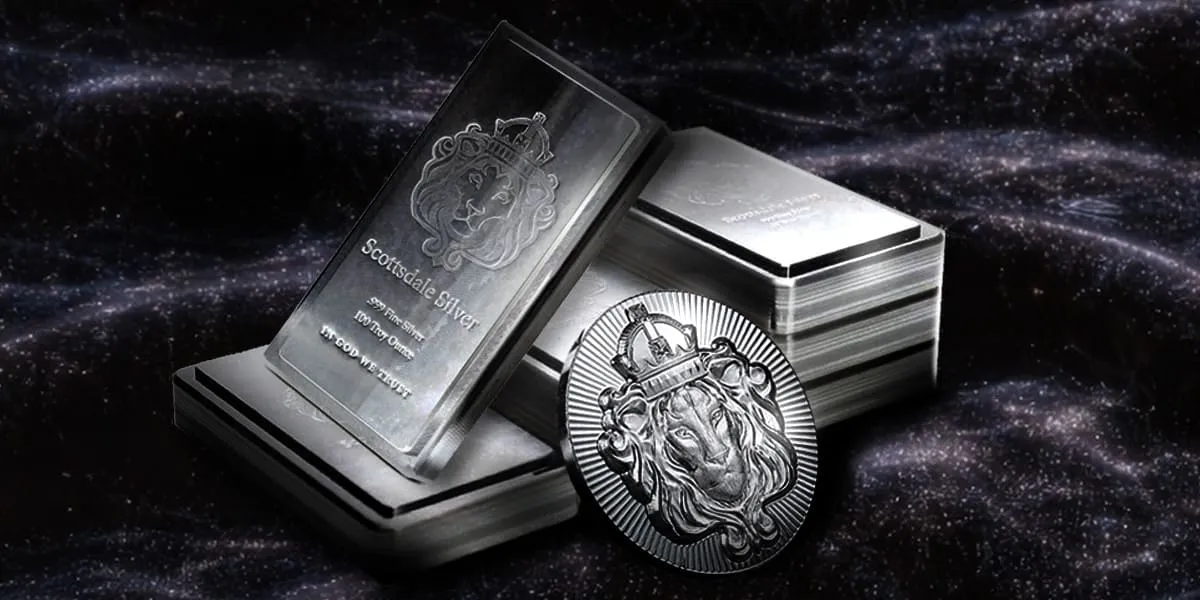
Think of them as privately minted silver discs, each containing one troy ounce of .999 fine silver, but with a clever twist. Unlike standard rounds that just sit flat, stackers have engineered beveled or concave edges that let them interlock when you pile them on top of each other. The result is a neat, stable column of silver that won’t topple over in your safe or storage tube.
Here’s the thing that trips up a lot of newcomers: rounds are not coins. A coin is issued by a sovereign government, carries a face value, and has legal tender status. A round is produced by a private mint, has no face value, and derives its worth entirely from its silver content and the reputation of the mint that struck it. That distinction matters because it directly affects the premium you pay. Government coins like the American Silver Eagle carry premiums of 15 to 25 percent over spot price, while privately minted rounds typically sit in the 5 to 10 percent range.¹
For cost-conscious stackers whose primary goal is accumulating as many ounces as possible, rounds offer the best value per dollar spent. You’re paying for the silver itself, not for legal tender status or collector appeal.
How much should I pay above spot price?
Premiums are the markup you pay above the current spot price of silver, and they vary a lot depending on what you’re buying. As of April 2026, silver trades near $75 to $76 per ounce.² For stacker rounds, you should expect premiums in the 5 to 10 percent range, which translates to roughly $3.75 to $7.60 per ounce above spot.¹ That’s the sweet spot for most buyers focused on accumulation rather than collectibility.
Why does the premium exist at all? Manufacturing isn’t free. Someone has to refine the silver, design the round, strike it, package it, and ship it to you. Dealer margins, shipping insurance, and payment processing fees all add up. If you’re seeing premiums below 5 percent, either the dealer is running a loss-leader promotion to attract new customers, or something doesn’t smell right.
For comparison, government-issued coins can carry premiums of 15 to 25 percent, and limited-edition or serialized products often command even more.¹ If you’re a collector who values exclusivity, mintage numbers, and custom packaging, those higher premiums might make sense. But if you’re purely stacking ounces, rounds give you the most metal for your money.
Which online dealers are trustworthy?
Reputation is everything in this space, and fortunately there are several well-established online dealers with long track records. Major platforms that have been operating for over a decade include large bullion exchanges and retailers founded in the early 2010s, as well as private mints that sell directly to consumers.³ When evaluating any dealer, look for transparent pricing that clearly shows the spot price and the premium separately, published return and buyback policies, and secure shipping with insurance included.
One advantage of buying directly from a mint rather than a third-party retailer is provenance. You know exactly where the product came from, and you’re eliminating one link in the supply chain where counterfeits could potentially enter. That said, established retailers often carry products from multiple mints, giving you more variety in one place.
If you’re new to this, start small. Place a modest order, evaluate the packaging, shipping speed, and product quality, and then scale up. Sophisticated buyers also ask about serialized products, assay packaging, and IRA eligibility before committing to larger purchases. These details signal that a dealer takes authenticity and compliance seriously.
How do I verify my silver is real?
Counterfeiting is a real and growing concern. In 2025, approximately 60 tons of counterfeit silver flooded the Chinese market, underscoring just how sophisticated fakes have become.⁴ That’s not a reason to panic, but it is a reason to take authentication seriously, especially if you ever buy from secondary markets or unfamiliar sellers.
The standard authentication protocol involves multiple tests. Start by weighing the piece on a precision scale. A genuine 1-ounce silver round should weigh exactly 31.1 grams, which is one troy ounce. Next, measure the dimensions. Even skilled counterfeiters struggle to match both the correct weight and correct dimensions simultaneously, because silver has a specific density that’s hard to fake with cheaper metals. The magnet slide test is another quick check: silver is diamagnetic, meaning a strong neodymium magnet should slide slowly down the surface rather than sticking or falling off quickly.
For larger purchases, consider investing in a sigma metalytics tester or similar device that uses electromagnetic conductivity to verify metal composition without damaging the piece. And here’s a practical tip: buying from established mints and dealers in the first place is the single best counterfeit prevention strategy. When your silver arrives in sealed assay packaging with serial numbers from a recognized producer, you’ve already eliminated most of the risk.
What’s happening with silver prices in 2026?
Silver is in a fascinating and somewhat contradictory place right now. Spot prices are trading near $75 to $76 per ounce as of April 2026, driven in part by surging industrial demand.² Solar energy alone accounted for 29 percent of industrial silver demand in 2024, up from just 11 percent in 2014, and that trajectory continues to climb.⁵ J.P. Morgan Global Research has published projections suggesting continued upward pressure on silver prices driven by these structural demand factors.⁶
But here’s the catch. Despite those high spot prices, the retail secondary market has experienced what analysts are calling a liquidity paradox. Refiners are facing lease rates exceeding 100 percent and dealing with chemical supply disruptions, which has created a disconnect between the spot price you see quoted online and the actual ease of buying or selling physical silver at that price.⁷ In practical terms, this means premiums can spike unpredictably, and selling your silver back might take longer or fetch less than you’d expect based on the headline spot number.
If you’re a long-term stacker, this volatility is less concerning because you’re not trying to flip silver next week. But it’s important context. The number on the screen and the number in your wallet aren’t always the same thing.
How is silver taxed when I sell it?
This is one of the less fun parts of stacking, but you need to know it. Under current U.S. tax law, specifically IRC Section 408(m), physical silver is classified as a collectible.⁸ That means long-term capital gains on silver held for more than a year are taxed at a maximum federal rate of 28 percent. Compare that to the 15 to 20 percent rate on long-term gains from stocks or ETFs, and you can see the disadvantage.
Short-term gains on silver held less than a year are taxed as ordinary income, just like any other short-term investment. And don’t forget state taxes, which vary widely and can add another layer of cost depending on where you live.
This tax treatment is one reason dollar cost averaging makes sense for silver stackers. By accumulating steadily over time and holding for the long term, you at least qualify for the collectibles rate rather than the higher ordinary income rate. Some investors also explore holding physical silver within a self-directed IRA, which can defer or eliminate taxes depending on the account type. Just be aware that IRA-eligible silver must meet specific purity and storage requirements.
How should I store silver stacker rounds?
One of the nice things about stacker rounds is that their interlocking design makes storage more efficient than loose rounds or bars rattling around in a box. A tube of 20 stackers forms a tight, stable column that fits neatly in a safe or vault. But the broader storage question is really about security and insurance.
For smaller holdings, a quality home safe bolted to the floor or wall is the most common solution. Just know that standard homeowner’s insurance policies typically don’t cover precious metals beyond a modest limit, often just a few thousand dollars. You’ll likely need a separate rider or floater policy to fully insure your stack. For larger holdings, professional vault storage is worth considering. It typically runs 0.5 to 1 percent of the value per year, but it comes with full insurance and eliminates the risk of theft or loss at home.⁷
Here’s something experienced stackers know: never publicly discuss the specifics of where you store your metals. Operational security is a real consideration when you’re holding a meaningful amount of physical value.
When might silver stacker rounds not be worth it?
Silver stackers aren’t the right choice for everyone, and it’s worth being honest about the limitations. The 2026 liquidity paradox is a real concern. Despite silver spot prices sitting near historic highs, the secondary market for physical silver has become less liquid due to refiner constraints and supply chain disruptions.⁷ If you need to sell quickly, you might face wider bid-ask spreads than you’d expect, meaning you could lose a meaningful percentage of your investment just in the transaction.
The tax treatment is another consideration. That 28 percent maximum federal rate on collectibles gains puts physical silver at a disadvantage compared to paper investments like stocks or ETFs, which benefit from the lower 15 to 20 percent long-term capital gains rate.⁸ If you’re purely optimizing for after-tax returns, physical silver has to outperform paper alternatives by a wider margin just to break even.
Storage and insurance add ongoing costs that paper investments simply don’t have. Professional vault storage at 0.5 to 1 percent annually eats into returns year after year.⁷ And if you’re someone who might need to liquidate quickly in an emergency, the combination of illiquidity and high premiums could work against you. Silver stacking works best as a long-term strategy for people who understand these trade-offs and are comfortable with them.
Key Takeaways
- Silver stacker rounds carry 5 to 10 percent premiums, far below government coin markups.¹
- Authentication requires weight, dimension, and magnet testing at minimum.⁴
- Physical silver faces a 28 percent maximum federal capital gains tax as a collectible.⁸
- The 2026 liquidity paradox means high spot prices don’t guarantee easy resale.⁷
- Dollar cost averaging reduces timing risk for long-term silver accumulators.
About This Topic
Silver stacker rounds are privately minted bullion pieces made of .999 fine silver, typically weighing one troy ounce each, with specially engineered beveled or concave edges that allow them to interlock when stacked. They offer a cost-efficient way to accumulate physical silver, with premiums significantly lower than government-issued coins. Buying them online from established dealers and mints provides convenience, competitive pricing, and access to authentication features like assay packaging and serialized products. The 2026 silver market presents unique dynamics including elevated spot prices driven by industrial demand and a secondary market liquidity paradox that buyers should understand before investing.
Comparative Analysis Table
| Factor | Option A | Option B | Notes |
| Premium Over Spot Price | Silver Stacker Rounds: 5 to 10 percent | Government-Issued Coins: 15 to 25 percent | Rounds are preferable for cost-conscious buyers focused on accumulating maximum ounces. |
| Liquidity and Resale Recognition | Rounds: Moderate, depends on mint reputation | Government Coins: High, universally recognized | Coins are preferable if you prioritize easy resale to any buyer worldwide. |
| Storage Efficiency | Stacker Rounds: Excellent, interlocking design | Standard Rounds or Coins: Average, requires tubes or capsules | Stackers are preferable for anyone building a large physical position. |
| Collectible or Numismatic Value | Rounds: Minimal, value tied to silver content | Government Coins: Potential numismatic premium over time | Coins are preferable if you value potential collector appreciation beyond metal value. |
| Counterfeiting Risk | Rounds: Moderate, varies by mint reputation | Government Coins: Lower, more security features and harder to replicate | Buying from established mints mitigates risk for both categories. |
How to Implement
- Set Your Budget and Strategy. Start by deciding how much you want to invest monthly and whether your goal is cost-efficient accumulation, collectability, or a mix of both. A dollar cost averaging approach, where you invest a fixed amount at regular intervals, helps smooth out price swings over time.
- Research Reputable Dealers. Look for established dealers and mints with at least a decade of operating history, transparent premium breakdowns, published return policies, and insured shipping. Compare premiums across at least three sources before buying.
- Verify Product Specifications. Confirm that the stacker rounds you’re buying are .999 fine silver, weigh one troy ounce (31.1 grams), and come from a recognized producer. Check whether the product includes assay packaging or serial numbers for added authenticity.
- Place a Small Initial Order. Order a modest quantity first to evaluate the dealer’s shipping speed, packaging quality, and product condition. Once you’re satisfied, scale up your regular purchases.
- Authenticate Upon Arrival. Weigh each piece on a precision scale, check dimensions against published specifications, and perform a magnet slide test. For larger orders, consider investing in an electromagnetic conductivity tester.
- Secure Storage and Insurance. Store your silver in a quality home safe with a separate insurance rider, or use professional vault storage for larger holdings. Keep an inventory spreadsheet with purchase dates, prices, and serial numbers for tax and insurance purposes.
Troubleshooting FAQs
My silver round’s weight is slightly off. Is it fake?
Not necessarily. Precision scales can drift, and environmental factors like humidity affect readings. Calibrate your scale first, then weigh the piece multiple times. A genuine 1-ounce silver round should weigh 31.1 grams within a tolerance of about 0.02 grams. If it’s consistently off by more than that, combine the weight test with dimension checks and a magnet slide test before drawing conclusions. When in doubt, contact the dealer’s customer service for guidance.
The premium I paid seems higher than what I see quoted elsewhere. Did I overpay?
Premiums fluctuate based on market conditions, dealer inventory, and payment method. Credit card purchases typically carry a higher premium than bank wire transfers because of processing fees. Also, the 2026 liquidity paradox has caused premiums to spike unpredictably due to refiner constraints.⁷ Compare the total delivered cost, including shipping and insurance, across multiple dealers before your next purchase. A slightly higher premium from a more reputable source is often worth the peace of mind.
Implementation Stories
- A first-time buyer started with just two stacker rounds to test the process. After confirming the weight, inspecting the beveled edges, and seeing how cleanly they interlocked, she set up a monthly $300 budget. Eighteen months later, she had accumulated over 60 ounces and felt confident enough to diversify into larger format bars.
- A retired engineer who’d been buying government coins for years switched to stacker rounds after calculating how much he was losing to premiums. By moving from 20 percent premiums to 7 percent, he estimated he was gaining an extra 8 to 10 ounces per year on the same annual budget, which over a decade of stacking added up to a meaningful difference.
- A young couple used dollar cost averaging to buy three stacker rounds every month regardless of spot price. During a price dip, they picked up rounds at $72 per ounce total cost. During a spike, they paid $84. After two years, their average cost per ounce sat comfortably below the prevailing spot price, and their interlocking stack filled an entire safe shelf with satisfying precision.
Best Practices Checklist
- Compare premiums across at least three reputable dealers before every purchase.
- Authenticate every delivery with weight, dimension, and magnet tests upon arrival.
- Keep a detailed spreadsheet of purchase dates, prices, premiums, and serial numbers for tax reporting.
- Review your homeowner’s insurance policy and add a precious metals rider if your holdings exceed the standard coverage limit.
- Avoid discussing the specifics of your holdings or storage location publicly.
- Reassess your accumulation strategy quarterly, checking the gold-to-silver ratio and adjusting format diversification as needed.
Glossary
| Term | Definition |
| Spot Price | The current market price for one troy ounce of silver as traded on commodity exchanges. It’s the baseline number before any dealer premium is added. |
| Premium | The markup above spot price that covers manufacturing, dealer margins, shipping, and insurance. It’s expressed as a percentage or dollar amount per ounce. |
| Troy Ounce | The standard unit of measurement for precious metals, equal to 31.1 grams. It’s slightly heavier than a regular (avoirdupois) ounce, which weighs 28.35 grams. |
| Assay Packaging | A sealed card or case containing a precious metal piece along with a certificate verifying its weight, purity, and authenticity, typically issued by the mint. |
| Liquidity Paradox (2026) | A market condition where silver spot prices are high but physical silver is difficult to buy or sell at those prices due to refiner constraints, elevated lease rates, and supply chain disruptions. |
References
- Comparative Dealer Pricing Analysis. “Silver Product Premium Comparison Across Product Types”. Market Research. April 1, 2026.
- Multiple Dealer Platforms. “Silver Spot Price Market Observation”. Real-time Market Data. April 1, 2026.
- Online Bullion Dealer Platforms. “Established Dealer Operating History”. Various. April 1, 2026.
- Market Reports. “Counterfeit Silver Market Incident Documentation”. Industry News Sources. January 1, 2025.
- Industry Reports. “Solar Energy Silver Demand Statistical Analysis”. Industrial Consumption Tracking. January 1, 2024.
- J.P. Morgan Global Research. “Silver Price Projections 2026”. J.P. Morgan. January 1, 2026.
- Market Analysis. “2026 Silver Liquidity Paradox and Storage Cost Analysis”. Industry Research. April 1, 2026.
- Internal Revenue Code. “IRC Section 408(m) – Collectibles Tax Treatment”. U.S. Tax Code. January 1, 2026.