The Netherlands reconsidered where its gold should be held, what form it should take and how quickly it could be converted into usable liquidity during a crisis. The amount of bullion remained unchanged for now, but the operational value of those reserves improved.
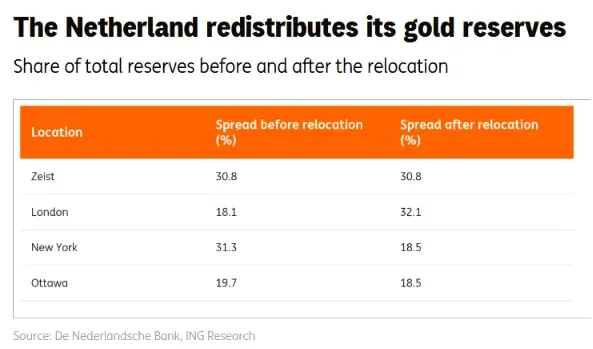
The Netherlands still owns 612.4 tonnes of gold. Following the relocation, London’s share of Dutch reserves increased from 18.1% to 32.1%. The portions held in New York and Ottawa fell to 18.5% each, while just under 31% remains inside the Netherlands. The move had little immediate effect on global supply or demand, yet it delivered an important signal about how central banks now think about gold.
The mechanics are especially instructive. DNB sold approximately 59 tonnes of gold in New York and purchased an equivalent amount in London. It also physically transported more than 27 tonnes from North America to the Netherlands, while moving an equivalent quantity of internationally tradable gold from the Netherlands to London.
The operation gave DNB experience using two different recovery routes. It demonstrated that reserves could be physically transported or replaced through market transactions if one route became unavailable. In effect, the central bank conducted a live test of its crisis-preparedness procedures.
London was selected because it remains the world’s largest over-the-counter market for physical gold. The Bank of England holds about 400,000 bars, representing roughly 5,000 tonnes of bullion. Gold stored there can change ownership without leaving the vault, provided both parties maintain accounts at the Bank. That reduces transportation costs and allows reserves to be sold or exchanged for foreign currency quickly.
The metal is also held on an allocated basis, meaning customers retain ownership of specific bars. The Bank accepts bullion meeting London Good Delivery standards, ensuring the metal can be readily traded in the international market. These details explain why the condition, location and legal structure of gold ownership matter alongside the number of tonnes recorded on a balance sheet.
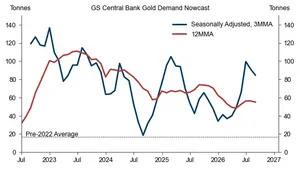
The decision comes during an extended period of historically strong official-sector demand. Central banks purchased more than 1,000 tonnes annually from 2022 through 2024. Buying slowed to approximately 863 tonnes in 2025, but remained elevated. The World Gold Council’s latest survey found that 89% of reserve managers expected global central-bank gold holdings to rise, while a record 45% expected their own institutions to buy more.
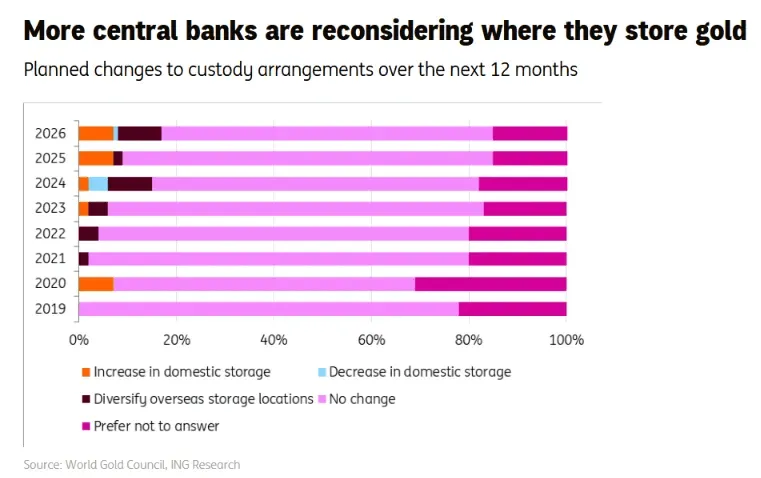
As holdings grow, the discussion is naturally expanding from acquisition to custody. Reserve managers increasingly need to know whether their gold is allocated, unencumbered, internationally acceptable and immediately accessible. Sanctions, geopolitical fragmentation and declining confidence in traditional custodial relationships have turned those questions into active policy concerns.
Foreign custody still carries jurisdictional risk. Venezuela has been unable to access roughly $4 billion of bullion held at the Bank of England since 2018 because of a dispute over which authority can represent its central bank. The case is exceptional, but the principle is clear: gold stored abroad remains subject to the laws, courts and political decisions of the host country.
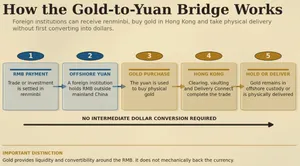
France has responded by bringing US-held gold back to Paris, while Serbia plans to keep its bullion domestically. China, meanwhile, is developing greater gold-market liquidity and storage capacity in Hong Kong. Different countries are choosing different arrangements, yet all are treating physical control, geographic diversification and market access as strategic considerations.
Private investors should take note. An ETF, futures contract or unallocated account may provide exposure to the gold price, but exposure does not provide the same protection as possession. When gold is owned as crisis insurance, custody and accessibility become part of the investment itself.
Physical gold held directly, securely and outside the chain of another party’s promise provides protection that a financial claim cannot fully reproduce. Central banks are quietly demonstrating the lesson: gold is most valuable when ownership, location and access are beyond doubt.