Societe Generale Sees the Gold Recovery Broadening as Beijing Buys the Dip and the Old Real-Rate Model Begins to Break Down
Gold’s recovery is gathering strength after one of the most volatile stretches of the current bull market, with Societe Generale arguing that renewed Chinese buying, improving Western investment demand and a continuing shift away from dollar reserves are rebuilding the case for higher prices.
In its September 2 Conviction Thinking report, SG notes that gold entered 2026 following an exceptional 64% rally in 2025, surged above $5,400 in January and subsequently suffered two violent corrections. The second, driven by the U.S.-Israel-Iran conflict and renewed expectations for Federal Reserve hikes, briefly pushed gold below $4,000 in July. Since then, Chinese central-bank dip-buying and Treasury’s surprise decision to double long-end buybacks have helped lift the metal back toward $4,500.
The recovery is also becoming healthier.
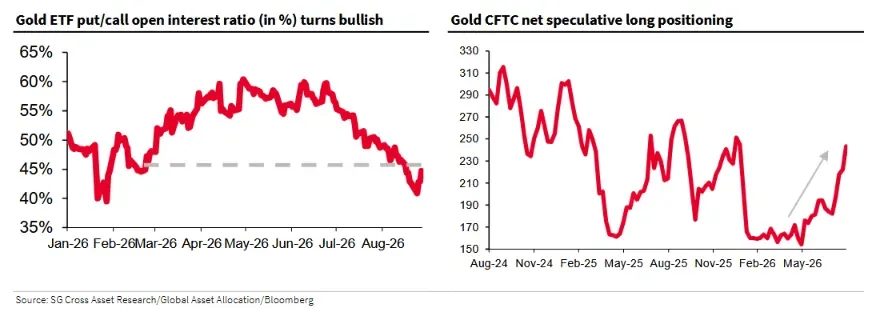
Gold volatility exceeded 45 during both the January correction and the Middle East turmoil before falling sharply. CFTC speculative positioning has recovered from 154,260 contracts in May to 243,334, above its two-year average of roughly 221,000 but still well below the 2024 peak. At the same time, the GLD put/call ratio fell to a six-month low, indicating that options positioning is again tilting toward calls.
The Real-Rate Model Is Losing Its Grip
Interest rates still matter.
SG notes that the traditional inverse relationship between gold and real yields repeatedly reasserted itself during 2026 as markets shifted from expecting three Fed cuts to pricing two or more rate hikes. That tightening in expectations contributed directly to gold’s correction. But something important has changed.
Historically, persistently positive real yields at today’s levels would have implied considerably lower gold prices. Instead, bullion remains near record territory.
SG attributes the divergence to a post-2022 regime shift in which central-bank accumulation, geopolitical uncertainty, sovereign-debt concerns and de-dollarisation have created a higher structural floor beneath gold. That does not make gold immune to rates. It means rates no longer explain the entire market.
The Dollar Is Becoming More Important
The dollar has re-emerged as another important driver.
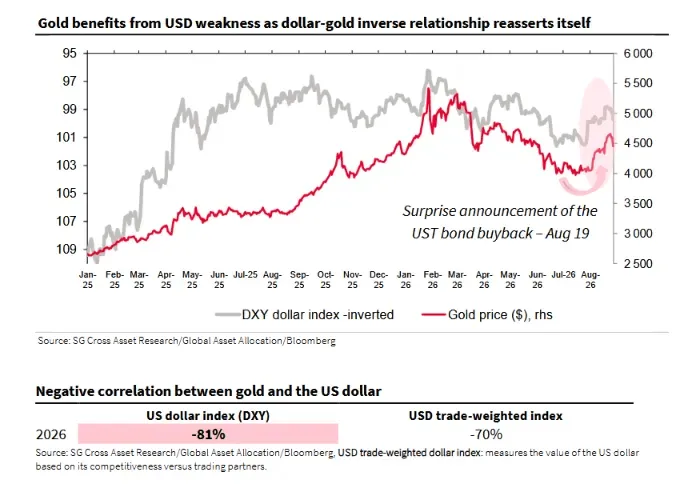
During August, the dollar index fell to a three-month low while gold rallied nearly 14%, putting the metal on track for its strongest monthly performance since 1999. Treasury’s decision to expand long-end bond buybacks amplified the move by increasing concern over future dollar purchasing power.
SG calculates gold’s 2026 correlation with the dollar index at -81%, while the relationship with the trade-weighted dollar stands at -70%.
The reserve story reinforces that trend. The dollar’s share of global foreign-exchange reserves fell to 57% in 2025, more than five percentage points below 2022. Meanwhile, 62% of reserve managers surveyed expect the dollar’s share to decline moderately over the next five years.
China Is Making the Trade Explicit
China provides perhaps the clearest example of what reserve diversification looks like in practice.
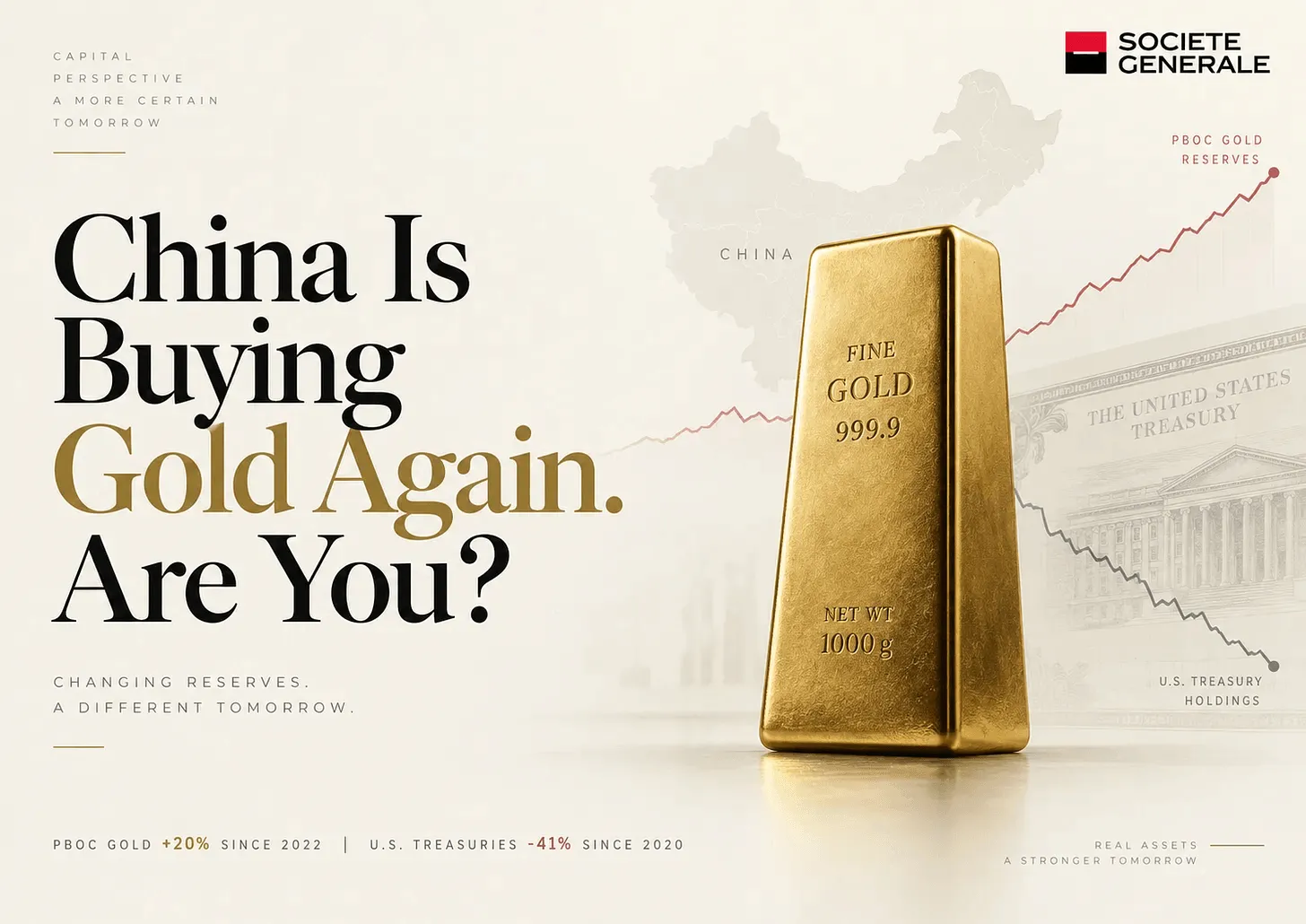
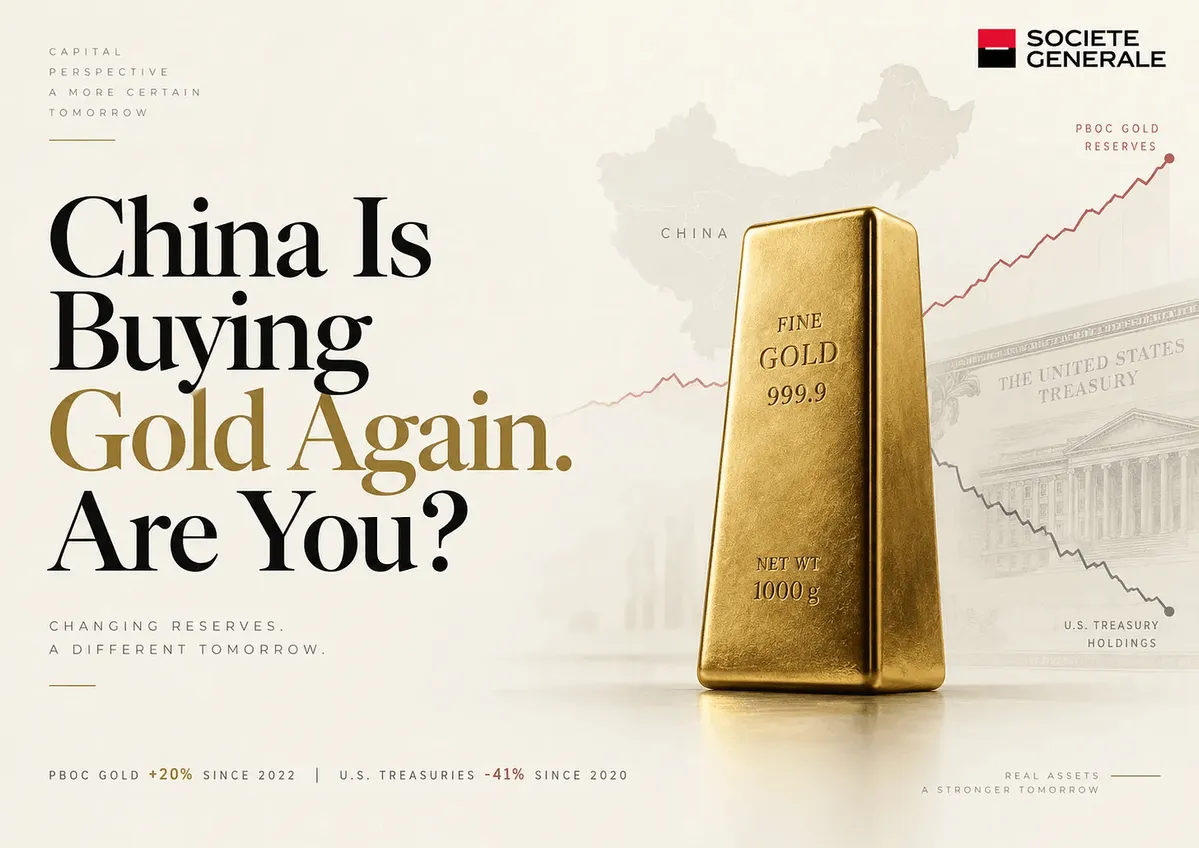
PBOC gold holdings have risen to 2,345 tonnes, making China the world’s fifth-largest official gold holder and accounting for around 7% of global official gold reserves.
Gold holdings have increased 20% since 2022 and 122% since 2015.
At the same time, China’s holdings of U.S. Treasuries have fallen 41% since 2020.
That pairing is more important than either number alone.
One reserve asset is rising while the other declines.
SG explicitly describes the combination as evidence of China’s gradual diversification away from dollar-denominated assets.
China: Gold Up, Treasuries Down
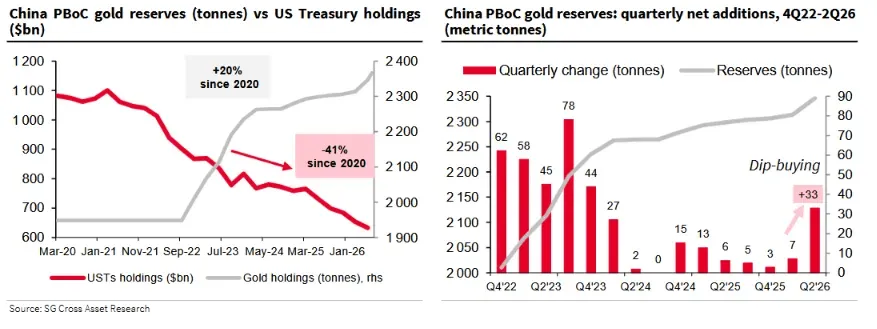
China has also been buying weakness. The report characterizes recent PBOC activity as dip-buying, reinforcing the idea that price corrections are increasingly being met by structural official-sector demand rather than triggering prolonged liquidation.
Poland is following an even more aggressive path. The National Bank of Poland purchased 82 tonnes through July 2026 and is now only 68 tonnes away from its publicly stated 700-tonne reserve target.
Central Banks Still Want More
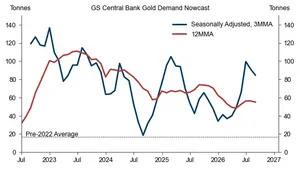
Official buying cooled sharply during the first quarter, when central-bank demand fell to just 57 tonnes, before rebounding to 288 tonnes in Q2.
The underlying reserve preference, however, remains intact.
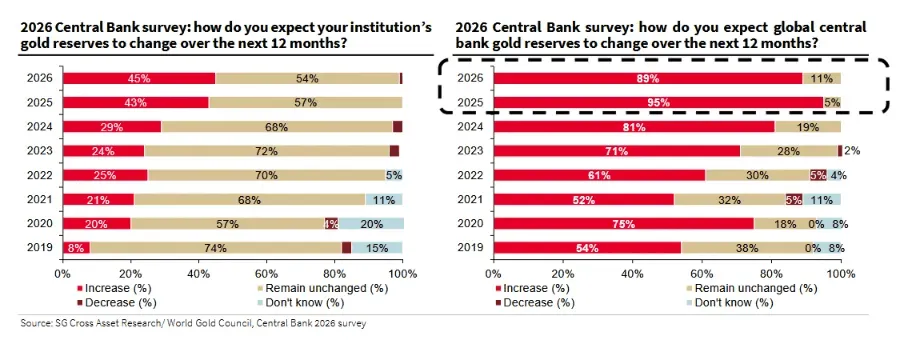
In the World Gold Council survey cited by SG, 84% of reserve managers expect gold to represent a larger share of global reserves over the next five years, up from 76% in 2025.
And 89% expect global central-bank gold reserves to increase over the next twelve months.
Central Banks Expect More Gold
ETF Investors Are Coming Back
The missing piece during much of the first half was Western financial demand.
ETF holdings fell between March and June as the Middle East conflict triggered risk-off liquidations and markets priced renewed Fed tightening. That began reversing during the summer as the dollar weakened and Treasury buybacks supported the gold recovery.
At the same time, institutional access is broadening across Asia.
India has expanded the ability of pension and investment funds to hold precious-metals ETFs. China’s ten largest insurers have been permitted to allocate up to 1% of their assets to physical gold, opening another potentially significant pool of long-term capital.
This matters because central-bank demand does not need to accelerate indefinitely for the bull market to broaden. Private capital can begin carrying more of the load.