Quick Answer: Buy authentic silver bullion from reputable private mints or established dealers that offer .999 fine silver with full authentication, insured shipping via USPS Registered Mail (covered up to $25,000), and transparent pricing that breaks down the premium over spot price.
You can buy authentic silver bullion directly from established private mints and vetted bullion dealers that provide insured shipping, authentication certificates, and transparent pricing. The key is knowing what to look for before you hand over your money. That means understanding purity standards, verifying dealer reputation, and making sure your shipment is fully insured and trackable from the moment it leaves the facility until it arrives at your door.
Authoritative Frameworks Referenced: Three recognized frameworks are especially relevant here. The Millesimal Fineness System is the industry standard for expressing silver purity as a decimal value, where .999 means 99.9% pure silver. The Six-Method Authentication Protocol combines hallmark verification, magnet testing, ring testing, weight assessment, acid testing, and professional certification to confirm authenticity. And the USPS Registered Mail Security Protocol provides a chain-of-custody shipping method with insurance up to $25,000, specifically designed for high-value items like precious metals.
How do I verify silver bullion is real?
Here’s the thing: counterfeiting has gotten sophisticated enough that no single test is foolproof on its own. That’s why experienced investors use a layered approach called the Six-Method Authentication Protocol. It combines hallmark verification (checking the mint mark, weight, and purity stamp), a simple magnet test (silver is only weakly magnetic, so if a magnet sticks firmly, walk away), a ring test (genuine silver produces a distinct high-pitched tone when struck), precise weight measurement, acid testing, and professional certification.
For the most definitive answer, XRF (X-ray fluorescence) analyzers can achieve 99% accuracy in precious metals testing.¹ The catch? These machines cost thousands of dollars, so they’re not practical for most individual buyers. That’s why buying from a reputable mint that provides assay packaging or serialized products matters so much. When your bar arrives sealed in an assay card with a matching serial number, you’ve got built-in verification without needing lab equipment.
If you’re a newer buyer just getting started, focus on purchasing products that come in tamper-evident assay packaging. This way, the authentication is essentially done for you at the source, and the sealed packaging preserves both the verification and the resale value.
What’s the safest way to ship silver bullion?
USPS Registered Mail is widely considered the gold standard (pun intended) for shipping precious metals domestically. According to USPS documentation, Registered Mail provides insurance coverage up to $25,000 with full chain-of-custody security.² Every person who handles the package signs for it, creating an unbroken paper trail from origin to destination. That level of accountability is why most reputable dealers use it.
The protocol requires specific packaging standards too. Think double-boxing, reinforced tape, and no external markings that indicate what’s inside. You don’t want a package labeled “SILVER BULLION” sitting on someone’s porch. Reputable sellers ship in plain, unmarked packaging with the security features hidden inside the process, not advertised on the outside.
If you’re ordering more than $25,000 worth of silver in a single shipment, you’ll likely need to split it across multiple packages or work with the dealer on a specialized shipping arrangement. For international orders, the rules change substantially, and USPS Registered Mail’s insurance framework is limited to domestic US shipments.²
What’s the difference between .999 and .9999 silver?
Under the Millesimal Fineness System, .999 means the silver is 99.9% pure, while .9999 means it’s 99.99% pure. In practical terms, the difference is one additional hundredth of a percent of purity. For most investors and stackers, .999 fine silver is the industry standard for bullion-grade products, and it’s what you’ll find in the vast majority of bars and rounds on the market.
So why does .9999 exist? It’s primarily a bragging right and a collectibility factor. Some government mint coins are struck at .9999 purity, and certain collectors value that extra decimal place. But from a pure investment standpoint, the melt value difference between .999 and .9999 on a one-ounce piece is negligible. You’re talking fractions of a penny.
If you’re cost-sensitive and focused on stacking ounces, .999 fine silver gives you the most metal for your money. If you’re a collector who values the finest possible purity or you’re building a collection with specific numismatic appeal, .9999 products might be worth the slightly higher premium.
How much extra do I pay over the spot price?
This is one of the biggest educational hurdles for people new to precious metals. The spot price you see on financial news sites is the wholesale price for large institutional trades. It’s not what you’ll pay at retail. Every physical silver product carries a premium over spot, and that premium covers minting costs, dealer margins, shipping, and insurance.
Here’s a rough guide to how premiums typically break down. Larger bars like 100 oz stackers generally carry the lowest premiums, sometimes in the range of 5-10% over spot. One-ounce bars and rounds sit in the middle. Government-issued coins like the American Silver Eagle tend to carry the highest premiums because they have legal tender status and broader recognition. The premium isn’t wasted money. It’s the cost of turning raw silver into a verified, portable, tradeable product.
Think of it this way: you’re not just buying silver, you’re buying silver that’s been refined to .999 purity, minted into a specific form, authenticated, packaged, and shipped to your door with insurance. All of that costs money. The key is understanding what premium you’re paying and why, so you can make informed decisions about which product type fits your goals.
How do private mints differ from government mints?
Government mints like the US Mint or the Royal Mint produce legal tender coins backed by a sovereign nation. That government stamp gives their products automatic recognition worldwide, which can make them easier to resell. However, that recognition also comes with higher premiums. You’re paying extra for the government’s name on the coin.
Private mints operate independently and produce their own branded bars, rounds, and specialty products. What many people don’t realize is that some private mints also hold manufacturing contracts with sovereign nations, actually producing coins on behalf of government mints. So the line between “private” and “government” isn’t always as clear as it seems. A private mint might be striking the very coins you’d buy from a government program.
The real differentiator comes down to what you’re buying for. If you’re a stacker focused on accumulating ounces at the lowest premium, private mint bars and rounds often deliver more silver per dollar. If you’re a collector seeking limited mintages, serialized products, exclusive designs, or custom packaging, private mints frequently offer more variety and creativity than government programs. And if liquidity is your top concern, government coins have the edge in universal recognition, though well-known private mint products trade actively too.
What are the tax rules for silver investments?
Here’s something that catches a lot of new investors off guard: the IRS classifies precious metals as collectibles, not standard investments. Under the IRS Collectibles Tax Classification framework, that means long-term capital gains on silver are taxed at a maximum rate of 28%, which is higher than the 15-20% rate most people pay on stocks or mutual funds.³ Short-term gains (if you sell within a year of buying) are taxed as ordinary income, just like a paycheck.
This doesn’t mean silver is a bad investment. It means you need to factor taxes into your planning. If you bought silver at $29 per ounce and it rose to over $70 per ounce as it did during 2025’s 148% appreciation,⁴ that’s a substantial gain, and Uncle Sam wants his share. Keeping detailed purchase records with dates, quantities, and prices paid is essential for accurate tax reporting.
If you’re considering holding silver in a retirement account, be aware that IRA eligibility has specific rules about which products qualify and how they must be stored. Not every silver product meets IRA requirements, and the silver must be held by an approved custodian, not in your sock drawer. This is an area where consulting a tax professional who understands precious metals is well worth the cost.
How do I avoid precious metals scams?
Fraud in precious metals is real, and it’s not just a hypothetical risk. In December 2025, the Commodity Futures Trading Commission (CFTC) obtained $2.3 million in restitution from a single precious metals fraud case.⁵ And that’s just one prosecuted case. Many frauds go unreported because victims feel embarrassed or don’t know where to file a complaint.
Counterfeiters tend to target two categories most aggressively: large bars and rare coins. Why? Because a fake 100 oz bar represents a massive payoff for the counterfeiter, and rare coins can be hard for non-experts to authenticate. If you’re buying large bars, insist on products with serial numbers and assay packaging from a recognized mint. If you’re buying numismatic coins, get them professionally graded and certified.
If you’re someone who buys regularly, consider investing in basic authentication tools. A precision scale, a strong neodymium magnet, and a caliper for checking dimensions will catch the most common fakes. Some mints have also developed smartphone authentication apps that let you verify products instantly, adding another layer of protection. The bottom line: buy from established sources, verify what you receive, and if a deal seems too good to be true, it absolutely is.
When might buying physical silver not be worth it?
Balanced analysis matters here, so let’s talk about when physical silver might not be the right move. First, silver is volatile. The 148% price increase in 2025 was remarkable,⁴ but past performance absolutely does not guarantee future results. If you’re investing money you might need in six months, physical silver’s price swings and the buy-sell spread (the difference between what you pay and what a dealer will pay you back) could leave you at a loss.
Second, most of the shipping, regulatory, and tax guidance available applies primarily to US domestic transactions. If you’re an international buyer, the rules around import duties, VAT, shipping insurance, and legal ownership limits can differ dramatically from country to country. Don’t assume US-focused advice applies to your situation without checking.
Third, storage is a real ongoing cost and responsibility. Keeping silver at home means accepting the risk of theft, fire, or natural disaster. Professional vaulting solves the security problem but adds annual fees that eat into your returns. And remember, the authentication and fraud statistics we’ve discussed capture only reported and prosecuted cases. The actual scope of counterfeiting in the market is likely larger than official numbers suggest.⁵ None of this means silver is a bad asset. It means you should go in with realistic expectations about costs, risks, and liquidity.
Key Takeaways
- Always buy .999 fine silver from established mints with authentication and assay packaging.
- USPS Registered Mail insures precious metals shipments up to $25,000 domestically.
- Silver is taxed as a collectible at up to 28% on long-term capital gains.
- No single authentication test is foolproof; use multiple verification methods together.
- Premiums over spot price are normal and vary by product size and type.
About This Topic
Buying authentic silver bullion with insured shipping involves selecting reputable mints or dealers, understanding purity standards like .999 fine silver, verifying authenticity through multiple testing methods, and ensuring your purchase is shipped via insured, chain-of-custody methods like USPS Registered Mail. With silver trading above $70 per ounce as of early 2026, the stakes for getting it right are higher than ever. Premiums over spot price, tax implications under the IRS collectibles classification, and proper storage are all critical factors that new and experienced buyers alike need to understand before making a purchase.
Comparative Analysis Table
| Factor | Option A | Option B | Notes |
| Premium Over Spot Price | Large bars (10 oz to 100 oz): Lower premiums, typically 5-10% over spot | Coins and small rounds (1 oz): Higher premiums, often 12-20%+ over spot | If you’re a cost-sensitive stacker focused on accumulating ounces, larger bars deliver more silver per dollar spent. |
| Liquidity and Resale | Government mint coins: Universally recognized, easier to sell anywhere in the world | Private mint bars and rounds: Strong liquidity from known mints, but may require a knowledgeable buyer | Government coins are preferable if you anticipate needing to sell quickly or internationally. |
| Collectibility and Exclusivity | Government coins: Standard designs with high mintages, limited exclusivity | Private mint products: Unique designs, limited mintages, serialized products, VIP access, custom packaging | Private mints are preferable for collectors seeking rare, distinctive, or limited-edition pieces. |
| Authentication Ease | Assay-packaged bars: Sealed with serial numbers, tamper-evident, easy to verify without opening | Loose coins or rounds: Require manual testing (magnet, weight, dimensions) or professional grading | Assay packaging is preferable for newer buyers who want built-in authentication. |
| Storage Efficiency | Large stackable bars (10 oz, kilo, 100 oz): Space-efficient, designed to stack neatly | Individual coins in capsules or tubes: Take up more space per ounce, but easier to sell in small increments | Large bars are preferable for long-term holders; coins are better if you may sell partial positions. |
How to Implement
- Define Your Goal Start by deciding whether you’re stacking for value, collecting for enjoyment, buying gifts, or investing for retirement. Your goal determines which products make sense. Stackers should lean toward larger bars with lower premiums. Collectors should explore limited-mintage rounds and serialized pieces. IRA investors need to confirm product eligibility before purchasing.
- Research the Dealer or Mint Verify that the seller is an established, reputable operation. Look for mints that produce their own branded products, hold contracts with sovereign nations, and offer authentication features like serialized bars and assay packaging. Avoid anyone offering prices dramatically below market or making guarantees about future returns.
- Understand the Full Cost Calculate the total price including the premium over spot, shipping, and insurance. Compare premiums across product types. A 100 oz bar will carry a lower per-ounce premium than ten individual 1 oz rounds. Make sure insured shipping is included or available, ideally via USPS Registered Mail for domestic orders.²
- Choose Products with Built-In Authentication Select items that come in sealed assay packaging with serial numbers, or that are compatible with digital verification tools. This protects your investment and preserves resale value. Avoid loose, unpackaged bullion from unknown sources.
- Verify Upon Delivery When your shipment arrives, inspect the packaging for signs of tampering before opening. Check serial numbers against your order confirmation. If the product came in assay packaging, verify the seal is intact. For loose items, perform basic authentication tests: magnet test, weight check, and dimensional measurement.
- Plan for Storage and Record-Keeping Decide whether you’ll use professional vaulting or personal storage, and set up a system to track every purchase with dates, quantities, prices, and serial numbers. This documentation is essential for tax reporting and insurance claims. Remember that the IRS taxes precious metals gains at up to 28%.³
Troubleshooting FAQs
My silver bar sticks to a magnet. Is it fake?
Pure silver is diamagnetic, meaning it should only interact weakly with a strong magnet. If a regular magnet sticks firmly to your bar, that’s a serious red flag. However, don’t rely on the magnet test alone. Some sophisticated counterfeits use non-magnetic metals. Follow up with a precision weight check and dimensional measurement. If the weight or dimensions are off by even a fraction, contact the seller immediately and request a return. For high-value pieces, consider paying for professional XRF analysis, which achieves 99% accuracy.¹
My insured shipment arrived damaged or missing. What do I do?
If you received your silver via USPS Registered Mail, the chain-of-custody documentation works in your favor. Document the condition of the outer and inner packaging with photos before opening anything further. File a claim with USPS immediately, referencing the Registered Mail tracking number and the declared insurance value. Contact the seller as well, as reputable dealers will work with you and the carrier to resolve the issue. Keep all packaging materials as evidence until the claim is fully settled.
Implementation Stories
- A first-time buyer purchased ten 1 oz silver rounds as a gift for family members. She was initially confused by the premium over spot price, thinking she was being overcharged. After learning that premiums cover minting, authentication, and packaging, she felt confident in her purchase and appreciated that each round came in a sealed capsule with the mint’s hallmark clearly visible.
- A long-time coin collector decided to shift part of his portfolio into larger bars for cost efficiency. He started with a 10 oz stacker bar and was surprised at how much lower the per-ounce premium was compared to the individual coins he’d been buying for years. He now buys a mix of collectible rounds for enjoyment and stacker bars for pure accumulation.
- A retired couple wanted to add silver to their IRA but didn’t realize that not all silver products qualify. After researching IRA eligibility requirements, they selected .999 fine bars from a recognized mint that met custodial standards. They also set up professional vaulting through their IRA custodian, avoiding the mistake of trying to store IRA metals at home, which would have triggered a taxable distribution.
Best Practices Checklist
- Confirm the product is .999 fine silver or higher before purchasing.
- Verify that shipping includes full insurance and tracking, preferably via USPS Registered Mail.
- Choose products with assay packaging, serial numbers, or digital authentication features.
- Keep detailed records of every purchase including date, price paid, quantity, and serial numbers.
- Compare the total cost (spot price plus premium plus shipping) across product types before committing.
- Consult a tax professional about the 28% collectibles capital gains rate before selling.
Glossary
| Term | Definition |
| Spot Price | The current wholesale market price for one troy ounce of silver, used as a baseline. It’s not the retail price you’ll pay, which always includes a premium. |
| Premium | The amount charged above the spot price that covers minting, authentication, dealer margin, packaging, and distribution costs. |
| Assay Packaging | A tamper-evident sealed card or case that contains a bar or round along with a certificate verifying its weight, purity, and serial number. |
| Millesimal Fineness | A system that expresses metal purity as a decimal. For silver, .999 means 99.9% pure silver, and .9999 means 99.99% pure. |
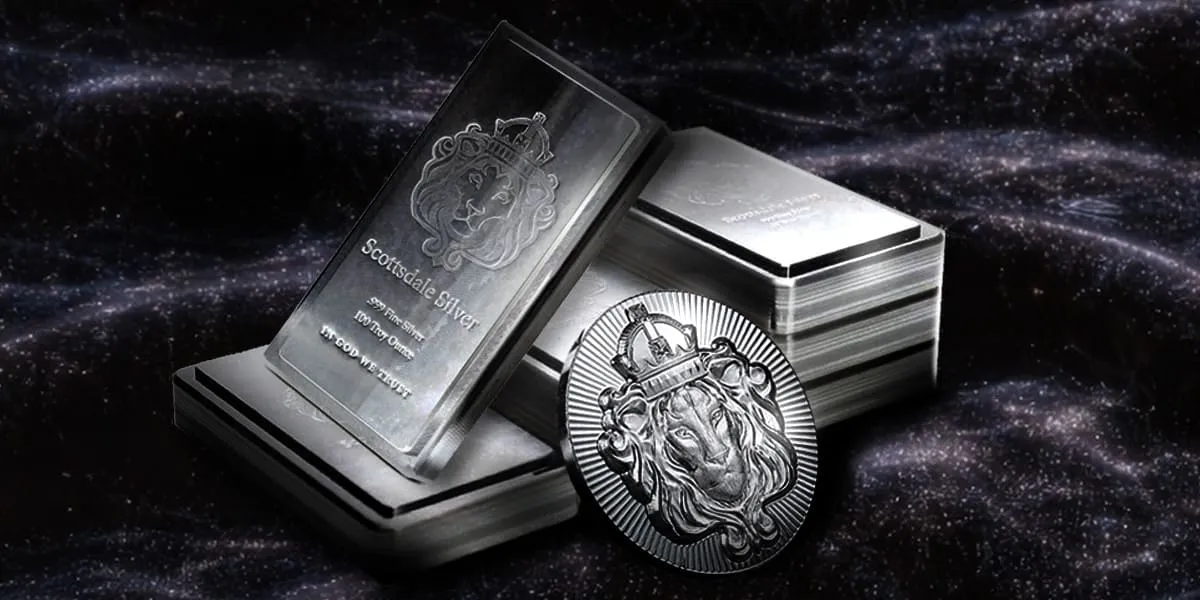
| Stacker Bar | A bullion bar designed with interlocking features so multiple bars can be stacked securely on top of each other for efficient storage. |
References
- Industry Technical Reference. “Silver Authentication Methods Guide”. Industry Publication. January 1, 2026.
- United States Postal Service. “USPS Registered Mail Guidelines for Precious Metals”. United States Postal Service. January 1, 2026.
- Internal Revenue Service. “IRS Collectibles Tax Classification for Precious Metals”. Internal Revenue Service. January 1, 2026.
- J.P. Morgan Global Research. “Silver Market Analysis”. J.P. Morgan. January 1, 2026.
- Commodity Futures Trading Commission. “Precious Metals Fraud Enforcement Actions”. Commodity Futures Trading Commission (CFTC). December 1, 2025.